How to Open Shipping Container Doors, Including Stuck Ones
Open the right-hand door first, close the left first, and level the box before you lubricate anything. A plain guide to container door hardware and stuck doors.
 EditorsEditors7 min read
On this page
A shipping container door looks simple until you stand in front of one. There are 4 steel bars, 4 handles, a padlock, and no obvious place to start. Pull the wrong handle first and nothing moves. Pull the right one carelessly and a heavy steel door swings toward you. Most stuck doors are not a hardware problem at all, and the fixes below run from cheapest to most involved.
Quick answer
Face the doors and open the right-hand door first. Remove the padlock, swing each handle out of its retainer, turn the handle until the locking bars release from their cam keepers, then pull the door open. Open the left door second. To close, reverse it: left door first, right door last. If a door binds, check that the container sits level before you lubricate or force anything, because a twisted box is the first cause to rule out. Never pull a stuck door with a vehicle or chain.
The parts you are working with
Most standard (ISO) container doors share one design.
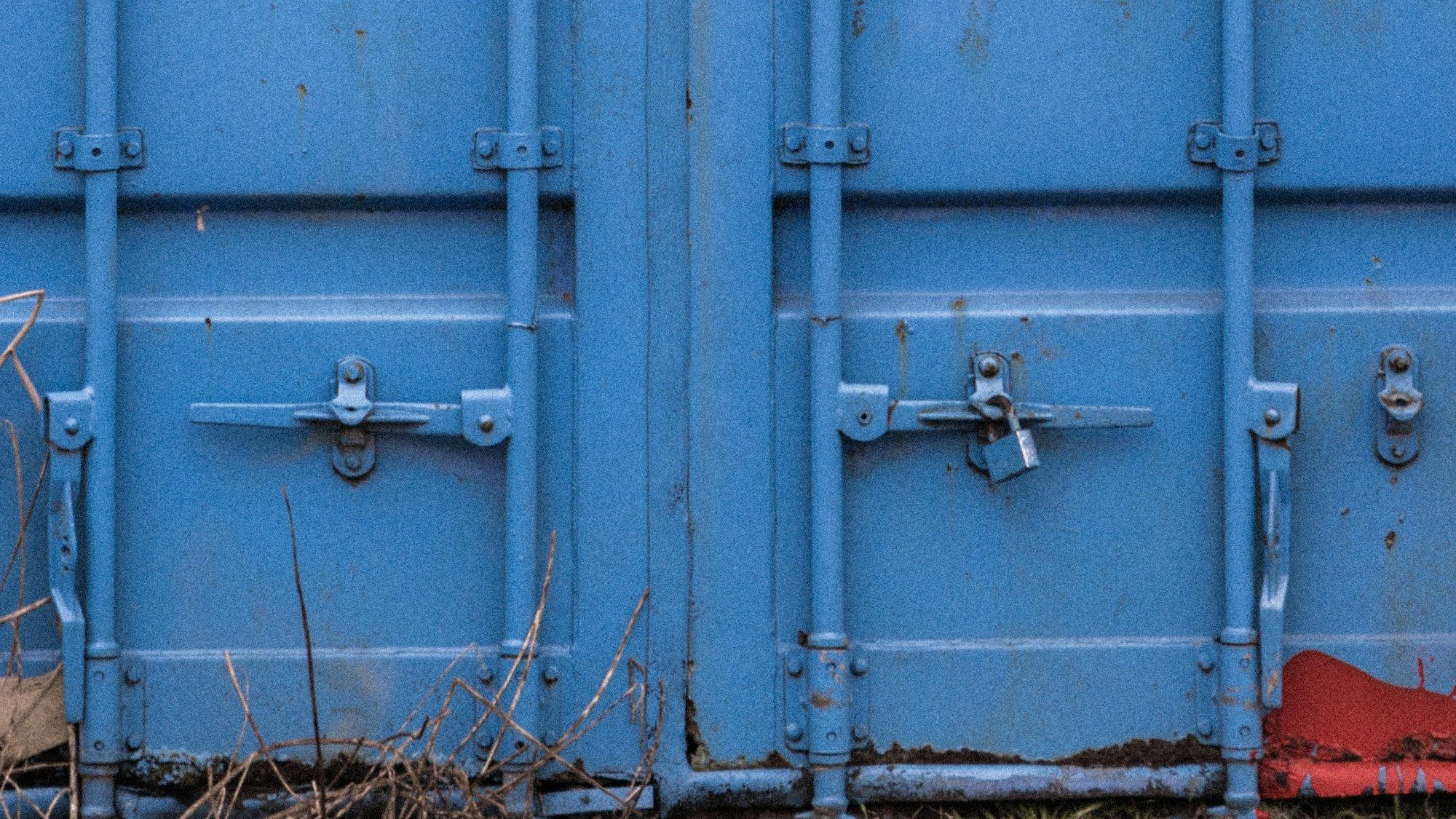
- Locking bars. Each door has 2 vertical steel bars that turn in brackets.
- Cams and cam keepers. A cam is the fitting at each end of a bar. It hooks into a keeper, a steel catch welded to the door header and sill.
- Handles and handle retainers. The handle turns the bar. The retainer is the catch that holds the handle flat, and its hole is where a padlock goes.
- Gaskets and hinges. Rubber strips seal the opening, and heavy hinges carry the door weight.
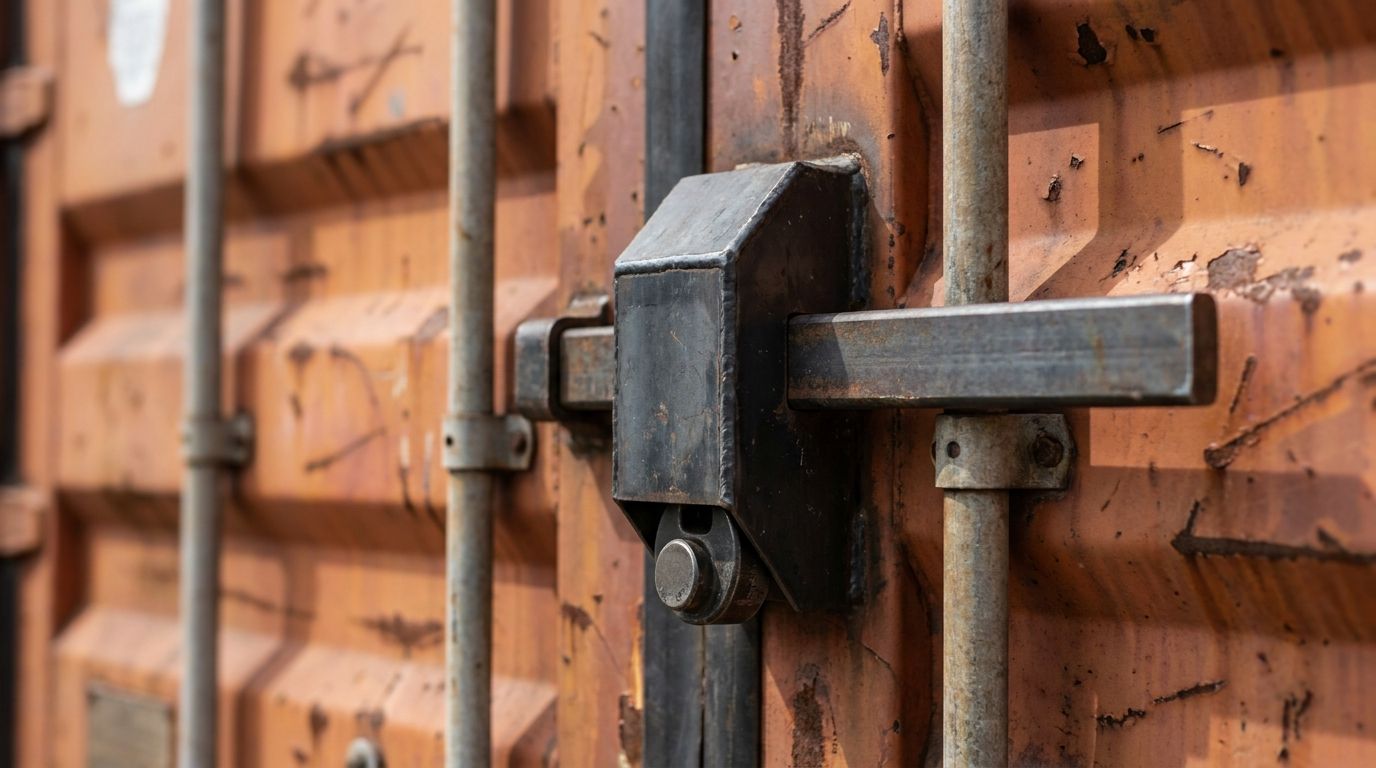
- Lockbox. An optional steel housing that covers the padlock. Some units have one. Many do not.
The tradeoff is built in: steel on steel wears and rusts, and rubber hardens with age. A one-trip container (shipped once from the factory) has little wear on its door gear. A used unit, including one graded wind and watertight (WWT), has more miles on the hardware. Our container condition grades guide explains what each grade tells you.
How to open the doors
- Clear the swing. Move people and vehicles away from the doors, and leave room beside each door.
- Remove the lock. Take off the padlock, or open the lockbox first.
- Free the right-hand door's handles. Lift each handle out of its retainer, keeping your fingers clear of the gap.
- Turn the bars. Swing each handle out to right angles with the door so the cams clear their keepers at the top and bottom.
- Walk the door open. Stand beside the door, not in front of it. If the unit has a door holder, secure the open door against the side.
- Repeat on the left door.
Why the right door goes first. On standard doors, the right door (as you face them) overlaps the left, so the left cannot release while the right is closed. Some units also carry a customs plate on the right door that covers the left door's edge. If your doors look different, check which edge sits proud. If nothing moves, check the order and the retainers before you pull harder.
How to close them
Close the left door first and turn its bars so each cam drops into its keeper, top and bottom. Look at the keepers instead of trusting feel. Set the handles in their retainers. Then close the right door over the left, seat its cams the same way, and fit the padlock. Closing the right door first leaves the left unable to seat.
Why container doors bind
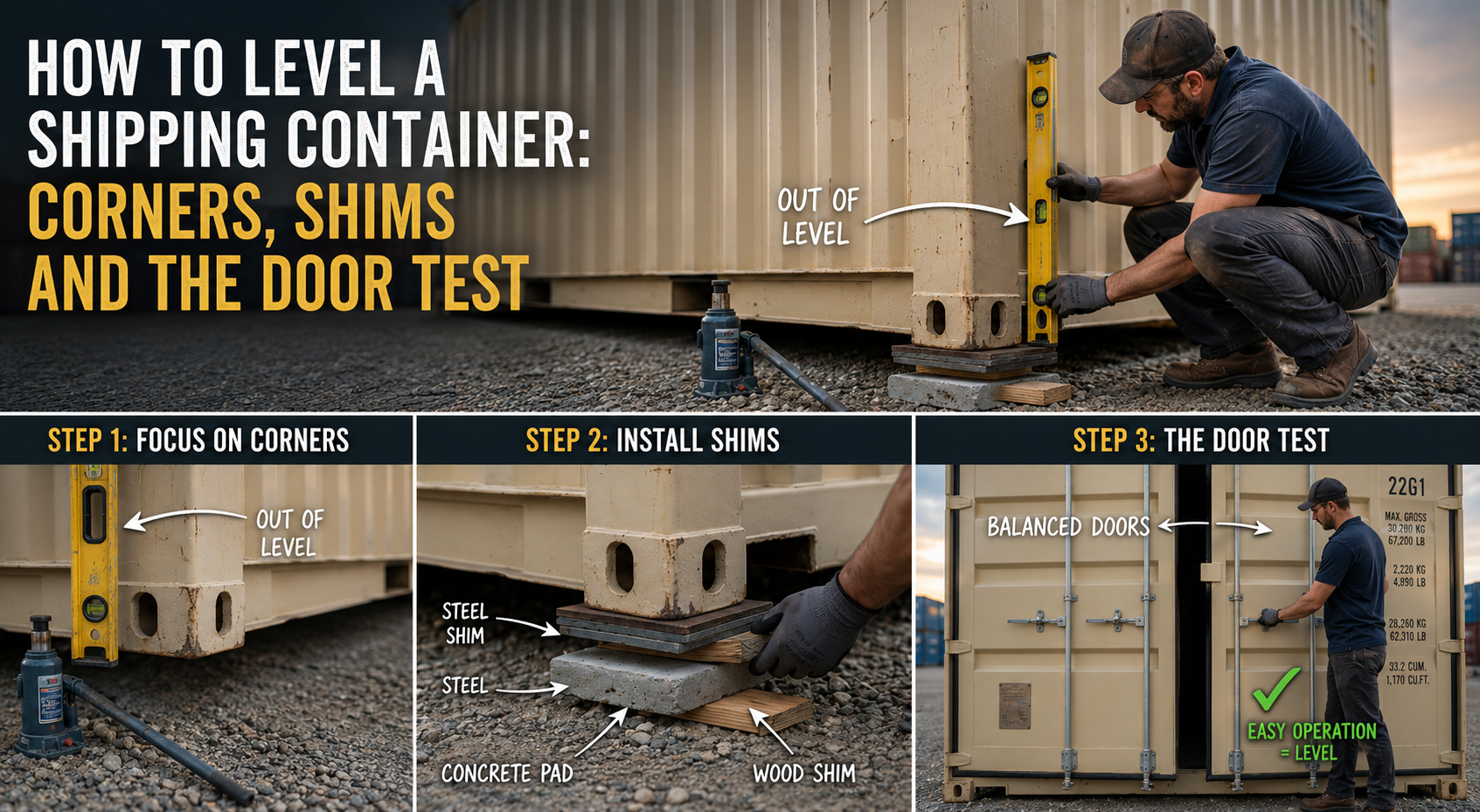
- An out-of-level or twisted footprint. This is the first cause to check. A low corner twists the frame so the opening is no longer square. Close both doors and compare the gap at the center seam, top and bottom. A gap wider at one end points to a twisted frame.
- Dry cams, keepers, and hinges. Steel on steel stiffens quickly outdoors.
- Rust. Surface rust adds friction, and heavy rust can seize a hinge pin.
- Swollen, hard, or torn gaskets. A damaged gasket can catch the door edge.
- Damage. A bent bar or keeper stops a bar from turning.
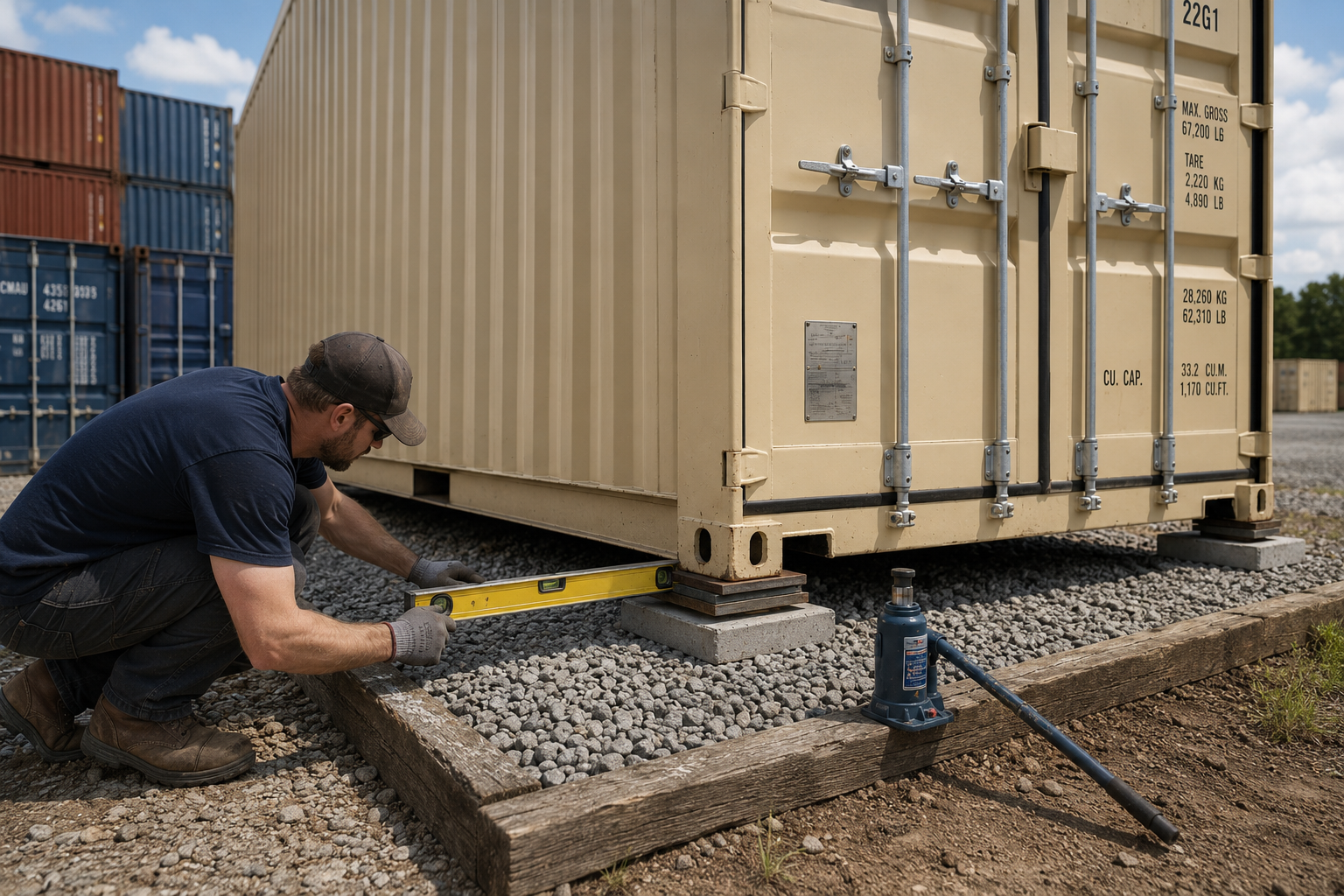
Soft ground settles after rain, so the base matters as much as the shim. See how to level a shipping container, and our guides to shipping container foundations and foundations by use.
Fixes for sticking doors, in order of effort
Stop when the doors move freely.
- Check level and square (free). If the center gap is uneven, put a level on the door sill and across the base. Shim a low corner with solid steel plates, solid concrete, or ground-contact treated timber under the corner casting, not the middle of the rail. This is the fix that keeps the problem from coming back, and it is only as good as the ground under it.
- Clean and lubricate (low cost). Brush grit off the cams, keepers, brackets, and hinges. Grease the cams, keepers, and hinge pins, and use a light spray on the bar guides. Work the bars and doors several times. Grease lasts longer but collects dust on a dirty site. Light oil goes on easily but washes out sooner. Keep products off the gasket, since some soften rubber.
- Treat rust. Wire-brush surface rust from bars and pins, then lubricate. A truly seized pin can need a specialist.
- Adjust or replace worn parts. A loose handle, a cam that no longer catches, or a bent keeper is a replacement job. Bent gear is often cheaper to replace than to straighten.
- Replace the gasket. Look for hardening, tears, and gaps. Replacement means removing the retainer strips, pulling the old rubber, cleaning the channel, and fitting a new run. A new gasket will not cure a racked door, so level the box first.
If the doors still will not move, stop. Frozen jambs, welded damage, or a bent frame need a repair specialist, not more force.
Door-opening aids
For a stiff bar that is not seized, a purpose-made lever tool that slips over the handle gives you more pull with less strain. Aftermarket easy-open handles do the same permanently, with a longer arm or ratchet action. The limit is that extra pull can bend a handle or break a retainer on a frame that is still out of square, and it treats the symptom, not the cause. A pipe slipped over a handle can bend it or slip.
Safety
- Stand outside the swing. Cargo that has shifted can lean on the doors, so open slowly and listen.
- Watch pinch points. Fingers get caught between handle and retainer, door and frame, and bar and bracket. Wear gloves.
- Secure an open door. Wind or a slope can swing a heavy door shut.
- Never force it with a vehicle. A truck, chain, or forklift can tear a hinge and bend the frame.
Locking up
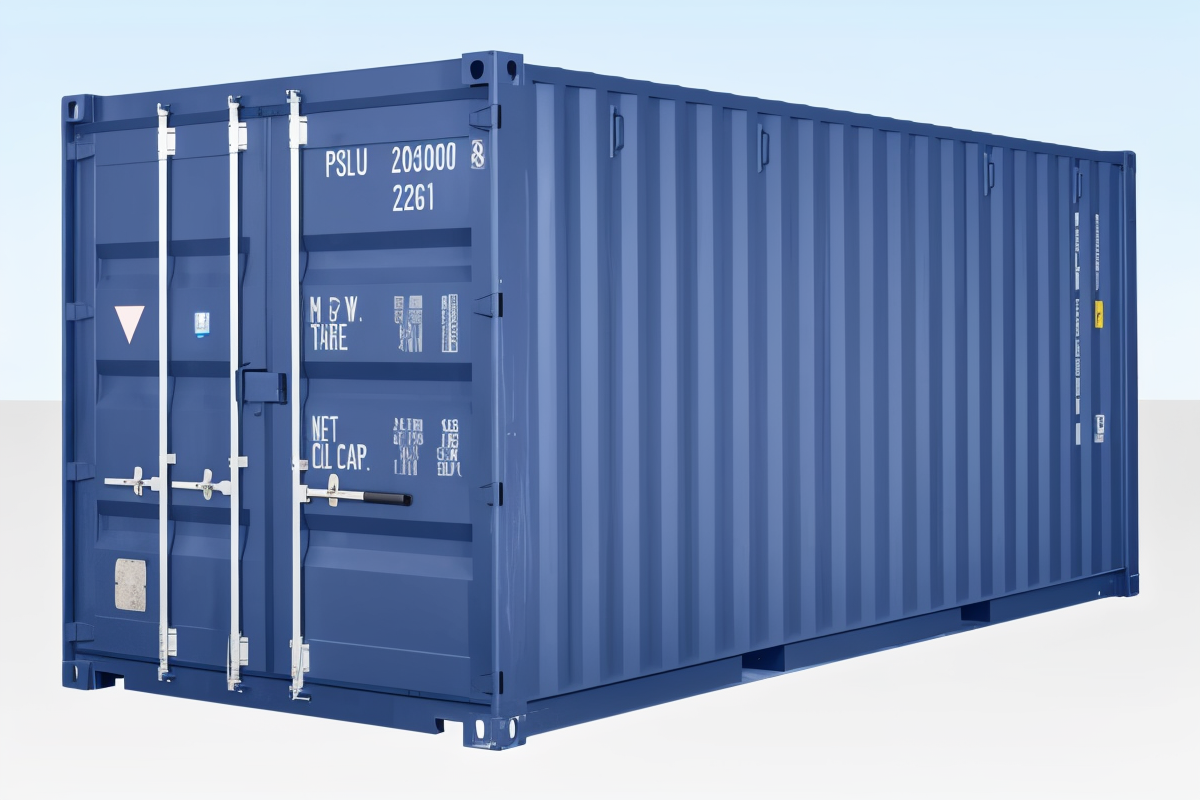
A bare padlock is the weak point on most doors, because the shackle is exposed. A lockbox shields it (our 20ft one-trip container in blue comes with a factory lockbox), and a high-security lock inside improves that further. The tradeoff is a few extra seconds each time you open. Our how to secure a shipping container guide covers lockboxes, puck locks, and crossbars.
When another door setup fits better
If you open the doors several times a day, standard doors may be the wrong fit.
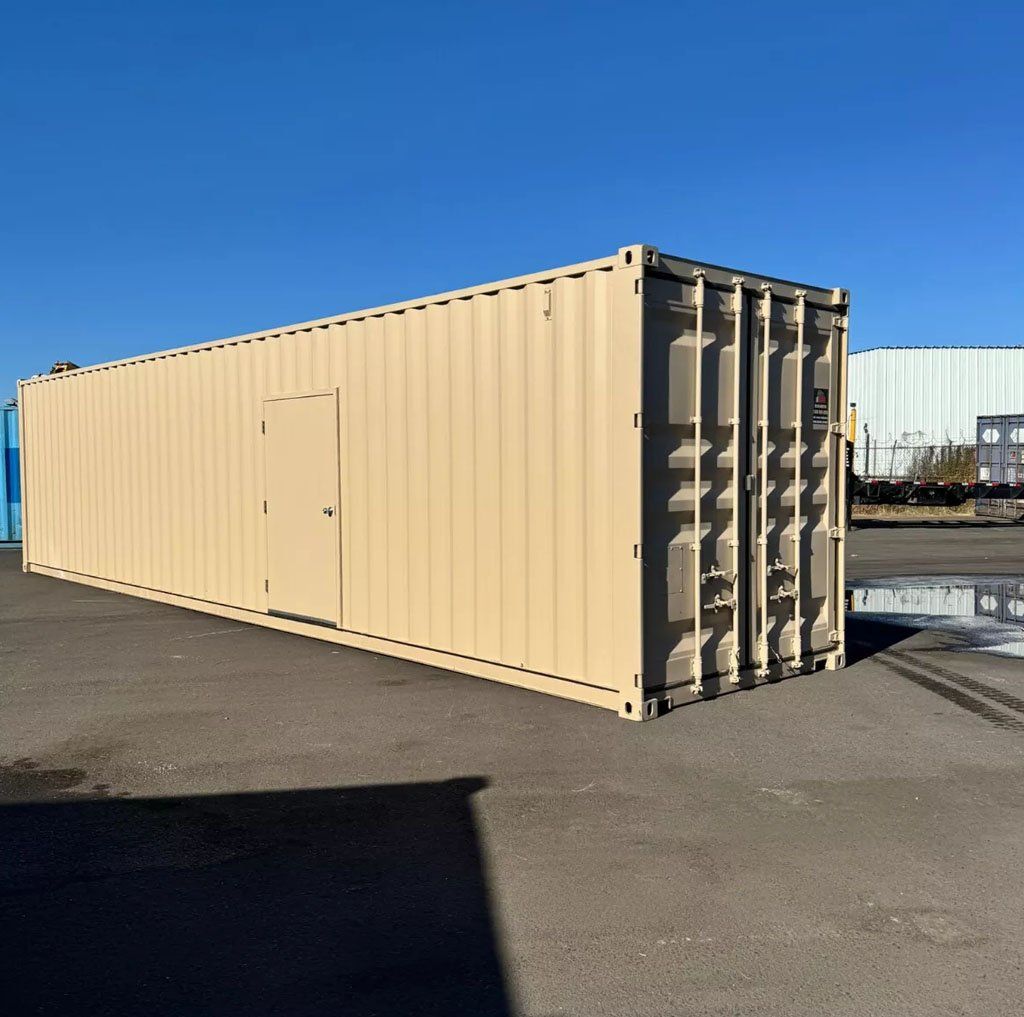
- Man door. A standard-size steel personnel door in the container wall lets you walk in without swinging the big cargo doors. See our 40ft shipping container with a man door. The cost is one more opening to secure.
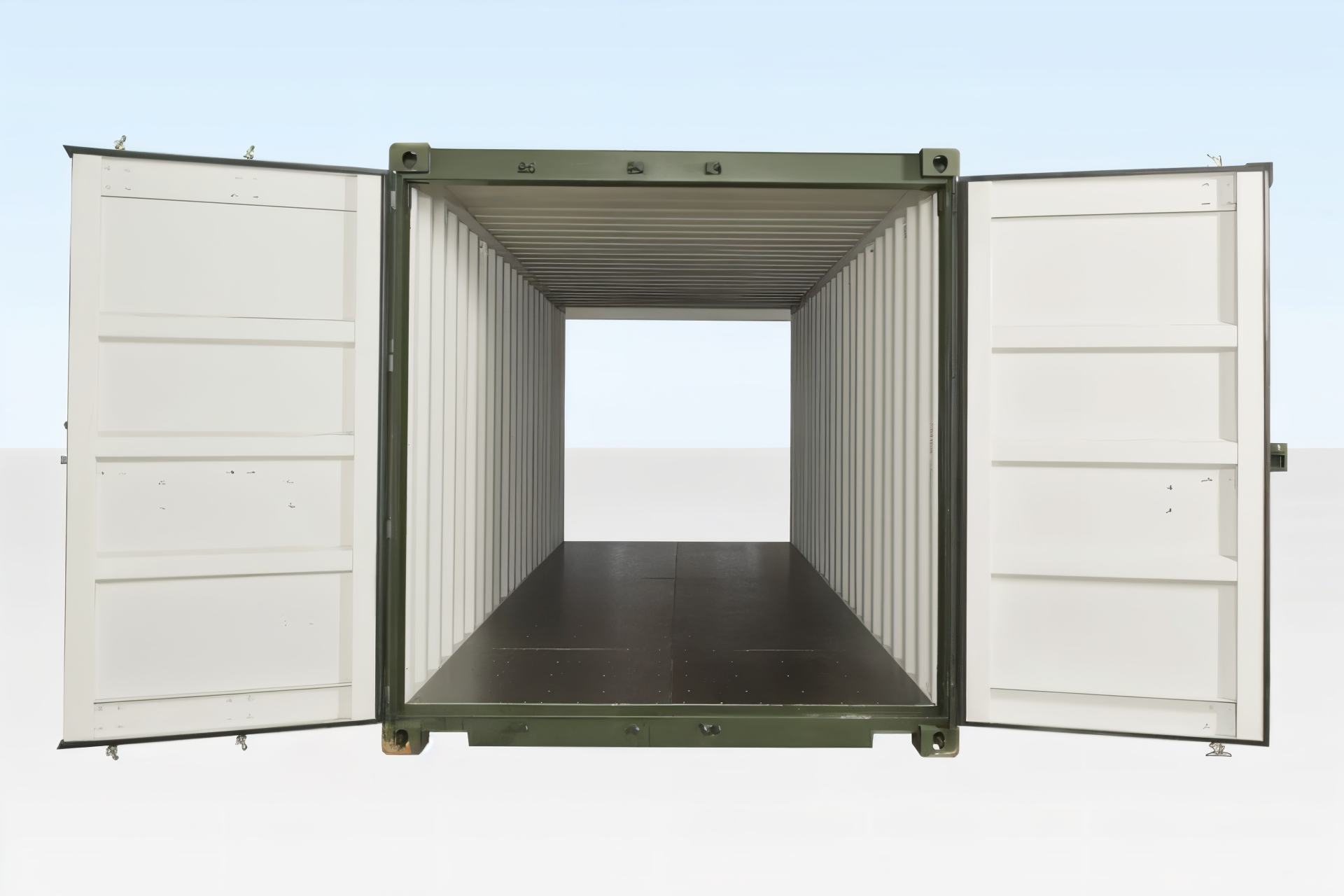
- Tunnel container. Doors at both ends let you load one side and unload or walk through the other, as on our 20ft x 8ft tunnel container with double end doors. It has twice the door hardware to maintain and needs clear space at both ends.
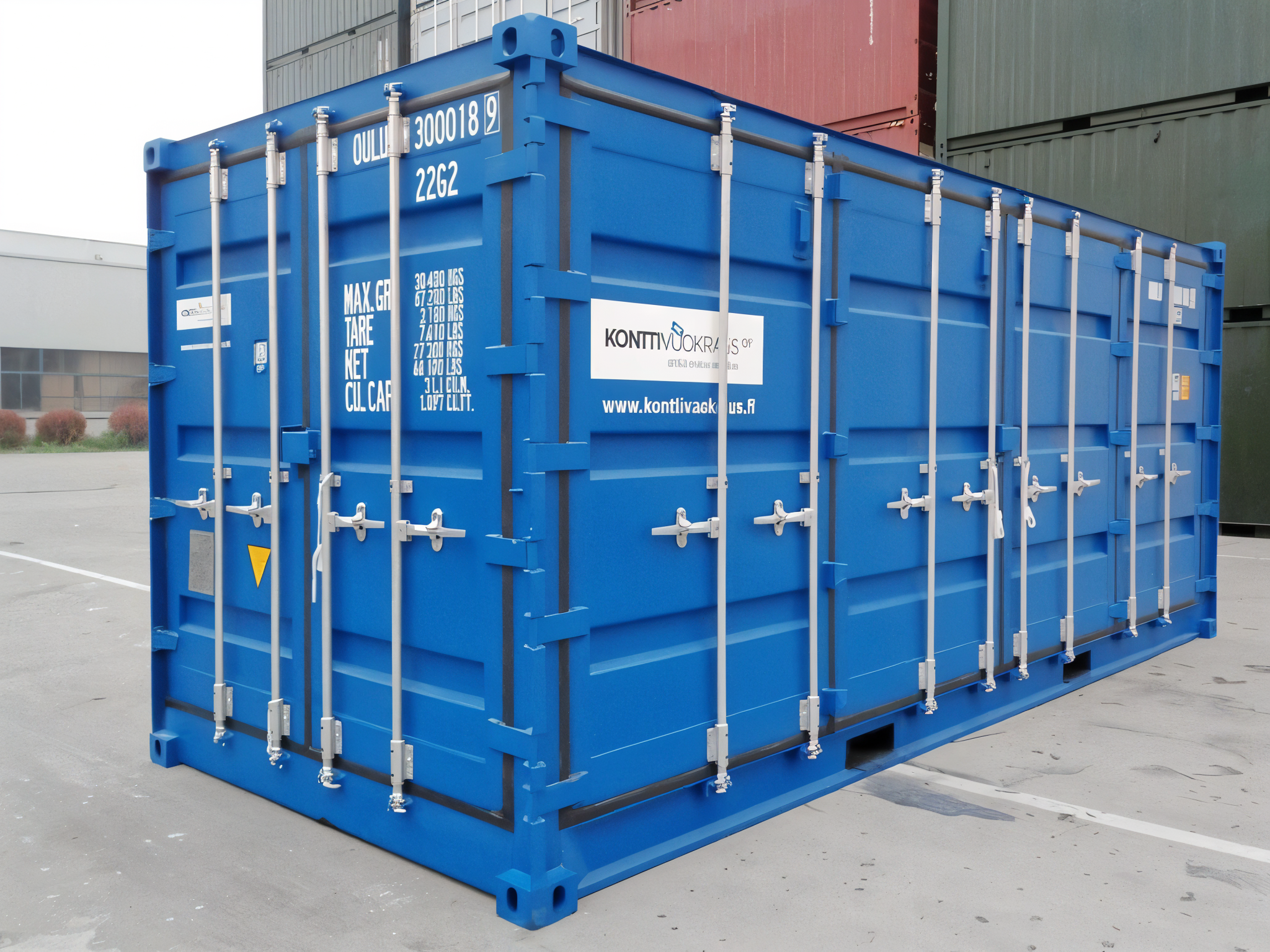
- Open-side container. Full side access means you no longer reach down a long box from one end. Browse open-side containers, including the 20ft open-side full side access container. A wide side opening is a bigger area to secure and seal.
Frequently asked questions
Which shipping container door do you open first?
The right-hand door, as you face the container. It overlaps the left door, so the left will not release until the right is open. Close in reverse, left door first.
Why won't my shipping container doors open?
Usually the container is out of level, the cams and hinges are dry or rusted, a gasket is catching, or the handles are not fully out of the retainers. Check level and the center gap first.
What should I use to lubricate container doors?
Grease on the cams, keepers, and hinge pins, and a light spray on the bar guides. Grease lasts longer but holds dust. Keep oil off the gasket.
Is a man door better than standard container doors?
It depends on how often you go in. A man door gives you daily access without swinging the cargo doors, while standard doors give the full opening for loading.
Tell us what the container is for and the site conditions, and we reply within 1 business day with a free, itemized quote and no hidden fees, so what we quote is what you pay. Every unit is inspected and graded before delivery.