Shipping Container Security: How to Protect One from Theft
A bare padlock loses to a lockbox, a puck lock, and a crossbar at the doors. Here is the full breakdown of layering container security.
 EditorsEditors6 min read
On this page
- Securing a shipping container against theft
- The weak point is the door and the padlock
- A lockbox is the single most effective upgrade
- High-security puck and disc locks explained
- Crossbar and slide-bolt locks add a layer
- How you site the container matters too
- A man door helps with frequent access
- Alarms and cameras belong as add-ons
- Weighing security against easy access
- Common questions
- Get a free quote
Securing a shipping container against theft
Because a shipping container is a solid steel box, the walls and roof are almost never where a break-in happens. The doors are the weak point, and more specifically, whatever lock is holding them shut. Nearly every break-in goes after the locking hardware rather than the steel structure itself, and that is actually useful, since it means a unit can be made much harder to crack by upgrading a single, focused spot. This guide starts at that weak point and works outward, covering the lock hardware, where you site the container, and the extras that finish off a setup.
The weak point is the door and the padlock
A standard container closes using four vertical locking bars along with a pair of lock handles, and most people rely on a single padlock run through the handle hasps to hold it all shut. The problem is that an exposed padlock is by far the easiest target anywhere on the box, since bolt cutters, a grinder, or a pry bar can get at the shackle within seconds simply because it is sitting out in the open. So the real goal of container security is not a bigger padlock, it is getting that padlock out of reach and adding backups that do not rely on it at all. Everything that follows works toward exactly that.
A lockbox is the single most effective upgrade
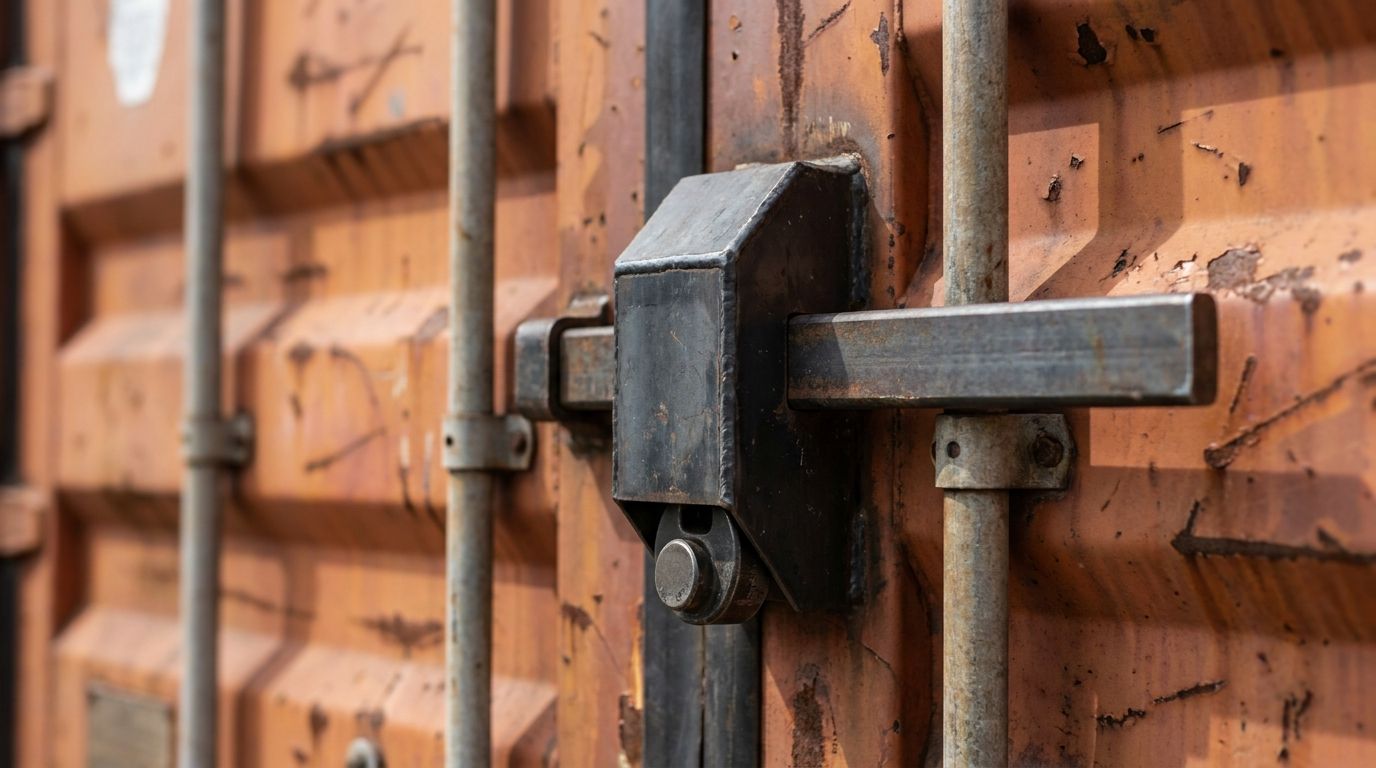
A lockbox is a welded steel shroud fitted over the right-hand door handle that encloses the padlock so that only the keyhole stays reachable. Once a lockbox is fitted, bolt cutters and grinders have nowhere to get an angle on the shackle, because it is hidden entirely inside the steel housing. Dollar for dollar, this is the single most effective security upgrade available for a container, and plenty of units already ship with one fitted. If you are buying a sound used box for storage, such as this 30ft used container listing, check whether a lockbox comes included, or ask for one to be added.
High-security puck and disc locks explained
Whatever lock sits inside the lockbox should be a puck lock, also called a disc lock, rather than an ordinary padlock. A puck lock is a round, hardened steel disc that leaves no exposed shackle for bolt cutters to grip onto, which is exactly why it works so well paired with a lockbox: between the two, almost nothing is left to attack. A similar hidden-shackle hasp lock does the same job on a man door. Look specifically for a hardened or boron steel body, because a cheap pot-metal lock undermines the whole point regardless of how good the surrounding lockbox is.
Crossbar and slide-bolt locks add a layer
A crossbar lock, sometimes called a slide-bolt or a container lock, clamps across both door handles and locks itself in the center, keeping the doors shut even if someone manages to beat the padlock. That makes it a second, fully independent layer, meaning a thief now has two separate mechanisms to defeat instead of just one. The cost is convenience, since fitting and removing a crossbar adds extra seconds every time the doors get opened, but for a unit you only visit occasionally, it is a genuinely strong addition.
How you site the container matters too
Where the box sits counts for just as much as whatever it is locked with:
- Point the doors at a wall or another container. Position the unit so its cargo doors face a wall, a fence, or a second container, leaving only a foot or two of gap between them. If the doors physically cannot swing open, the locks become unreachable, and that costs nothing while still working well.
- Put lighting on it. A container sitting under a light is a deterrent on its own, since darkness is what thieves prefer working in. Motion-activated lighting along the approach costs little and draws attention to anybody standing at the doors.
- Keep it out in the open. It sounds backward, but a container that sits in plain sight of a road, a building, or cameras is frequently safer than one hidden away where somebody could work on it without being seen.
- Think about the approach. Set the box up so a vehicle cannot simply back straight up to the doors and haul contents away in a hurry.
A man door helps with frequent access
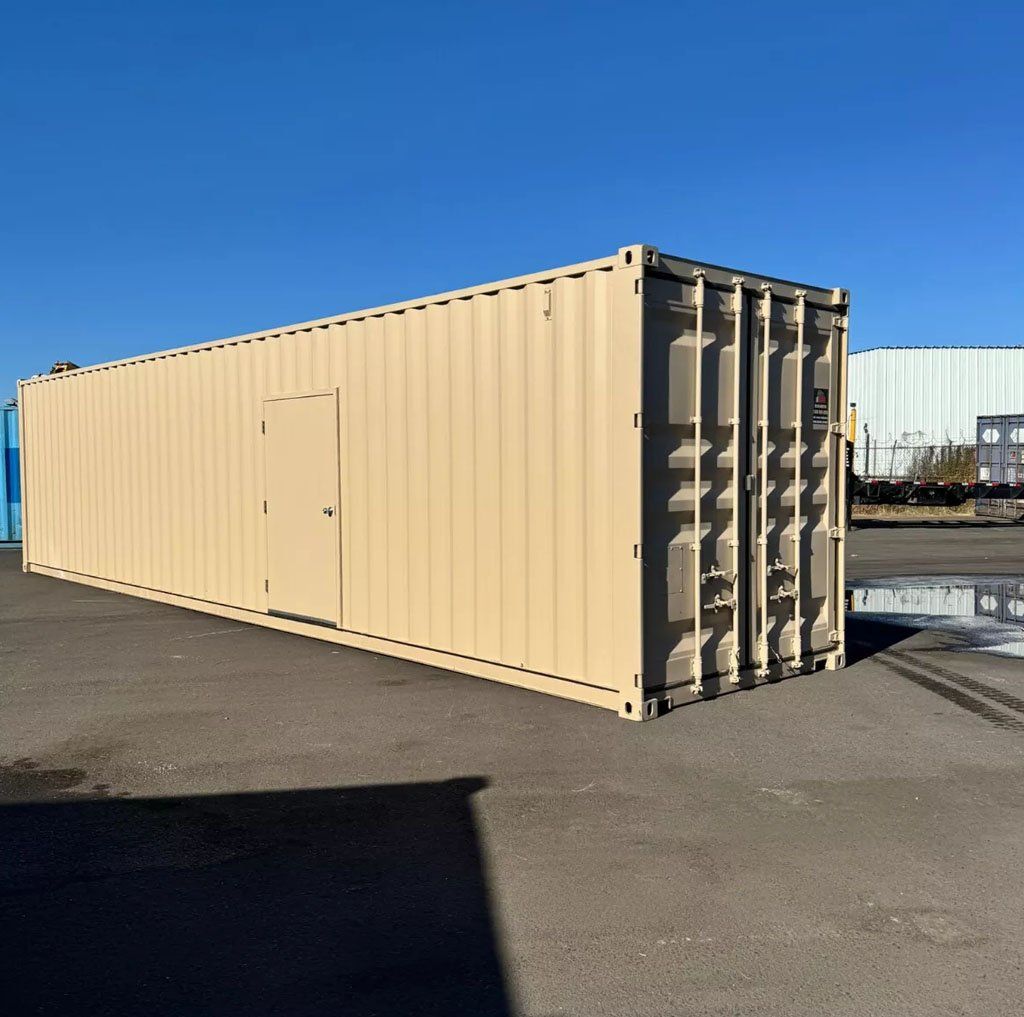
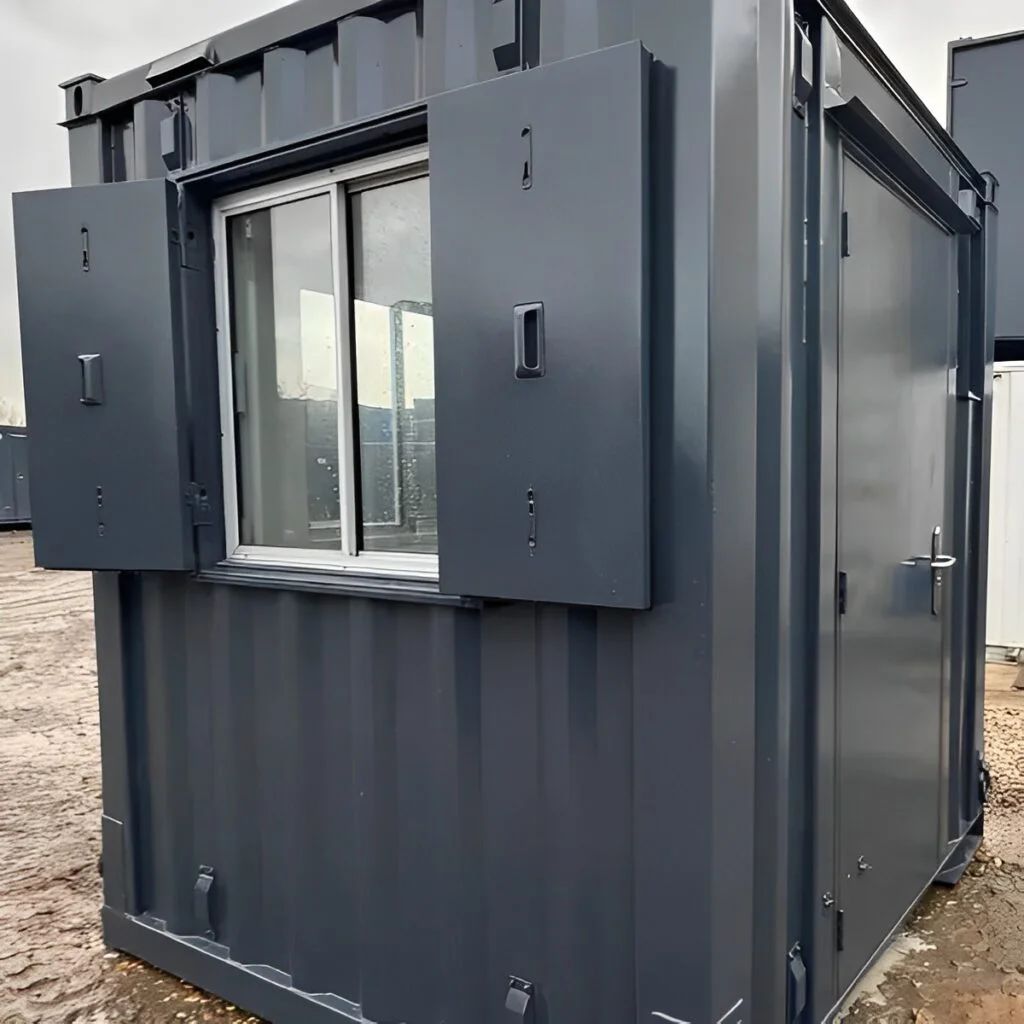
For anyone going in and out of the container every day, taking a crossbar off and unlocking a lockbox over and over turns into a chore, and chores are the first thing people start skipping. A tidier solution is a personnel, or man, door fitted with a solid deadbolt for everyday use, while the main cargo doors stay locked down hard and only open when the full width is actually needed. A unit like this 40ft container with a man door is already built for that exact pattern. A small office-style unit such as a 7ft x 7ft anti-vandal office container (anti-vandal meaning reinforced doors and steel-shuttered windows) applies that same thinking to a space that is manned and used often.
Alarms and cameras belong as add-ons
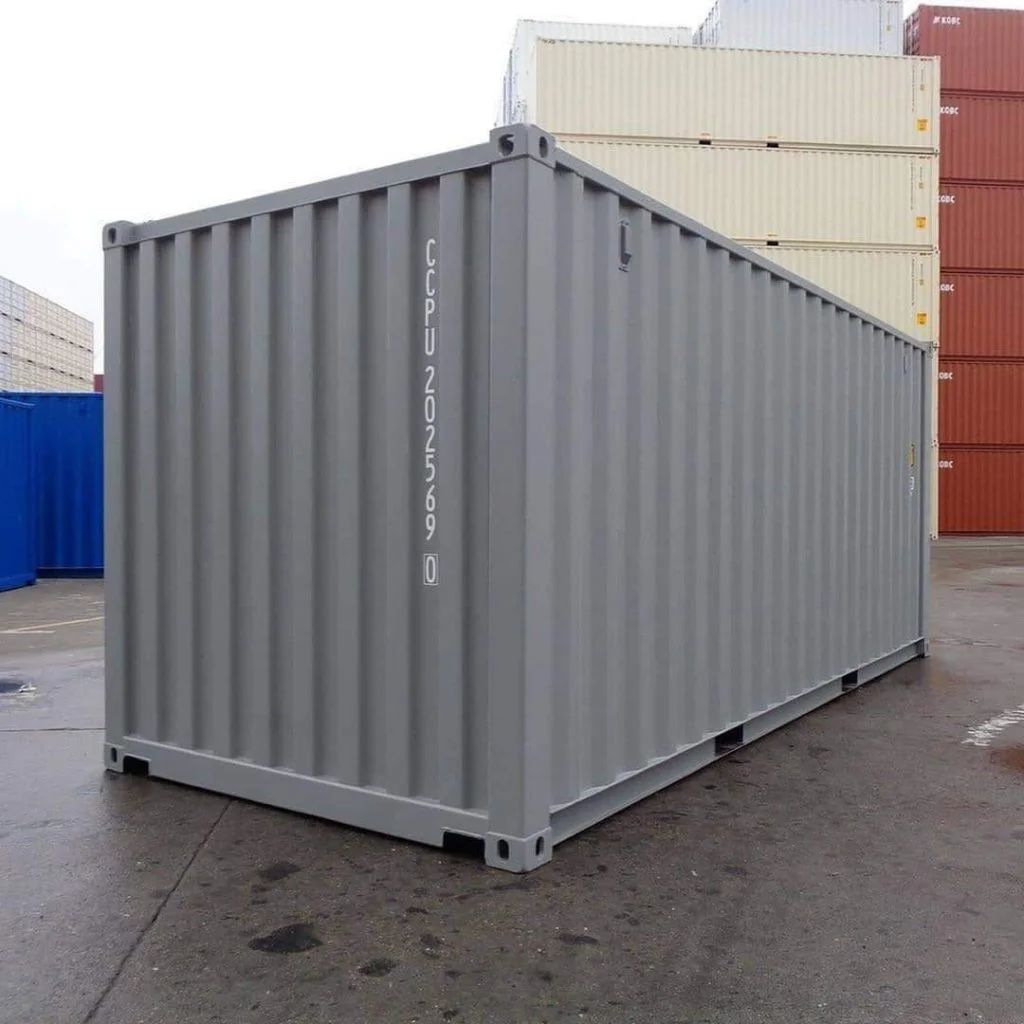
Hardware is what stops entry in the first place; alarms and cameras catch whatever gets past it and discourage people from trying at all. A motion sensor or door-contact alarm, a camera in plain view, or a cellular GPS tracker tucked among high-value contents all add something physical locks cannot provide on their own: notice, plus evidence afterward. Treat these as genuine additions rather than substitutes, since a camera will not stop a grinder, though it does raise the cost of attempting a break-in and helps after the fact. For storing anything moisture-sensitive, keep in mind that a high cube, standing 9 feet 6 inches tall, a foot taller than standard, like this 20ft high cube unit leaves more headroom for shelving and organizing whatever you are protecting.
Weighing security against easy access
Each additional layer makes the box a bit less convenient to get into. Combine a lockbox, a crossbar, a man-door deadbolt, and an alarm and you get something very hard to beat, but also something that adds extra steps every single visit. A good setup weighs what is stored inside against how often access is actually needed: lock a long-term store that is rarely opened down as hard as possible, and rely on a man door with lighter daily hardware for a unit in everyday use. Nothing achieves maximum security and maximum convenience at once, so pick the point on that scale that suits what you are storing.
Common questions
Which lock is most effective on a shipping container?
The strongest combination for the cargo doors is a puck lock, or disc lock, fitted inside a welded lockbox. The lockbox keeps the shackle hidden from bolt cutters and grinders, while the puck lock itself has no exposed shackle to begin with. Adding a crossbar lock on top of that provides a second, independent layer of protection.
Is it possible to cut through a container wall?
With the right tools, yes, but doing so is loud, slow, and obvious to anyone nearby, which makes it rare in practice. The doors and their locks present a far softer target, which is exactly why securing the locking hardware and pointing the doors at a wall does most of the heavy lifting.
What setup works for a container accessed daily?
Fit a personnel, or man, door with a solid deadbolt and use that for daily entry, while the cargo doors stay locked down behind a lockbox and crossbar that only get opened when the full width is needed. That keeps the main doors under strong security without forcing you to remove heavy hardware every single day.
Get a free quote
Let us know what you plan to store and how often the doors will open, and we can recommend hardware to match, a lockbox, a man door, reinforced openings, whatever fits, before sending a free, itemized quote with no hidden fees, so the figure we quote stays the figure you pay. Every unit gets inspected and graded before it ships out, and expect a reply from us within 1 business day. Include your use case and site notes and the whole package, unit plus locking setup, gets matched to it.