

Residential storage
Storage containers delivered right to your home and yard
A lockable steel container on your own lot — for renovations, decluttering, and seasonal gear close at hand.
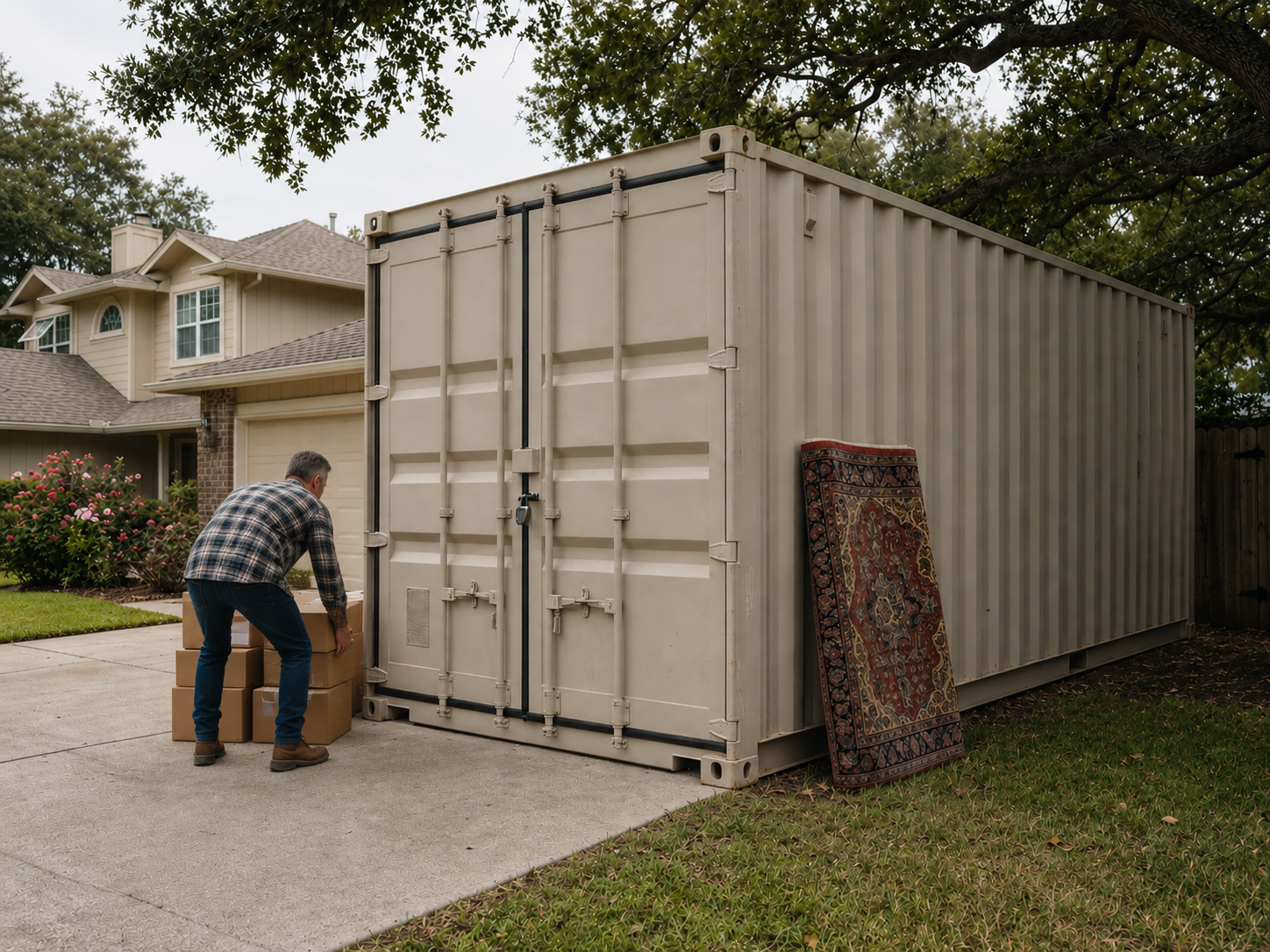
Built for the job
Storage right where you live
Delivery sets the container down at ground level right on your lot, so you load straight from the garage or yard. The tradeoff is space: you still need a clear spot and a path in for the truck.
Welded steel, not a tarp
A welded steel shell keeps weather and casual entry out far better than a shed or a pod. It won't climate-control itself, though — humid climates may need vents or a desiccant.
Size it to your lot
A 20ft unit fits most driveways; a 40ft holds a full household but needs a longer, flatter spot. The bigger the box, the more clearance the truck needs to place it.
Yours for the length of the project
Buying beats a running rental bill for multi-month renovations or year-round seasonal storage. In exchange, siting, ground prep, and eventual resale or removal are on you.
No slab to pour first
The container sets straight onto level, compacted ground, so there's no slab to pour first. A soft or sloped lot still needs leveling, and timber pads under the corners help.
One all-in quote
The quote covers the unit and delivery to your address, and what we quote is what you pay — no fees added later. Price still depends on size, condition, and delivery distance.
A storage container puts a lockable, weatherproof steel box right on your own lot — useful for a kitchen remodel that needs the cabinets out of the way, a garage you're finally clearing out, or seasonal gear with nowhere else to live. Rather than renting space off-site and driving back and forth, you load and unload at home, whenever it suits you.
The trouble with home storage
Home storage tends to run out right when you need it most. A renovation means furniture and appliances need somewhere to sit for weeks. A decluttering push stalls once the garage, attic, and spare closet are already full. Seasonal items (patio furniture, holiday decorations, a motorcycle) take up space you'd rather use for something else. Off-site self-storage means a monthly bill and a drive every time you need something back, and a backyard shed is small, not especially secure, and rarely watertight.
How a storage container helps
A shipping container starts life as precision-built steel meant to cross oceans, which is exactly why it holds up sitting in a driveway or side yard for months on end. Wind and watertight (WWT) is the grade that matters here: it keeps rain and weather out, and it locks. A 20ft unit, roughly 20ft long by 8ft wide, holds what you'd expect to find in a two-to-three-bedroom home. Step up to a 40ft high cube (a container a foot taller than standard, for extra vertical room) and you get more capacity, including room for tall or bulky items. Since it never leaves your property, whatever you're storing stays close to your door instead of across town.
Siting a container on your lot
Whether a container fits your lot comes down to two things: where it will sit, and how you get it there. We deliver by tilt-bed truck (also known as a roll-off), which tilts its bed and slides the container off at ground level without a crane or forklift. That approach still needs clearance — a straight run, free of obstacles, roughly as long as the container plus the truck itself, so there's room to position and unload. When you request a quote, flag anything in the way: low branches, gates, soft lawns, overhead lines, that kind of thing.
The container sets down on level, compacted ground, and no foundation is required. A sloped or soft lot still benefits from leveling and timber pads under the four corners to keep the doors square, and there's no slab to pour beforehand.
One thing to flag that has nothing to do with construction: some neighborhoods cap how long a container can stay visible, and some cities require a placement permit before you set one down. These rules differ by city and by HOA, so check your local code and any HOA covenant ahead of delivery day. Consider this general guidance rather than legal advice; the rules where you live are what actually govern.
Containers we'd recommend for the home
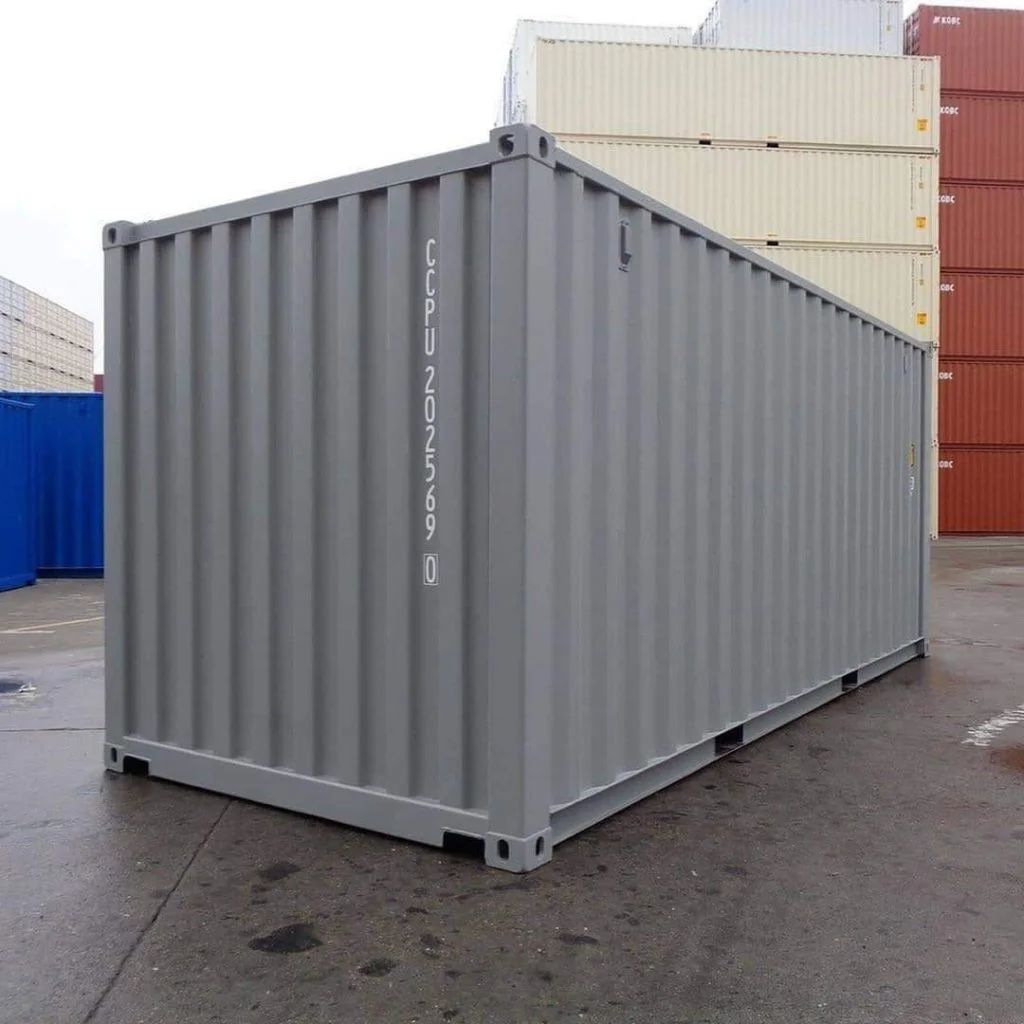
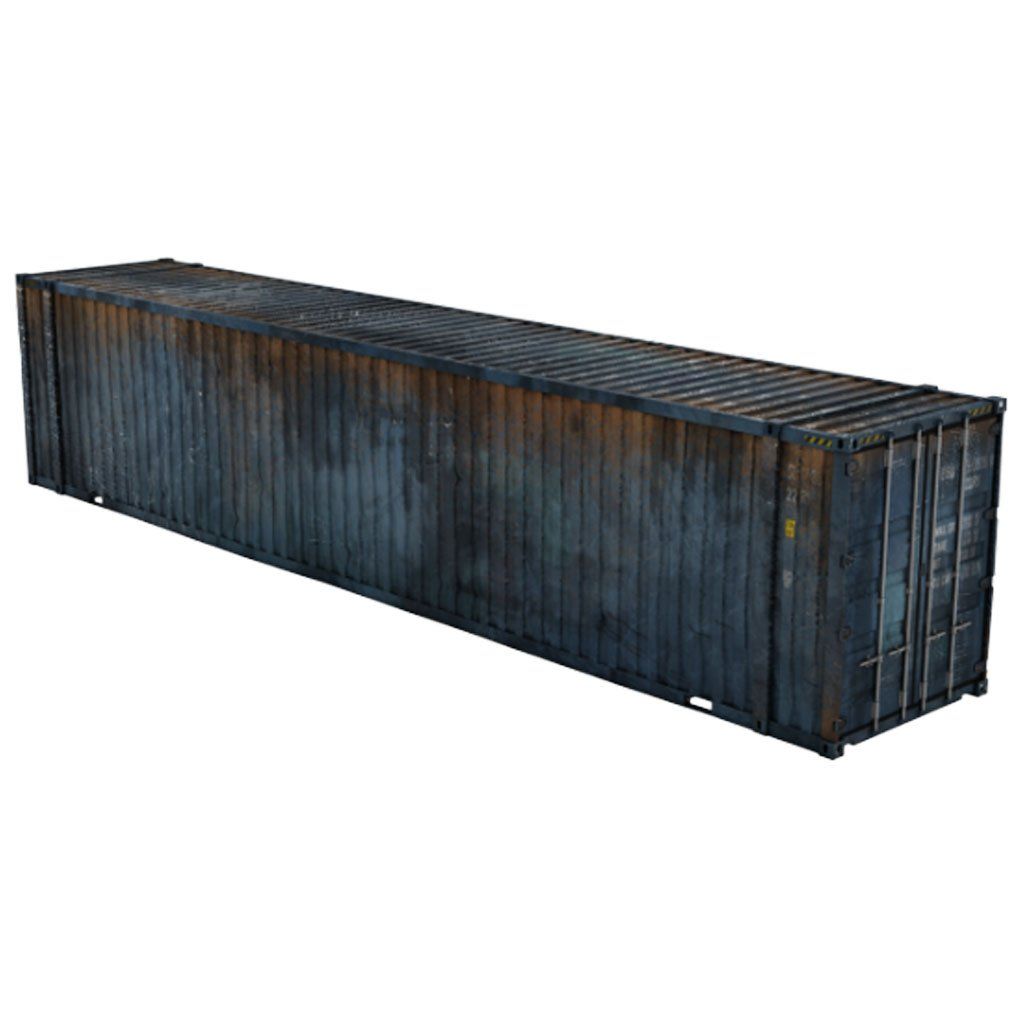
If you want a unit you wouldn't mind parking beside the house, theone-trip 20ft containerfits the bill — one-trip condition (shipped once from the factory overseas, then sold, about as close to new as it gets) in standard dry, the general-purpose steel box for dry cargo, with barely any wear on it. If you need room for an entire household or for long items, look at thehigh cube 40ft containeradds the most volume along with an extra foot of interior height. For budget-friendly used options, browse the fullstandard dry container rangeruns through the common sizes and grades available. If you're unsure which size matches what you own, ourshipping container size guidewalks through the dimensions side by side.
Common questions
How large a container do I need for storage at home?
Think of a 20ft container as holding roughly a two-to-three-bedroom home's worth of belongings, and it fits into most driveways without trouble. Moving up to a 40ft high cube roughly doubles your floor space and adds extra height for tall items, though it demands a longer, flatter spot and more room for the truck to maneuver.
Will it fit in my driveway, and will it look okay?
Most standard driveways have room for a 20ft unit along with the space the truck needs to position it. Since it's a plain steel box, homeowners typically place it off to the side of the house, and a one-trip unit will have the cleanest paint if appearance is a priority for you.
Is a permit or an HOA sign-off needed before delivery?
That depends entirely on where you live. Some cities and HOAs put a cap on how long a container can remain, or ask for a placement permit before delivery. Look into your local code and any HOA rules ahead of time; this counts as general guidance, not legal advice.
How does the container get delivered to my home?
Delivery comes by tilt-bed truck — the container slides off and settles directly on the ground, no crane or forklift involved. Once your address and site access are confirmed, a 20ft one-trip unit typically arrives within 5–7 business days.
Get a free quote
Send us your address, the size you need, and a quick note on driveway access, and we'll put together a price for the container plus delivery: the number you're quoted is the number you pay, nothing added afterward. Every unit gets inspected and graded before it goes out, and you'll hear back from us within 1 business day. Our container delivery team handles the tilt-bed drop-off, while our storage solutions consulting can help size the right unit for what you're storing. Get a free quote to get started.
Containers suited for residential storage
Related services
- Container DeliveryDoor-to-door delivery on a tilt-bed truck
- Storage Solutions ConsultingAdvice on sizing your on-site storage
Related guides


Put containers to work in residential storage
Tell us about your project and we will send a free, no-obligation quote.