How Shipping Containers Hold Up in Hurricanes and High Wind
Will a shipping container survive a hurricane? There's no genuine wind rating for a box on the ground. Here's what actually keeps one in place, and what fails.
 EditorsEditors8 min read
On this page
- The wind-rating myth, and the real answer
- 3 mechanisms wind uses on a container
- Weight, sail area, and which way it faces
- Anchoring has to reach the corner castings
- Water is just as much a risk
- Surge and flooding: why a sealed box floats
- A shipping container is not a storm shelter
- Before the storm: your checklist
- What to inspect after the storm
- Insurance, permits, and when you need an engineer
The wind-rating myth, and the real answer
Will a shipping container hold up in a hurricane? Anchor a loaded unit to a solid base and it becomes one of the sturdier objects on the lot. Leave an empty one unsecured and it behaves like an oversized steel sail instead. What you end up with comes down to weight, anchoring, and where you put it.
Container listings often quote a wind rating as though it were a fixed number: 1 figure for a unit unsecured, a higher one once it is anchored. Treat any mph figure attached to a container as marketing language, not an engineering result. No ISO wind-speed rating exists for a box sitting on the ground. The ISO standards test stacking, racking, lifting, and weathertightness in transit, not wind load once a unit is parked.
Inside the United States, the numbers that actually govern are the ASCE 7 design wind speeds adopted by your local code, and those shift with location, exposure, and structure type. A real figure is site specific, and it comes from an engineer, not a listing.
3 mechanisms wind uses on a container
Wind moves a box through 3 distinct mechanisms, and each one has its own countermeasure:
- It slides. The unit shifts across its pad, and wind only has to overcome the friction beneath it, which falls fast once the ground turns to mud.
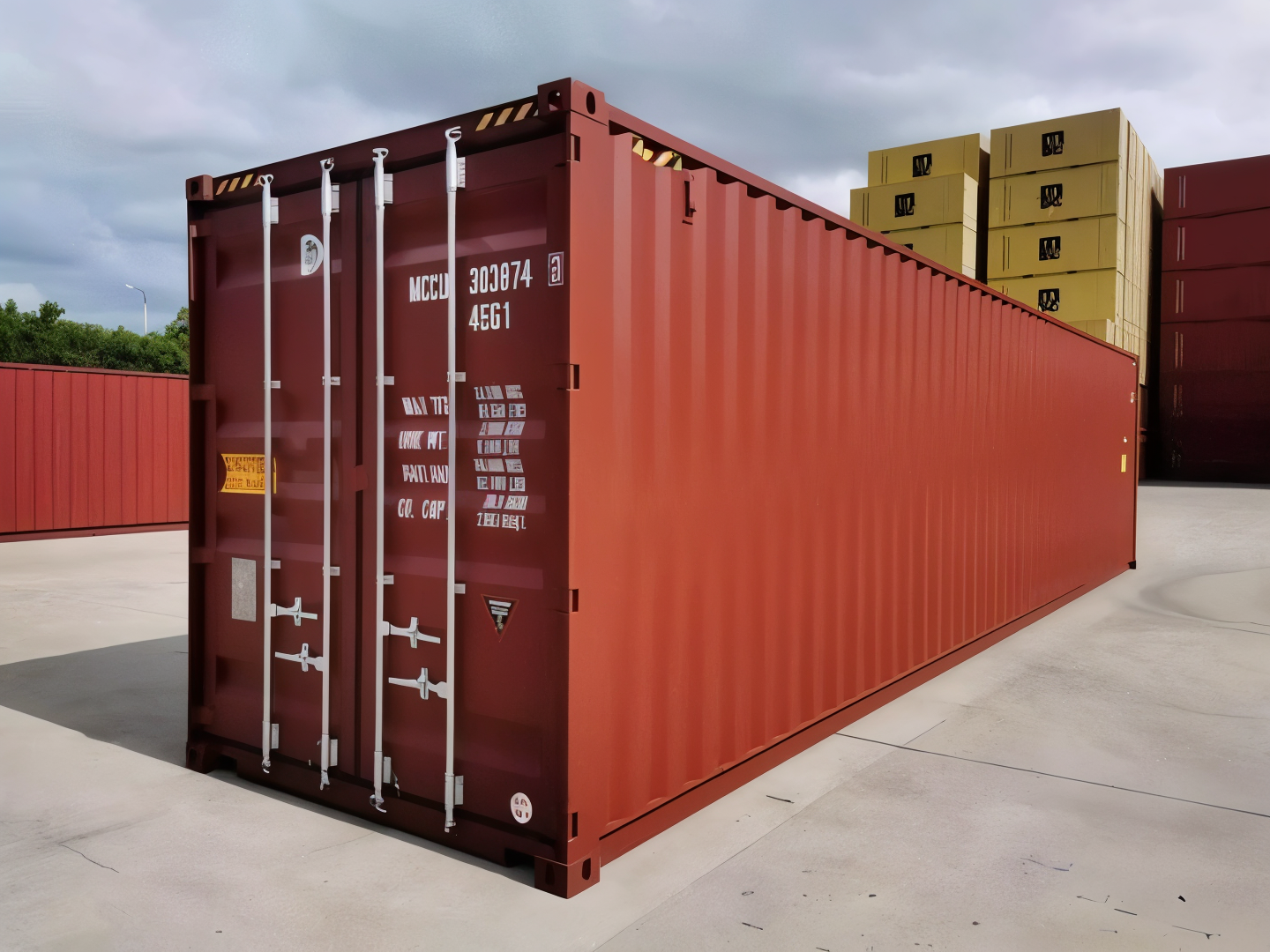
- It tips or rolls. Pressure against the long side wall pries the box over its downwind bottom rail, and because a 40ft unit presents about twice the side area of a 20ft, it is the more exposed of the two. Hold-downs at all 4 corners push back against this.
- It lifts. Air moving over the roof and leeward wall creates negative pressure that can lift a light unit clean off its base, and it works against the largest surface the box presents.
The box can sit perfectly still and still cause 2 other kinds of loss: rain forced sideways through tired gaskets and vents, and debris carried on the wind.
Weight, sail area, and which way it faces
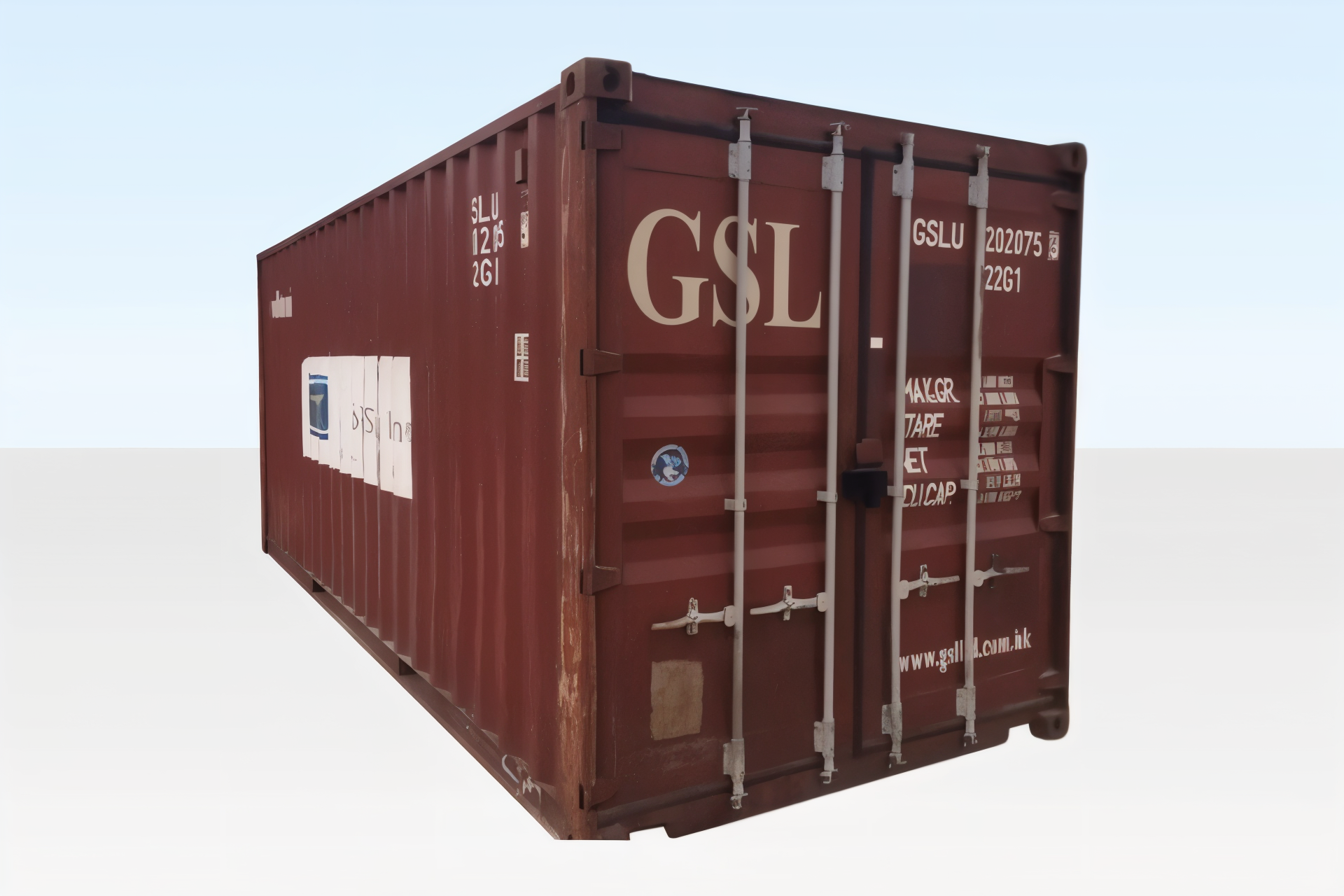
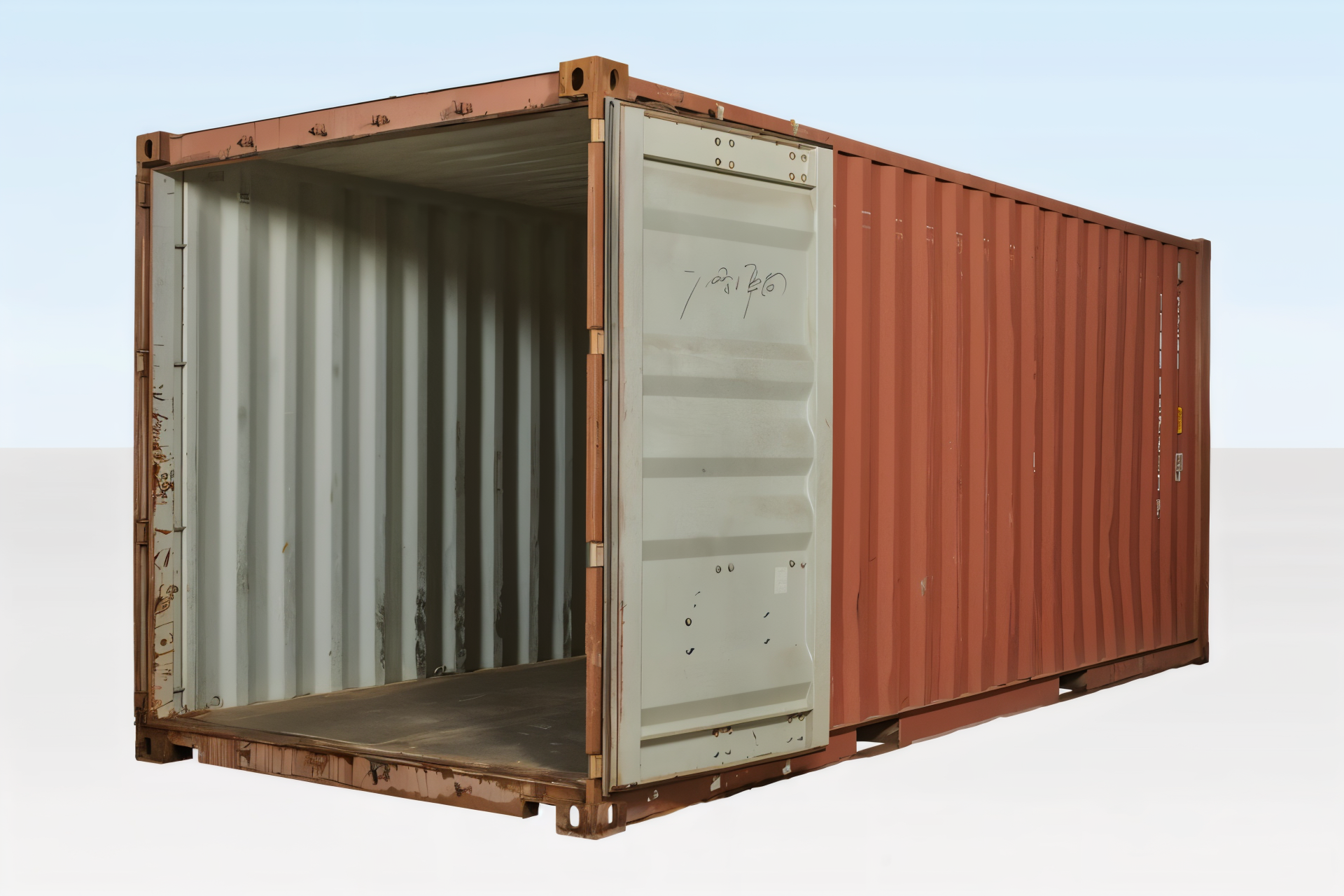
It comes down to weight versus sail area. A 40ft box presents a very large broadside, and an empty one is light relative to its size, which makes the empty box the greater risk. A used 20ft cargo-worthy container. CW stands for certified for ocean transport, and it stays simpler to keep filled and staked down than a cargo-worthy 40ft box.
- Load it, and keep it low. Stacking dense contents low adds resisting weight and lowers the center of gravity. Check the payload and floor limits before you load it.
- Turn the long axis to face the storm wind. Doing so puts the narrow end into the wind and cuts both pressure area and lever arm at once.
- Face the doors away from the wind. Doors left facing the wind can be caught, levered, and torn open.
That protection costs mobility, since a loaded box is harder to shift and needs a base that will not settle under it. Read how to move a container before you commit to a base.
Anchoring has to reach the corner castings
Load in a container travels through its 8 corner castings, the cast steel blocks at each corner that a crane hooks onto, and the corner posts that connect them. Whatever you attach has to tie into that steel.
- Screw or helical ground anchors set beside each corner and tied back to the casting.
- Concrete deadmen placed at the corners, or a slab with anchor plates cast in beneath the castings.
- Steel brackets or plates welded or bolted to the castings, then fixed down to the anchor beneath.
- Straps run over the box to ground anchors on both sides, tensioned until the box is clamped down rather than merely tethered.
- Twistlocks or bridge fittings linking stacked or side-by-side units, so 2 boxes act as a single mass against the wind.
What you should not do matters more than the list of what you can. Do not strap over the roof panel, since it is thin sheet, not a structural member, and do not fasten to the side corrugation, which is only skin. Anchor size, spacing, and depth are governed by soil, exposure, and code, which is why no numbers are given here: a local engineer has to size them for your site. No anchoring setup makes a container hurricane proof. It lowers the risk of sliding, rolling, and uplift; it does not remove that risk.
Water is just as much a risk
Losing everything inside does not require the box to move at all. When wind holds steady, rain gets pushed sideways, finding its way through door gaskets, vents, and any cut opening. A used unit with a WWT grade (wind and watertight: no daylight through the seams, doors that seal) gets checked specifically for this, though gaskets do wear with age.
Ahead of the season, close the doors on a strip of paper at several points around the frame and check how easily it slides free. A flattened gasket costs little to fix now and far more once it fails later. Our guide to airflow and condensation covers that side of things.
Surge and flooding: why a sealed box floats
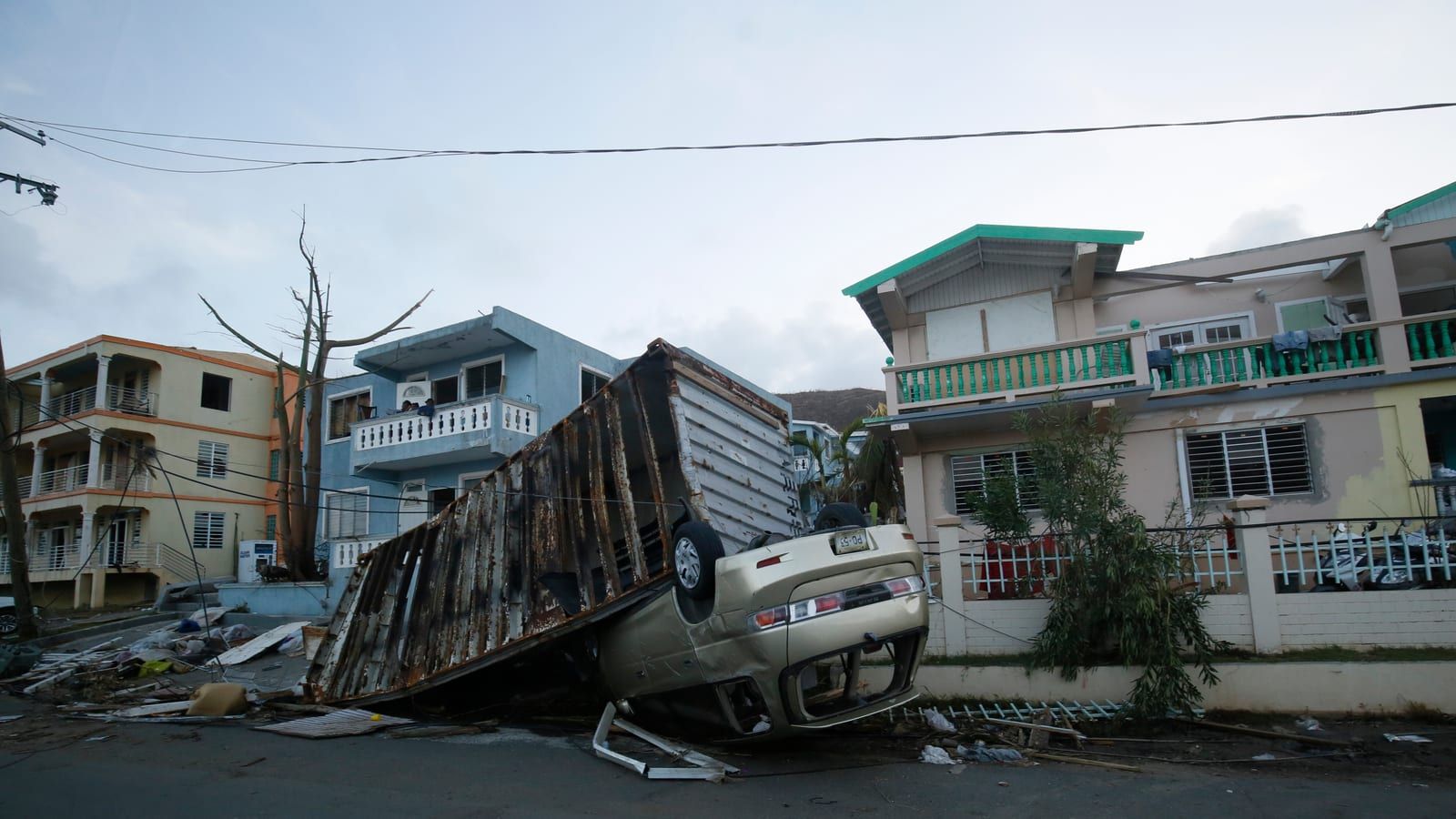
A sealed steel box that is full of air has buoyancy. During surge or deep flooding, an empty container can lift and float, and once it is floating it becomes a battering ram. Even a container too heavy to float outright can still be pushed off its pad.
- In a surge or flood zone, do not store anything you cannot afford to lose.
- Keep contents up on pallets, since standing water inside the box is common even when it never moves.
- Drainage and elevation matter more than how thick the steel is.
- After flooding, check the floor, because thick plywood draws water in at cut edges and fastener holes.
The base itself deserves its own explanation; see our guides to foundations for a shipping container as well as how to build a lasting gravel pad.
A shipping container is not a storm shelter
Never shelter inside a shipping container during a hurricane or a tornado, and do not let anyone else do it either. Rated shelters and safe rooms meet FEMA and ICC criteria: engineered, tested against debris impact, anchored to a foundation built to carry that load. A container meets none of those standards. It has only 1 set of doors, which debris can block or a racked frame can jam shut, and the whole unit can be moved with people still inside it. Follow evacuation orders.
Where containers do earn their keep is after the storm passes: staging supplies, locked-down equipment storage, and site offices, the same pattern behind containers for disaster and emergency response. A container meant to be occupied is an entirely different, engineered and permitted project.
Before the storm: your checklist
Start working through this roughly 48 hours before landfall, while there is still time.
- Relocate it if that is still realistic: pick the least exposed spot, shelter the long side, point the doors downwind. Once you are inside 24 hours of landfall, skip this step.
- Load the container or ballast it low, since low weight is the cheapest resistance you can buy.
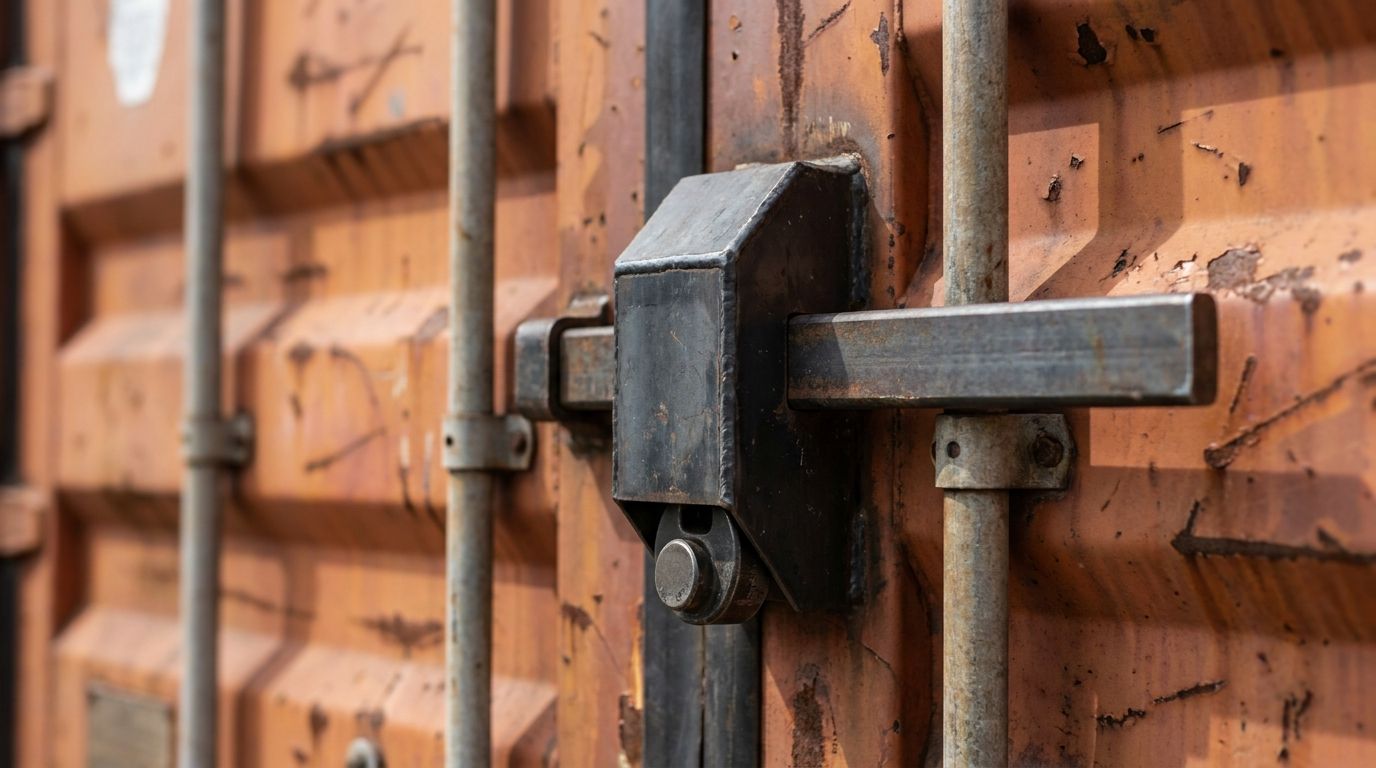
- Get both doors shut and locked, then check the gaskets and cam seals; our guide to securing a container covers the theft side of it.
- Take down or stow anything bolted to the outside that could catch wind: awnings, canopies, ramps, shelving, signage.
- Clear away loose objects nearby, since your own yard is usually where flying debris starts.
- Photograph the unit, the anchors, and what is inside it, because insurance claims run on evidence.
- Halt any work nearby and keep people away from it.
Here is the honest limit: an empty, unanchored box sitting on soft ground the day before landfall has no fast fix available. Get the contents somewhere safer instead.
What to inspect after the storm
Before you move or open a thing, get it all on camera.
- Did it shift? Check the anchors against your marks. The quickest level test is the doors: if they no longer swing and latch the way they used to, the frame has racked or the base has settled. Level it again before you reload it.
- The roof. Look for ponding, standing water collecting in a low dish, and impact dents.
- The gaskets and floor. Look for water inside, plywood gone damp or swollen, and staining at the edges.
- New scrapes. Flying debris strips paint and bare steel rusts quickly, so get it touched up.
Insurance, permits, and when you need an engineer
Whether a container on your property is covered by a homeowners policy depends on the carrier, since coverage often hinges on whether they classify it as a structure, as personal property, or exclude it altogether. Ask before hurricane season starts. Permanent anchoring can also trigger a permit requirement, because bolting a unit to a foundation can reclassify it as a structure. Our guide to permits and zoning for containers has more. None of this is legal, tax, or insurance advice, just a general starting point, and specifics shift from one city, county, or HOA to the next.
A licensed local engineer is worth the call for coastal or high-wind ground, a unit that is occupied or serviced, containers stacked in a pair, or a jurisdiction asking for a wind-load calculation. For a backyard storage container sited inland, low weight, correct orientation, a sound pad, and hold-downs at the castings are the effort that is actually worth making.
Tell us where the container will go, how exposed the site is, and what you will be storing in it, and we will match a unit on size, condition grade, and weathertightness. Every unit gets inspected and graded before delivery, and site access is checked first. A tilt-bed (roll-off) truck sets it down at ground level with no crane or forklift needed, as long as the site has the straight, obstacle-free run the truck requires to position and unload; some heavy placements do need one. Send us your site details for a free, itemized quote with no hidden fees, and we will reply within 1 business day.