

Hospitality & Recreation
Hunting, lake, and off-grid retreats built to lock and leave
A steel container becomes a secure, lockable retreat for months at a time — bare shell or finished, ready unit.
Built for the job
Built for lock-and-leave use
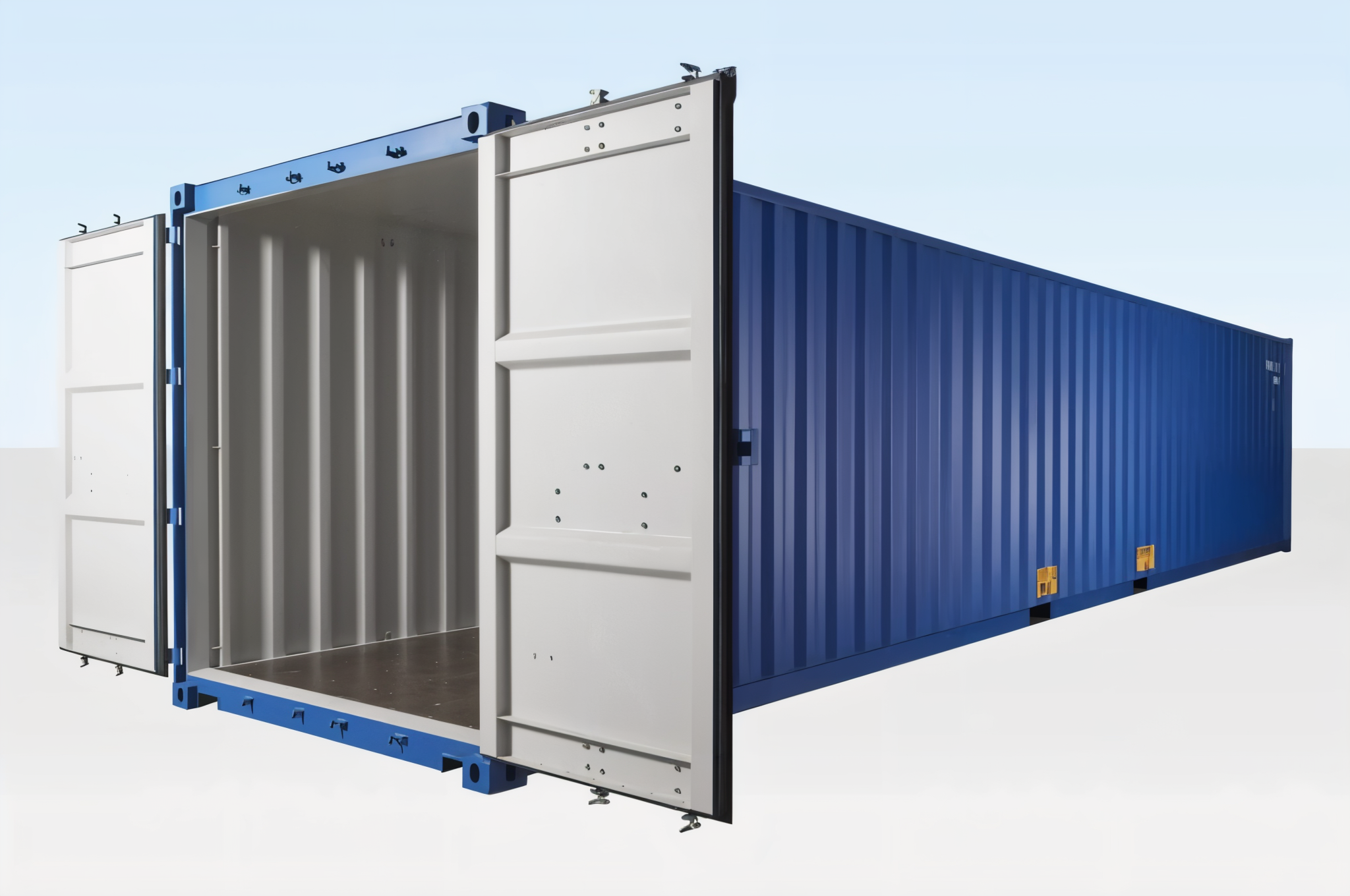
The welded steel shell holds up on land nobody is watching for weeks at a stretch. The tradeoff is width — interior space runs about 7ft 8in, enough for a snug one-room cabin, not a wide layout.
Bare shell or finished unit
Two options: an unfinished box you build out, or a unit shipped insulated with a minisplit installed. The bare version costs less but takes your time; paying more gets it ready right away.
Grid-tied or fully off-grid
Power comes from solar panels and a battery bank matched to your load, or from the grid if it reaches your site. Off-grid means independence but limits how much runs at once, so size for actual use.
Delivered to raw land
On open ground, the truck lowers the box at ground level with a tilt-bed setup. Wooded or tight lots often call for a crane instead, an added cost we flag by checking access first.
Identical units for repeat builds
Operators running glamping sites or short-term rentals like how stackable, durable boxes match identically each time. Rental permitting differs county to county, so check yours before committing.
Insulation comes before anything else
Heat a steel box only now and then and it sweats, which is why insulation and ventilation need planning at the start, not added later. Skip it and rust sets into the shell while bedding stays damp.
A retreat you can lock and walk away from
Whether you own hunting or lake ground, a remote parcel, or you run a glamping or short-term-rental operation, the need is the same: a small, secure, weatherproof building you can lock and leave on land with no utility hookup and nobody keeping watch. A shipping container handles that better than a stick-built shack — the welded steel shell shrugs off weather and animals through an entire season unattended. This page covers turning that shell into a recreational or off-grid retreat, and where the real limits sit.
Two ways in: shell or finished
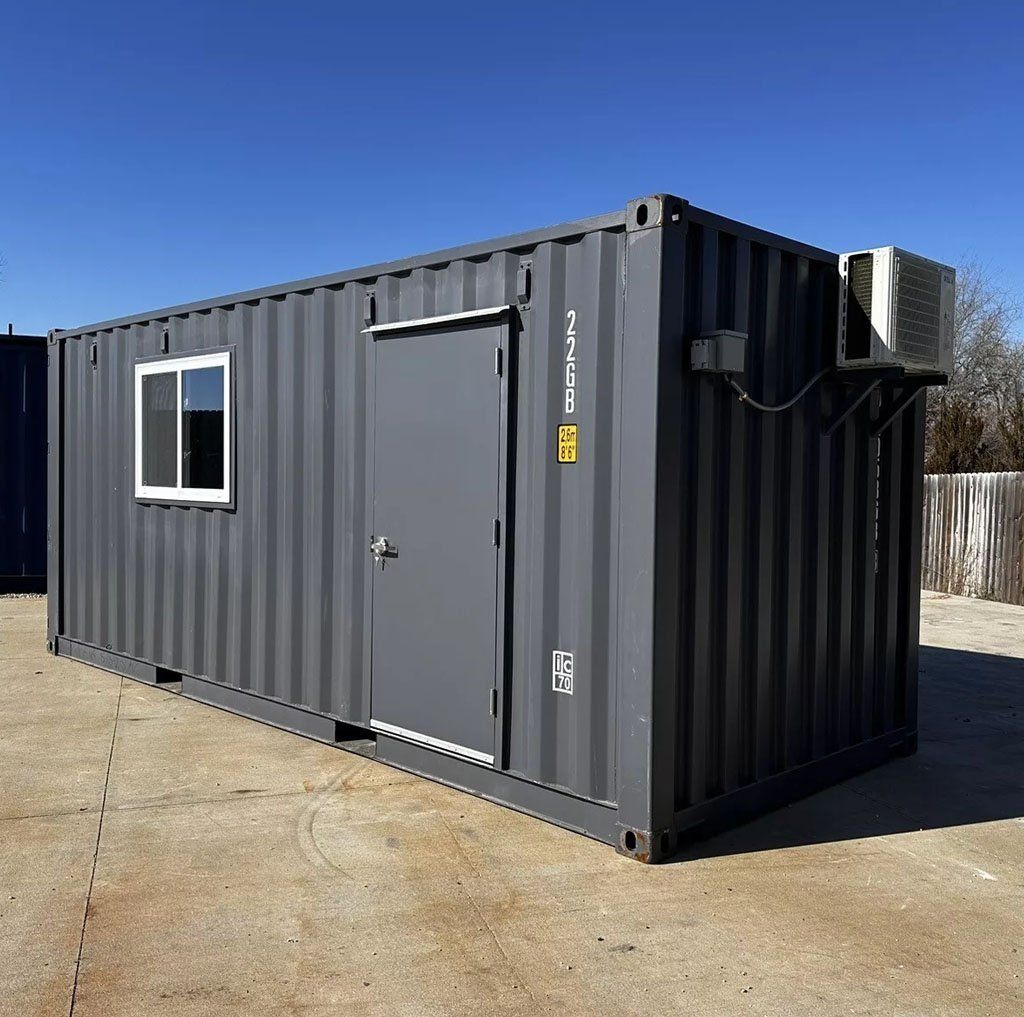
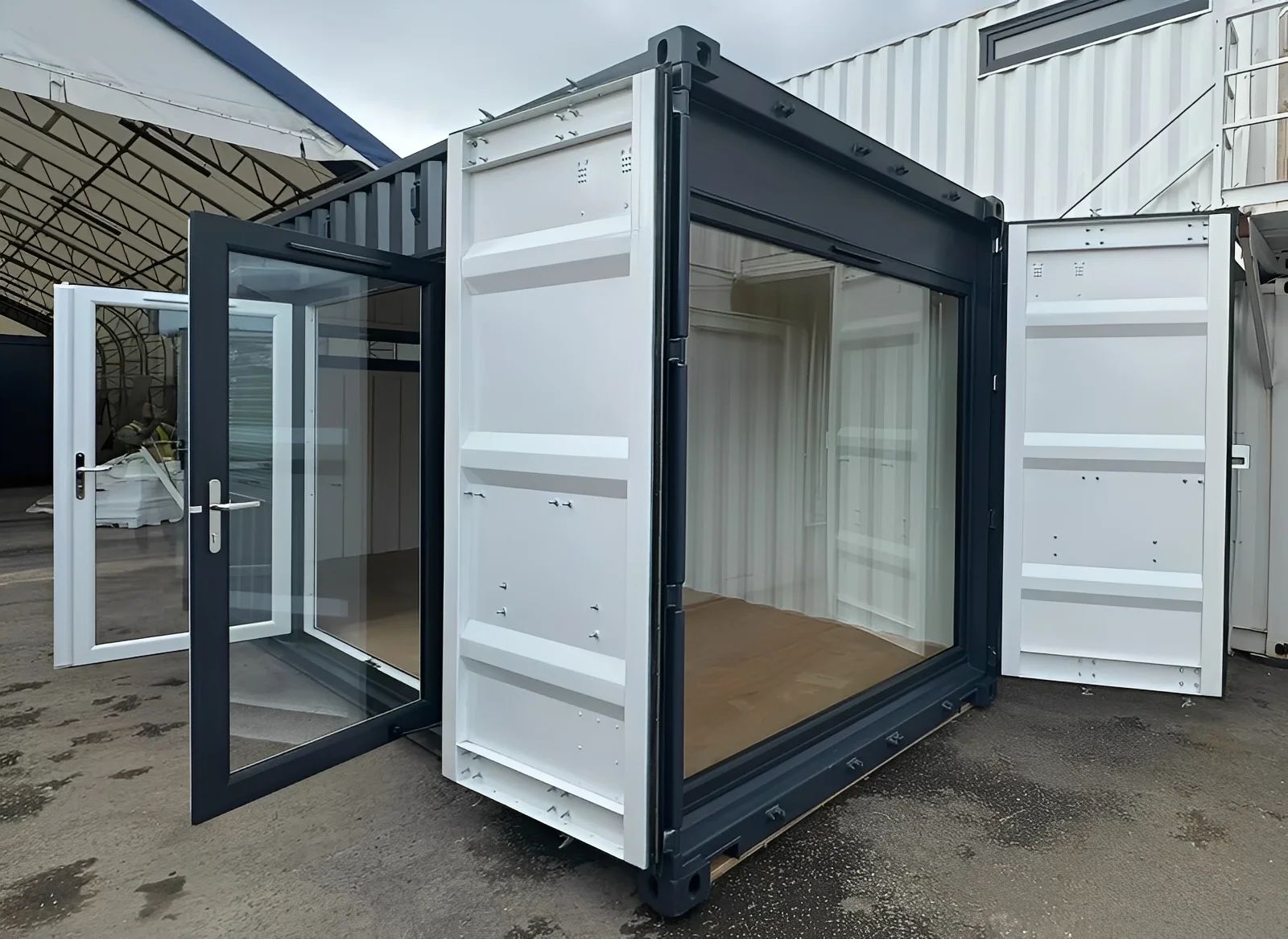
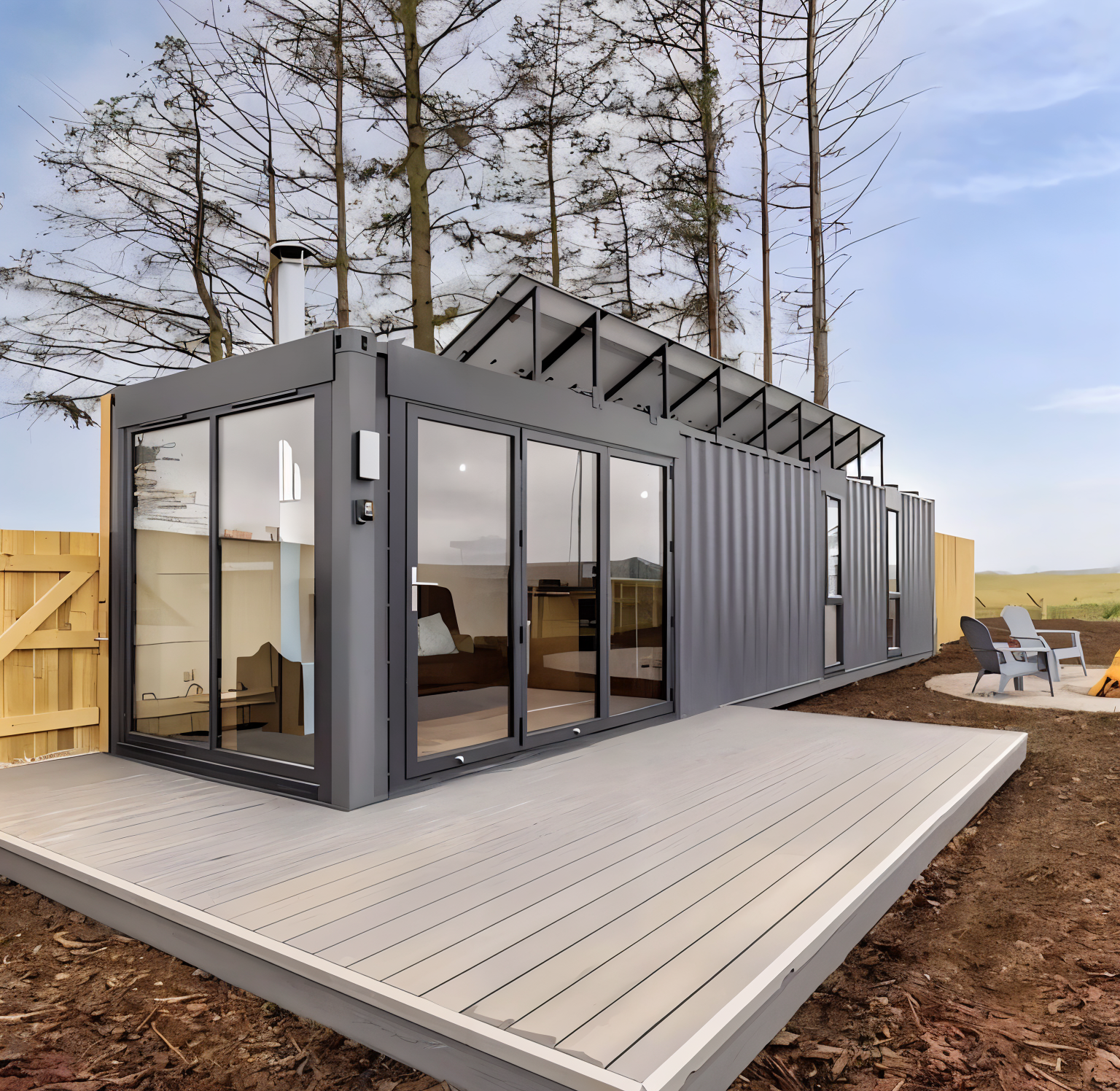
Two paths get you there. The first is a bare or lightly modified shell you finish yourself — cheaper to buy, but the insulation, wiring, and interior become your project and your time. A custom 20ft container conversion arrives with window and door cutouts already in place to build from. The second path is a finished unit that shows up insulated and climate-ready: a 20ft shiplap container office in slate gray with a minisplit is finished and cooled from the day it lands, and a 1BHK container house with an attached deck arrives furnished, ready as a turnkey lake or rental cabin. Finished units cost more, but they also save you an entire build season.
Power: off-grid or grid-tied
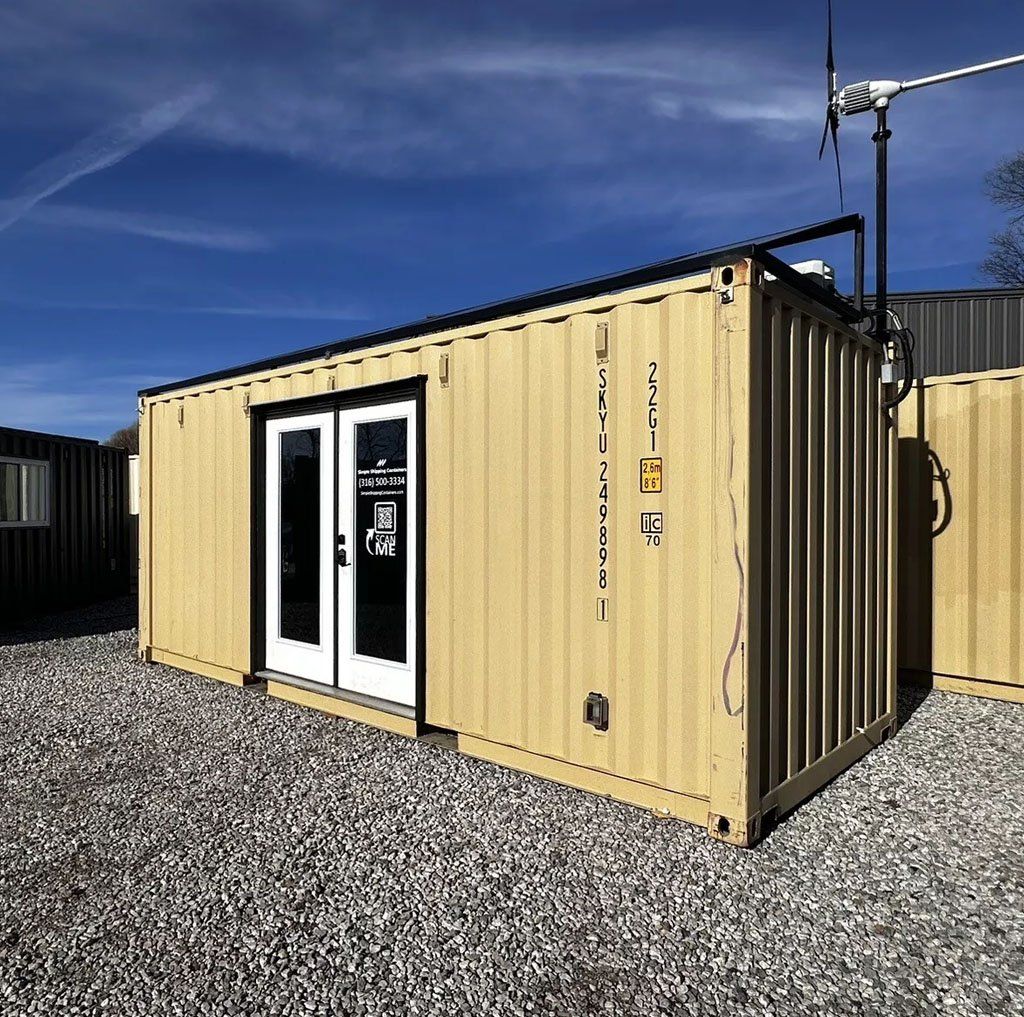
Most cabin land has no utility hookup, so power becomes a decision you make up front. Off-grid means solar panels, a battery bank, and an inverter sized to what the cabin actually runs — a weekend retreat with lights and device charging needs far less capacity than one running a fridge and a pump. A solar-equipped 20ft container office shows the setup, and the same approach carries over to a cabin. Where the grid reaches the property, tying in removes the battery ceiling entirely. Either way, size the system to actual use rather than a catalog number — this is general guidance, and a licensed electrician sizes the real installation.
Getting the box to raw land
Getting the box to the site is the step the glossy photos leave out. A tilt-bed, or roll-off, truck slides the container off at ground level, so an open site needs no crane — but the truck still needs a straight, obstacle-free run to back in and unload, and a tight or heavily wooded lot often can't offer one. Where the truck can't reach the final spot, placement may call for a crane, a separate cost we flag up front rather than assume away. The unit then sits on a level base: compacted gravel or piers under the corners keep it off wet ground and the doors swinging true. We check site access and clearance before the truck rolls.
The rental and glamping case
For operators, containers repeat in a way timber cabins never do: durable, stackable, and identical from unit to unit, so the second and third cabin match the first exactly. That's the appeal for anyone scaling — a finished box you drop, power, and rent out. The caveat is regulatory, not structural: short-term-rental permitting and county rules vary widely, and some areas license or restrict rentals tightly, so confirm local rules before you commit to more than one. This is general guidance, not legal advice.
The tradeoffs, stated plainly
Three limits deserve stating plainly. Interior width runs about 7ft 8in — a cozy one-room footprint, not a wide floor plan, so a family retreat usually calls for a 40ft high cube (roughly 1ft taller than standard) or two boxes joined in an L. Heating the box only on visits makes insulation and ventilation non-negotiable, because a shell warmed just on weekends condenses moisture inside and rusts without them. And a recreational cabin isn't a permitted full-time dwelling. For a code-compliant place to live, see our container home and backyard ADU page. If what you actually need is a jobsite cabin for workers rather than a getaway, that's our site cabins and welfare units page instead. For the full build-and-systems walkthrough, read our shipping container cabins guide— it covers off-grid power, wood stoves, and sizing.
What you can add to the unit
Steel containers accept a wide range of upgrades: windows, insulated doors, spray-foam insulation, wiring, solar, a minisplit, and a rated pass-through for a wood stove all count among the common additions. Our custom modifications service handles that work, and a two-box or ADU-style layout runs through the ADU and modular builds service instead. Plan the changes before the truck ships, since adding them later is possible, just harder.
Common questions
Can I live in a container cabin full time?
Yes, for seasonal or off-grid use, in most jurisdictions. Turn it into a full-time residence, though, and building code kicks in: insulation, egress, foundation, and utility requirements apply, and county rules on that vary. Our container home and backyard ADU page is the place to start if a code-compliant residence or ADU is the goal.
Bare shell or finished — which should I buy?
Choosing a bare or lightly modified shell saves money and gives you full control over the build, though insulation, wiring, and fit-out then depend on your own time and skill. Paying more for a finished unit with insulation and a minisplit gets you something usable on arrival. The right pick comes down to how much of that work you want to take on yourself.
Will a container cabin reach remote land?
In most cases, yes, as long as a truck can get there. Open sites with a straight, clear approach let a tilt-bed truck lower the box right at ground level. Crane placement, at extra cost, becomes necessary on tight or heavily wooded lots. Site access and clearance get checked before we schedule anything.
Does a glamping or rental cabin need a permit?
In many counties, yes, though permit rules aren't uniform across jurisdictions. Building permits sometimes exempt small, unconnected recreational structures, though renting one short-term typically triggers a separate license requirement. Check with local code before placing your order; treat this as general guidance rather than legal advice.
How do I keep a container cabin from sweating?
Insulate, then ventilate. Closed-cell spray foam keeps warm inside air from reaching the cold steel, and fitted vents let the box breathe. This matters even more in a cabin you heat only on visits, because the shell swings between cold and warm each time and sweats without insulation in place.
Get a free quote
Tell us how the retreat will be used, whether power reaches the site, and what a truck needs to get to the spot, and from there we match you to a shell or finished unit and the right modifications. Inspection and grading happen on every unit before it ships, and site access and clearance get checked first by our container delivery service: an open site takes a tilt-bed, or roll-off, truck sliding the box down at ground level, while a tight lot may call for a crane. Custom modifications covers windows, insulation, electrical, solar, a minisplit, and a wood-stove pass-through, and a two-box or ADU-style project goes through our ADU and modular builds service instead. Expect a free, itemized quote with no hidden fees and a reply inside 1 business day.
Containers suited for hospitality & recreation
Related services
- ADU and Modular BuildsLivable ADUs built from shipping containers
- Custom ModificationsCustom doors, windows, HVAC, and fit-outs
- Container DeliveryDoor-to-door delivery on a tilt-bed truck
Related guides
Put containers to work in hospitality & recreation
Tell us about your project and we will send a free, no-obligation quote.