Shipping Container Modifications: What You Can Change and Add
Shipping container modifications turn a steel box into an office, shop, or home: doors, windows, insulation, and power, and what each change costs you.
 EditorsEditors6 min read
On this page
What's possible when you modify a shipping container
Straight off the ship, a shipping container is a sealed steel box with a single set of cargo doors. Modification work is what turns that box into something usable: the cuts, the added systems, and the interior fit-out that make it an office, a workshop, a retail counter, a guard booth, or a home. In practice, you can fit almost any opening or building system into the steel, provided the cut is framed and reinforced correctly. Below is a rundown of the items builders add most often, the structural tradeoff each one carries, and how the list you choose moves both the price and the build time.
Defining a modification
Anything beyond the container's as-delivered cargo state counts as a modification: a new opening cut into the steel, a system added inside it, or interior finish work. None of these tasks is unusual on its own, but each carries its own labor and material cost, which is why the scope of a build reads as a list of line items rather than a single flat number.
The modification menu
Most builds draw from the same set of options below, and how many you choose comes down to the job the container has to do.
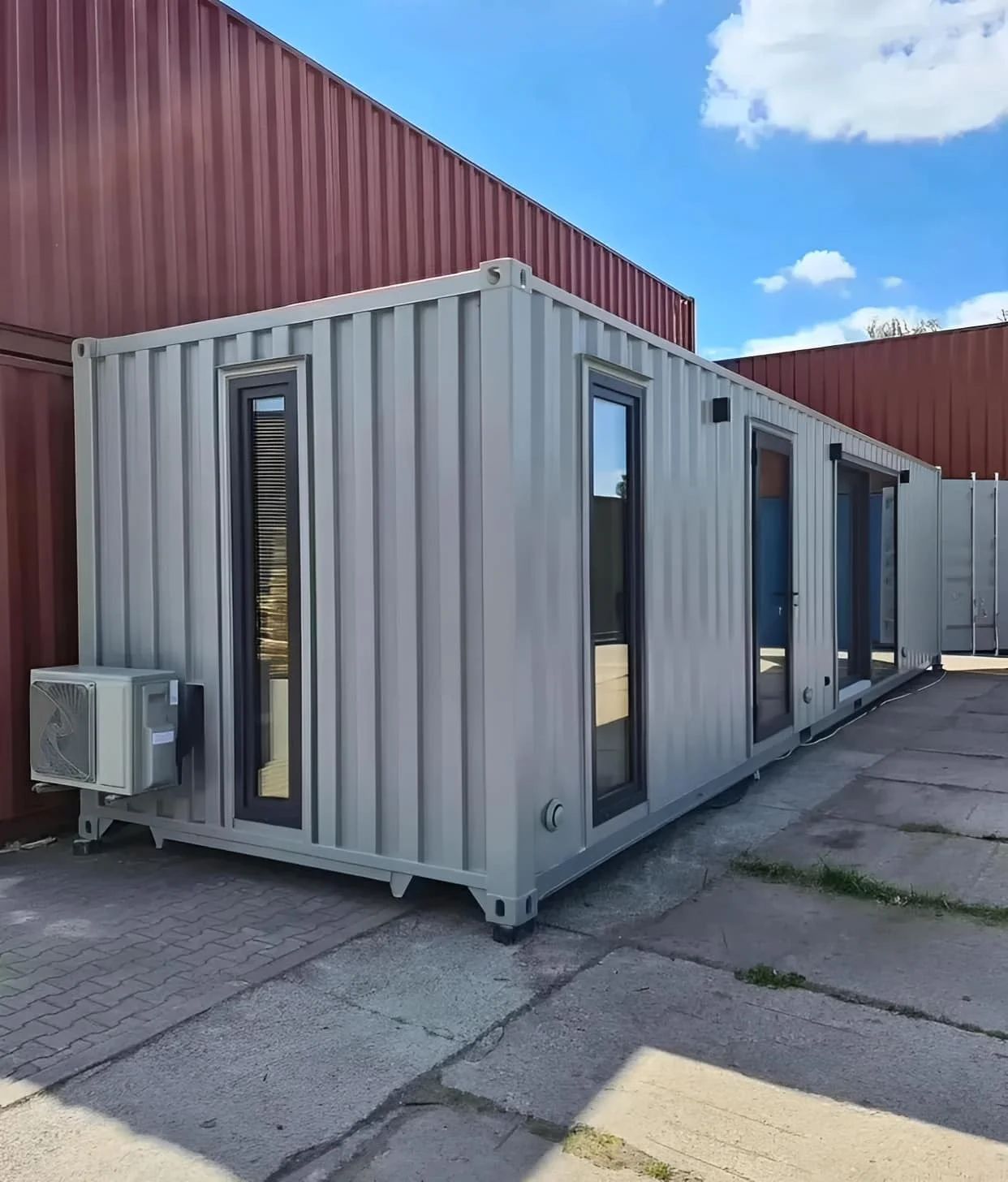
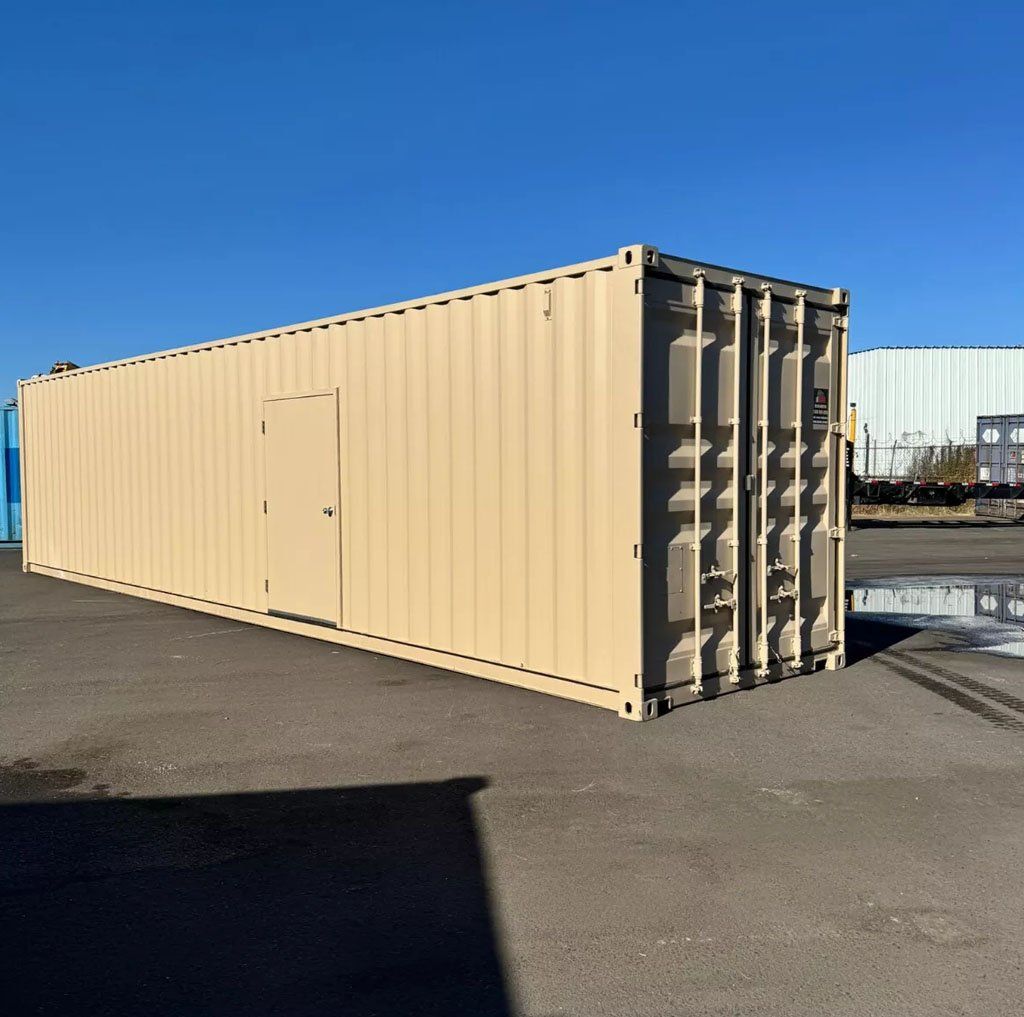
- Man doors (personnel doors). A hinged entry door lets people come and go without swinging open the full cargo doors, and it is the single modification most builds start with. Some units already ship with one in place, such as this 40ft container with a man door fitted.
- Overhead roll-up doors. Sized like a garage door, it opens for drive-in access, loading, or a walk-up service window facing the road.
- Windows and glazing. Fixed, sliding, or awning styles bring in light and a view, and most unattended units add security bars or shutters over them.
- Ventilation. Passive louvers or powered fans keep air moving and hold down the condensation that collects inside a sealed steel box.
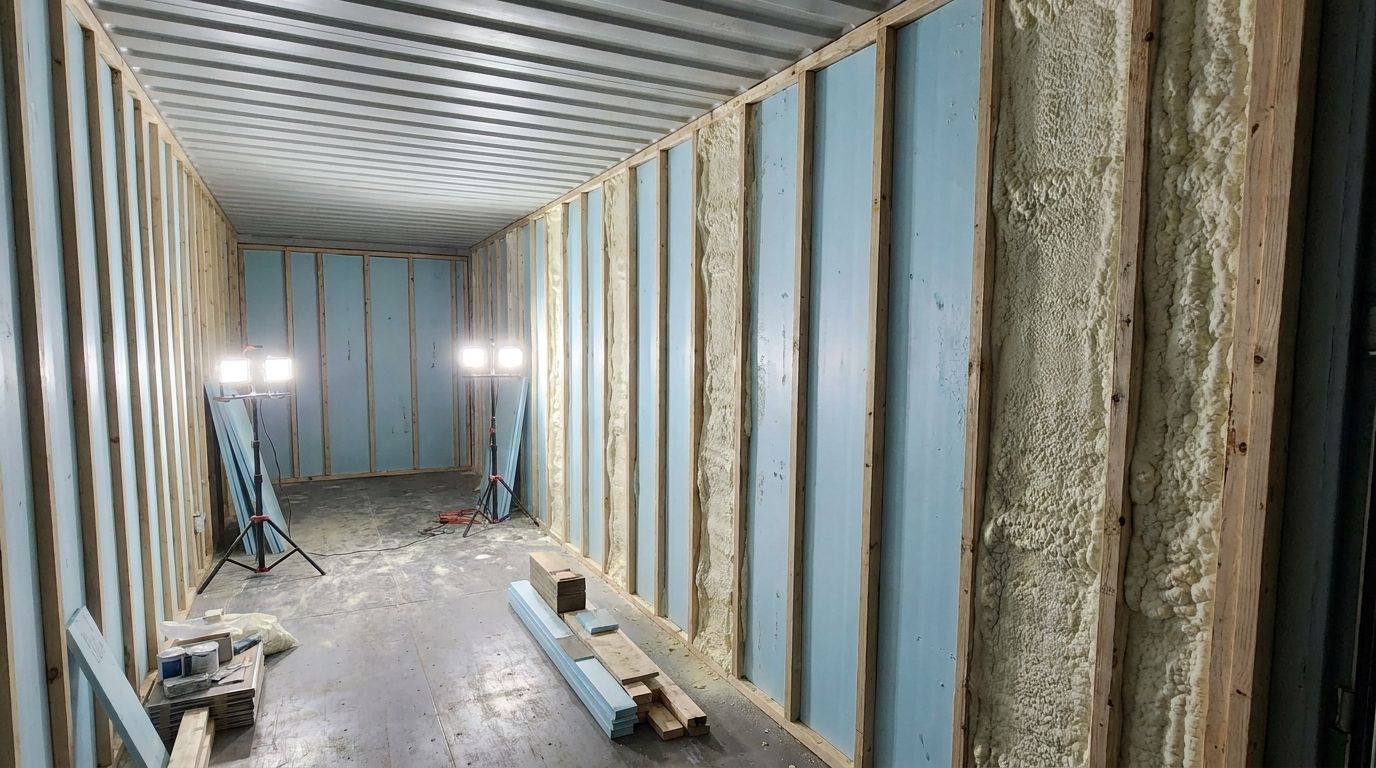
- Wall and roof insulation. Spray foam, rigid board, or a framed batt cavity all hold a stable temperature and stop the steel from sweating, and which system you pick moves both comfort and cost, a tradeoff our guide on insulating a shipping container walks through in detail.
- Electrical and HVAC systems. Lighting, outlets, a breaker panel, and a heating or cooling unit make the space usable in every season.
- Wall and ceiling finishes. Plywood, FRP panels, or drywall mounted over a frame turn bare corrugated steel into a finished interior.
- Interior partitions. Stud walls built inside the box divide one container into separate rooms, an office alongside a storage bay, for example.
- Plumbing and water. Where the use calls for it, a sink, a toilet, or a full washroom goes in, bringing water supply, drainage, and typically a site hookup plan with it.
What cutting the steel actually involves
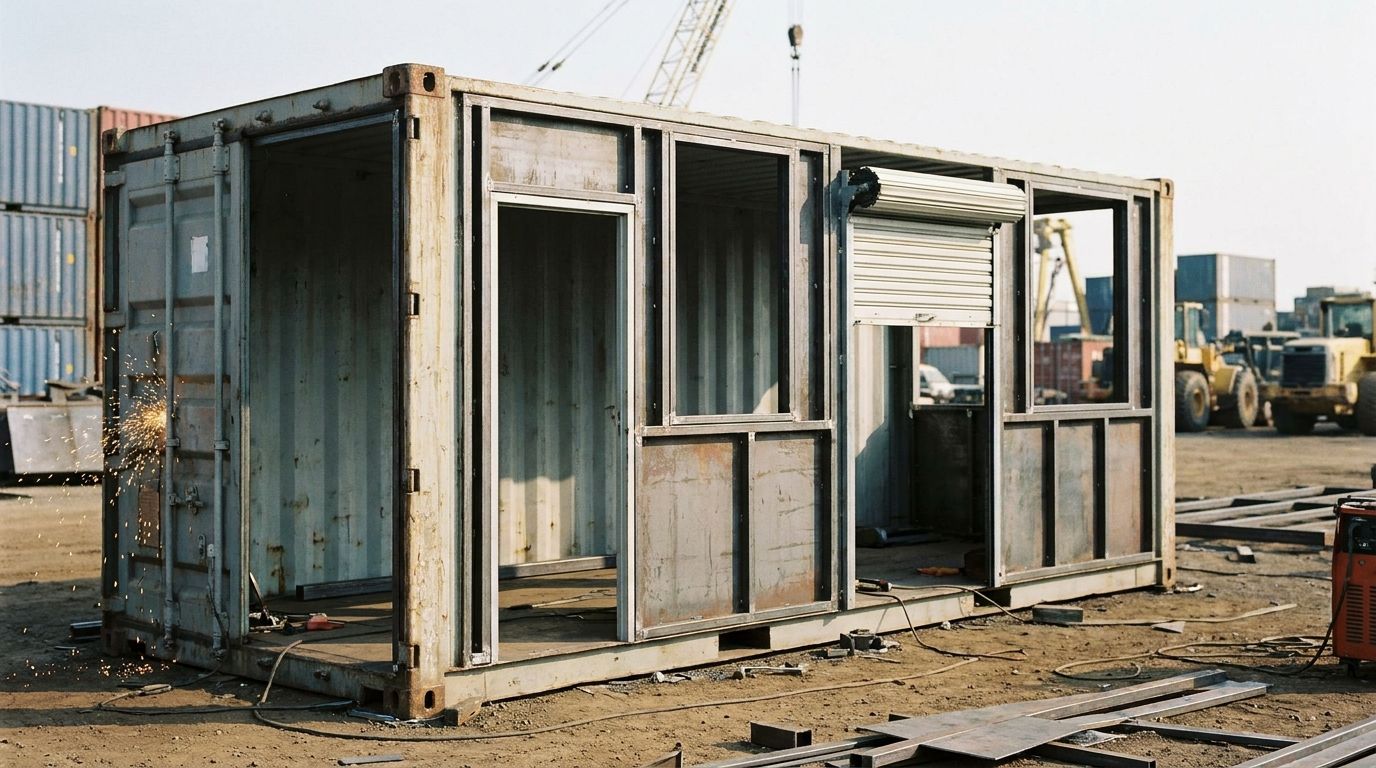
Unlike a house, a container carries no internal frame. The corrugated wall panels, together with the four corner castings and the rails, do the structural work, holding the stacking load and keeping the box true to shape. Cut an opening into a wall and you remove part of that load path, so welded steel tube or angle has to go back around the opening to replace what the steel used to carry. Without that reinforcement, a door or window can rack out of square, the frame can flex, and the wall can weaken over time. A window or a door, then, is not a hole with trim around it, it is closer to a structural repair worked in reverse. Builders leave the corner castings alone, since those still carry the real load if the unit is ever stacked or lifted again.
Levels of finish
Think of the work in tiers, since the same box can be left at very different stopping points:
- Storage tier. Little to no modification beyond perhaps a vent and a man door: the aim here is a dry, secure box, not comfort.
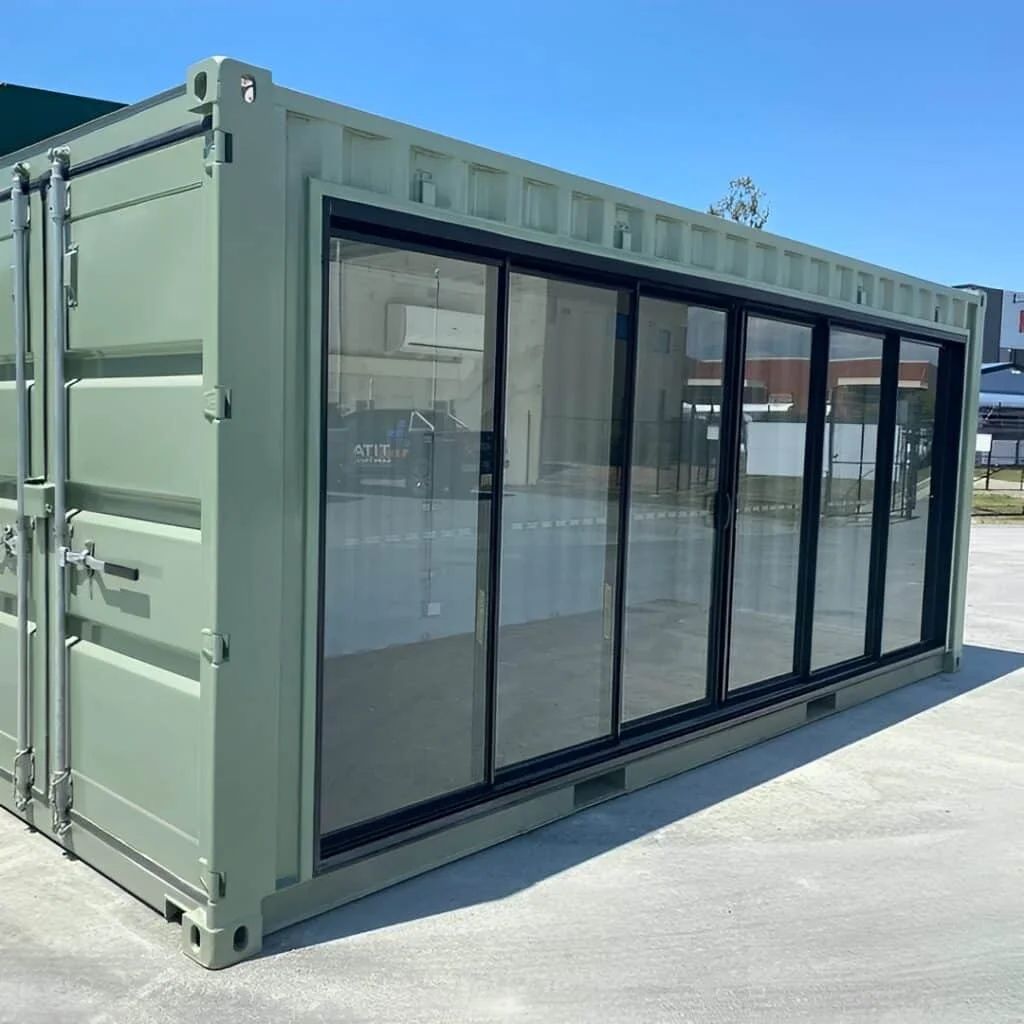
- Office tier. Insulation, interior lining, electrical, lighting, windows, and a heating and cooling unit turn it into a space people can work in all day, as shown in this 20ft container office fitted with a glass door and AC.
- Habitable tier. The complete build includes high insulation, plumbing, a kitchen and washroom, finished surfaces, and a layout designed for living, as seen in a 40ft container house build. This is the tier that draws the highest cost and the closest code scrutiny.
Some containers are purpose-built for one job from day one, such as a 20ft insulated greenhouse container already lined and climate-ready from the factory instead of retrofitted after the fact.
The tradeoff: cost and lead time stack with every change
No modification comes free. Every opening requires cutting, reinforcing, fitting, and weatherproofing, and every system you add, whether electrical, HVAC, or plumbing, brings its own materials, labor, and usually a longer spot in the build queue. Delivering a bare container is the cheapest and quickest option; fitting out a full office or home costs the most and takes the longest. That is simply the arithmetic of the work, which is also why a custom unit gets quoted against its exact scope instead of a flat rate. Check more items off the list above, and both the price and the timeline move with them.
What to DIY and what to hire out
A capable owner can realistically handle some of this list: bolting on a vent, lining a wall, or dropping a window kit into an opening that is already framed. Structural steel cutting and reinforcement, code wiring, and plumbing are where most people call in a professional instead, since a poor cut weakens the box and bad wiring becomes a safety and inspection problem. For many buyers, the practical split is to have the structural and system work built to spec by a professional and take on the lighter, cosmetic finishing themselves.
Permits and code review
Permit requirements for a modified container come down to what the unit is used for and where it sits. Local rules treat a job-site storage box very differently from an occupied office or a dwelling, and the specifics shift by city, county, and HOA. Units meant to be occupied or lived in are the ones most likely to trigger building, electrical, and sometimes zoning review. Check the requirements with your local building department before committing to a build; this is general guidance, not legal advice.
Common questions
Can every shipping container be modified?
Most standard steel dry containers accept modification, and high cube units, standing 9 feet 6 inches tall, a foot above a standard box, are a popular pick for conversions because the added height leaves room for insulation, a ceiling, and flooring without the space feeling tight. Condition matters as much as size: a sound, watertight box makes a better starting point than a rusted one.
Does modifying a container weaken it?
Poorly executed work can weaken it. Cutting an opening removes part of the load path, which is why welded steel framing has to go back in to keep the wall sound. Done correctly, the container keeps its strength, and the corner castings carrying stacking and lifting loads stay untouched throughout.
How long does a container modification take?
The timeline follows the scope. Fitting one man door is a quick job, while a fully fitted office or home with insulation, electrical, HVAC, and plumbing runs much longer, since every system is a separate stage of the build. The lead time is part of what your quote covers.
Get a free quote
Describe the job, a secure store, a working office, or a place to live, and we will translate that into a modification spec. The quote that comes back is free, itemized, and covers everything with no hidden fees added later, so the figure you see is the figure you pay. Every unit ships only after it has been inspected and graded, and you will hear back from us within 1 business day. See our container office builds page for a workspace build, or check our container homes and ADU builds page covers that path; send us your details and the scope you are picturing and we will take it from there.