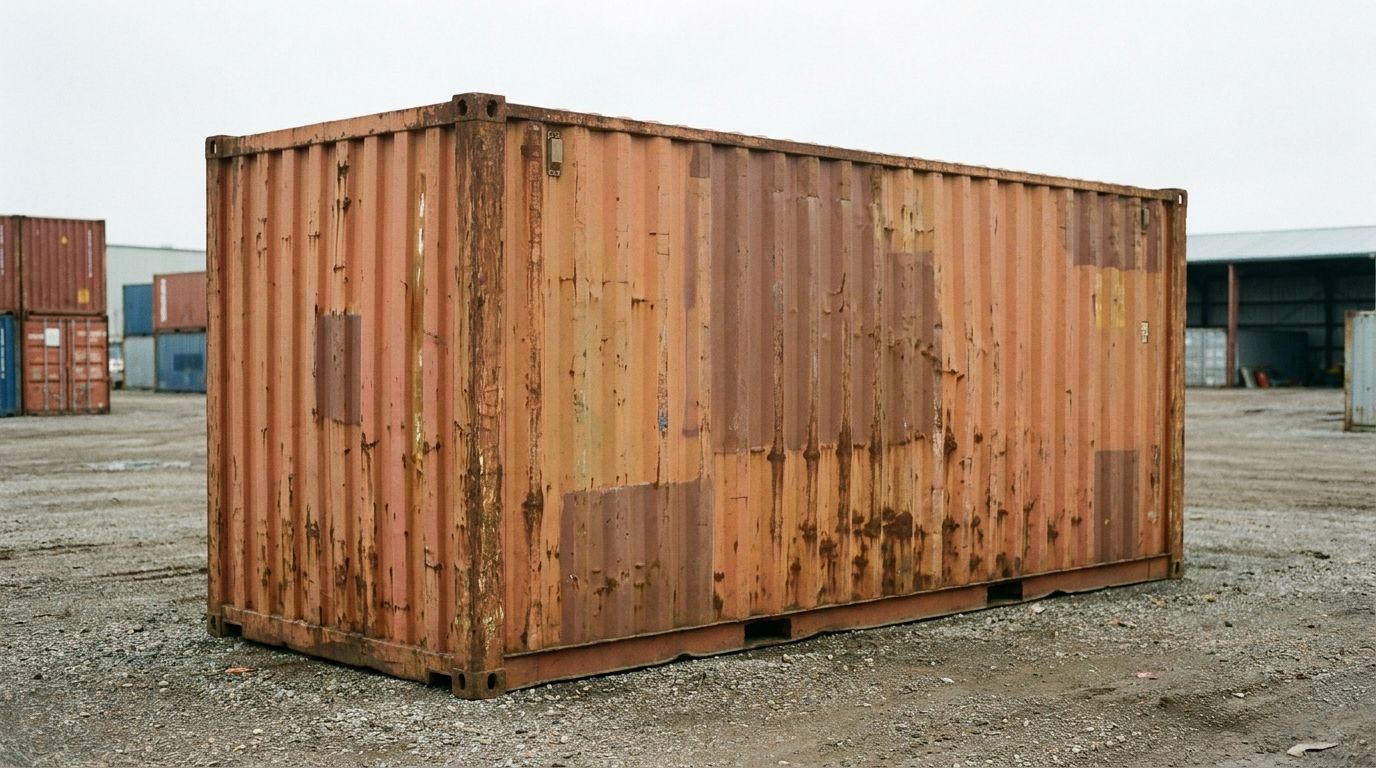
Insulating a Shipping Container: A Practical Guide
Insulating a shipping container means beating condensation first, since warm, moist air hits cold steel and drips. See how spray foam, board, and batt compare.
 EditorsEditors7 min read
On this page
How to insulate a shipping container the right way
Insulating a shipping container is not the same job as insulating a stick-built wall, because the container starts out as an airtight steel box. Get the approach wrong and moisture gets trapped against the steel, growing rust and mold behind your finish. Get it right and a former cargo box holds a comfortable temperature through summer heat and winter cold alike. This guide explains why insulation matters, weighs the main options against what each one costs you, and helps you choose based on what you are actually building.
In short: controlling condensation matters more than chasing R-value on its own. Because it insulates and seals the steel as a vapor barrier in a single pass, closed-cell spray foam is the most effective option, though it is also the priciest and the hardest to remove later. A do-it-yourself middle ground exists in rigid foam board, provided every seam gets sealed. Batt or mineral wool costs the least of the three but demands a framed cavity plus a deliberate vapor strategy to work. The right method follows the use: a dry store, an office, and a living space each pull the decision toward a different answer.
Why insulation matters: condensation
Comfort is only half of why a container gets insulated; moisture is the other, larger half. Steel acts as a thermal bridge, letting heat and cold pass straight through it. Warm, humid indoor air touching the cold inner face of that steel reaches the dew point, the temperature at which air can no longer hold onto its moisture, and the water condenses on the wall and runs down from there. Owners know this as container sweat. Left running over time, that constant film of water rusts the steel from the inside out and feeds mold behind whatever lining sits on the walls.
Two things happen when you insulate correctly. Heat transfer slows enough that the inside face of your wall never drops to the dew point, and a properly chosen system also adds a vapor barrier that keeps moist air from reaching the steel in the first place. Comfort and lower energy bills are the payoff most people notice, since a bare container swings between an oven and a freezer with the weather, but condensation control is the part that actually protects the box.
Weighing the insulation options
No material here is simply correct. Every option trades off against the others on cost, R-value (resistance to heat flow, where a higher number performs better), how easy it is to install, and how much interior space it takes up.
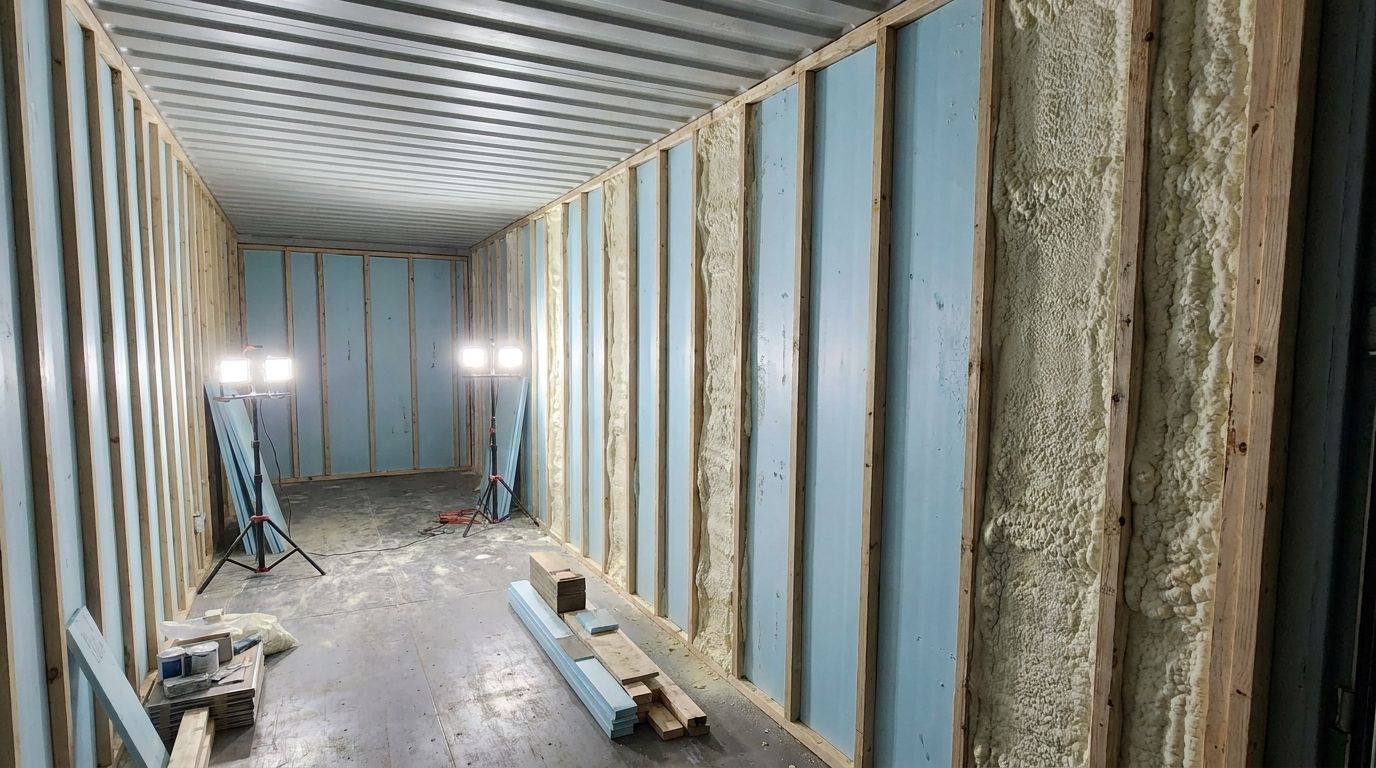
Closed-cell spray foam insulation. Of the common options, this delivers the highest R-value per inch, roughly R-6 to R-7, spraying directly onto the corrugated steel to seal every gap and act as its own vapor barrier. A single application both insulates and waterproofs the wall, which explains why serious conversions default to it. The tradeoffs are just as real: this is the most expensive route, it typically requires a contractor, and once cured it is very difficult to remove or change.
Rigid foam board, XPS or polyiso. A decent R-value comes with board, around R-5 per inch for polyiso, and at a lower cost than spray foam, with installation realistic for a patient do-it-yourselfer. The seams are the catch. Board performs only when it is glued or fitted tight to the steel with every joint and edge taped and sealed, since any gap lets humid air slip behind it to the cold steel and condense somewhere you cannot see. Expect more labor than spray foam demands, in exchange for something far more forgiving of a tight budget.
Batt or mineral wool, framed with studs. By far the cheapest material of the three, fiberglass batt or mineral wool cannot touch the corrugated steel directly and cannot stop vapor on its own. A stud frame has to go up against the walls first to create a cavity, which then gets filled, with a separate vapor barrier added on the warm side. Several inches disappear off every interior dimension to that framing, and that matters a great deal inside a box only about 7.5 feet wide to begin with. Without the vapor barrier, batt turns into a sponge held against cold steel, the worst outcome any of these methods can produce.
Prefabricated insulated panels. Going up fast and clean, prefabricated insulated panels deliver a finished inner surface in a single step, a fit well suited to an office or a quick fit-out. Flexibility is what gets traded away: panels arrive in set sizes, so they adapt less readily around odd openings and modifications than foam or board cut to fit.
Skipping the install altogether and starting from a unit already insulated and lined is what many buyers choose instead, such as this insulated greenhouse container, built for temperature control from the factory floor.
Do not overlook the floor and roof
All the attention goes to the walls, yet the roof and floor lose just as much heat. Direct sun hits the roof and radiates that heat down into the box, so it benefits from spray foam underneath it or a board layer built into a dropped ceiling. Steel cross-members under the original plywood floor bridge cold straight up through it, which is why a living space usually needs rigid board or a foam layer under a new subfloor. Insulate the walls alone while ignoring the top and bottom, and two large surfaces keep swinging with the weather and keep sweating regardless.
Ventilation works with vapor control
Airflow and insulation are not separate jobs. Ventilation still matters even in a well-sealed container, because cooking, breathing, and damp gear all push moisture into the inside air, and that moisture has to go somewhere. Humidity gets kept off your walls by passive vents, a powered fan, or an HVAC system built with a fresh-air path. One rule ties all of it together: insulate so the steel stays warm enough to avoid the dew point, seal so moist air cannot reach the steel at all, and ventilate so any moisture you do generate leaves the box instead of collecting inside it.
Choosing a method by end use
What the container ends up becoming decides the right method.
For a dry store or workshop, it typically needs just enough to stop sweat and blunt the worst of the temperature swings, and a spray-foam skin or a single sealed layer of board on the walls and roof usually covers it.
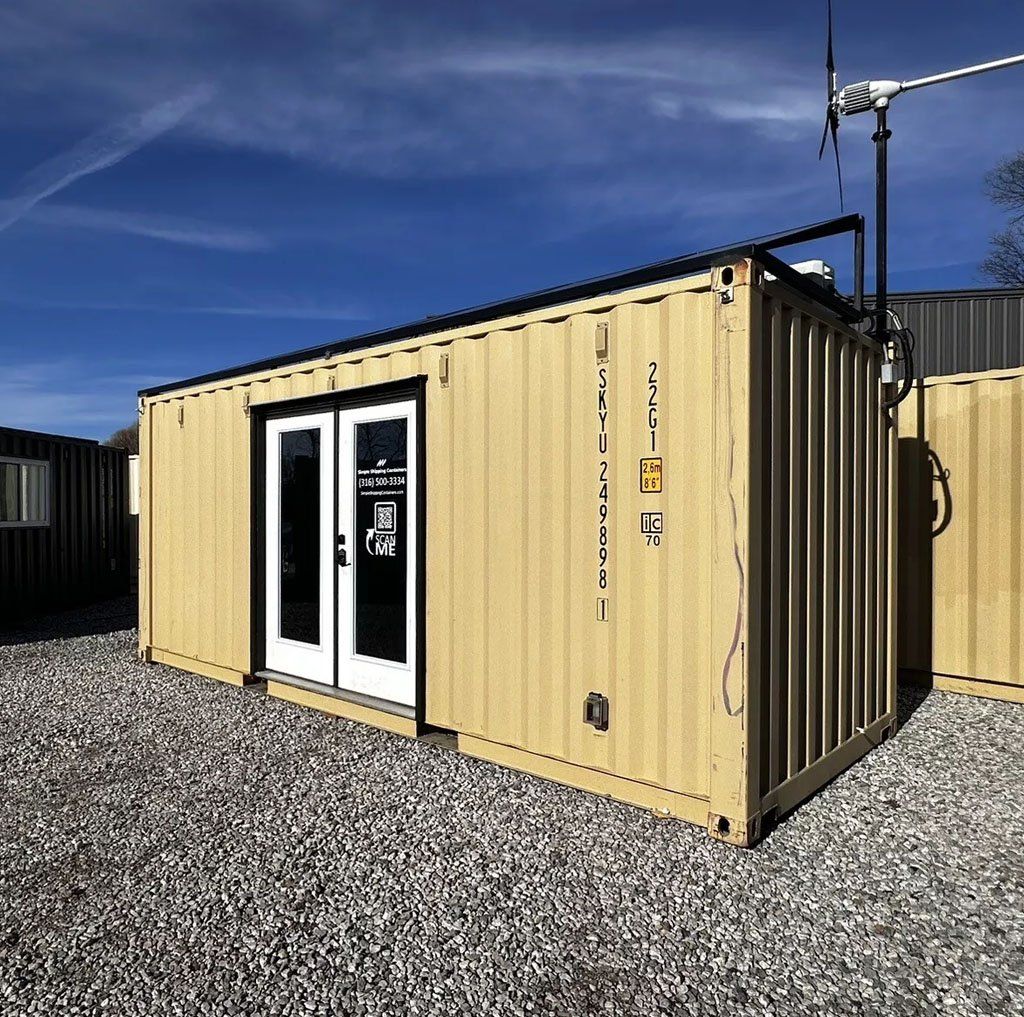
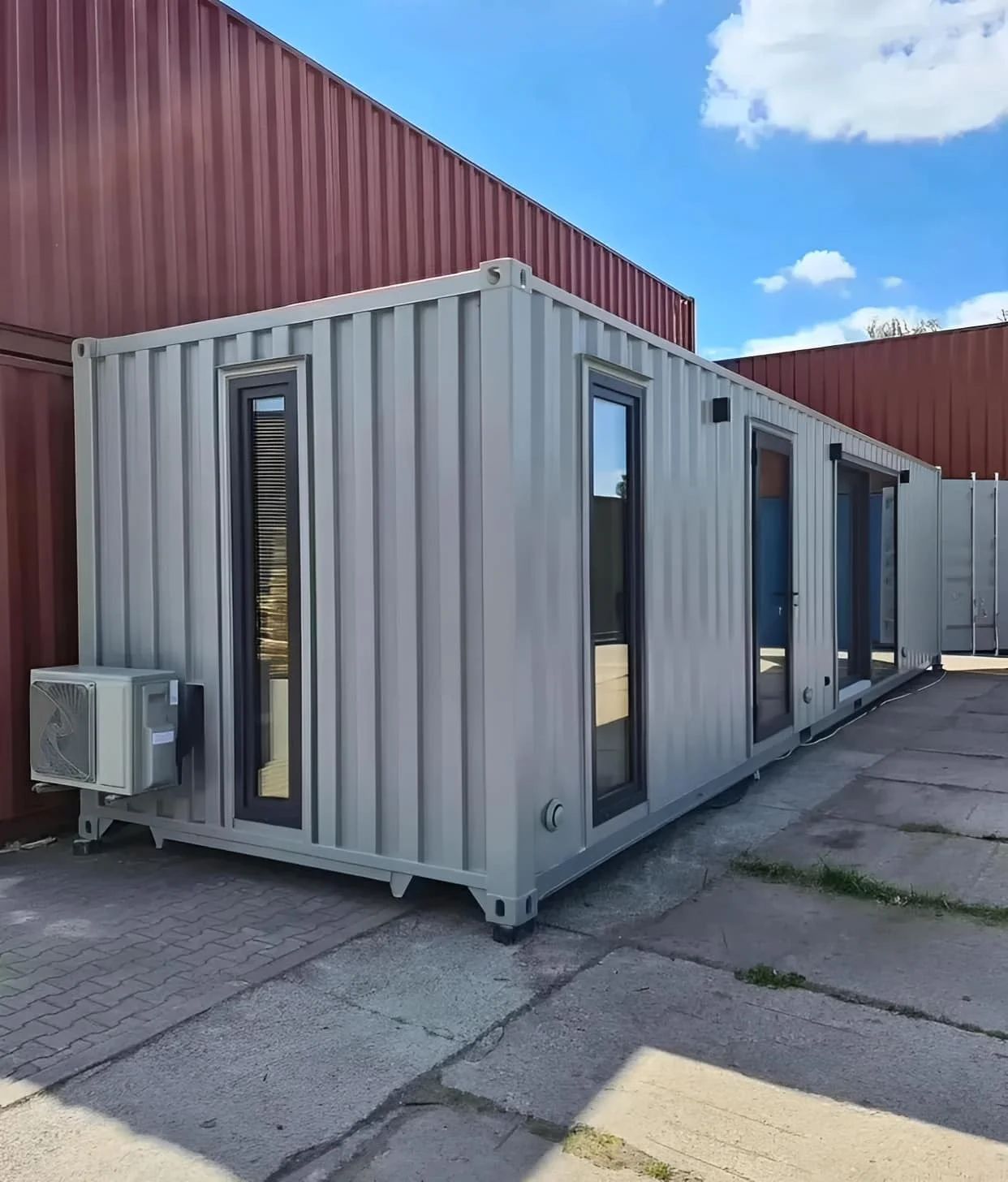
An office space needs comfort and a clean finish for people spending the whole day in it. Insulated panels or board behind a lined wall pair well with a heating and cooling unit, the same approach behind a finished 20ft office container.
A full living space calls for the complete system: high R-value across walls, roof, and floor, a continuous vapor barrier, and genuine ventilation. Closed-cell spray foam earns its price tag right here, as in a built-out 40ft container house build.
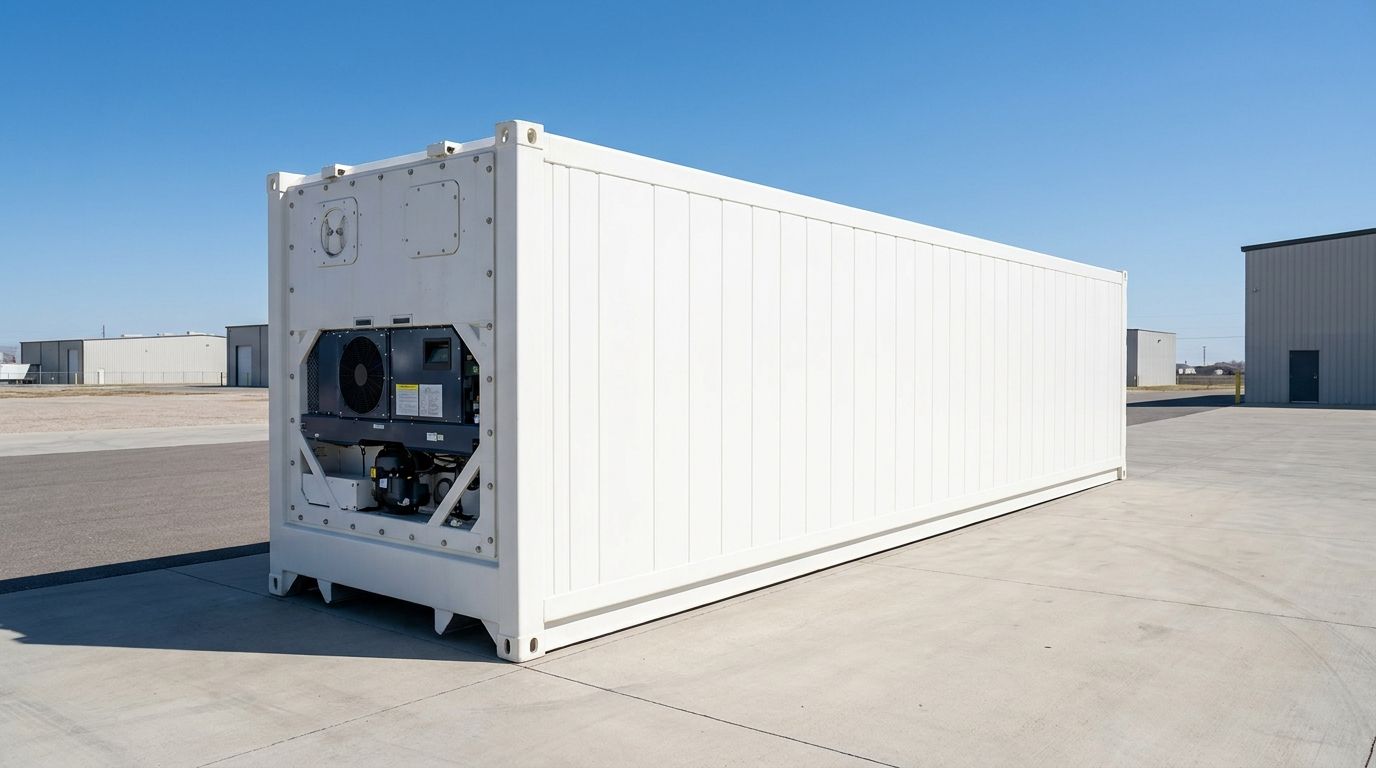
Keeping the cold inside a reefer. Thick factory foam panels already insulate a reefer (refrigerated container), which is built to hold cold rather than to serve as a comfortable room. Refrigeration needs are better met by starting with a purpose-built reefer than by trying to insulate a dry box up to that standard.
Mistakes to avoid
Three recurring errors sink most container insulation jobs. One: no vapor barrier behind added R-value, which just relocates the cold surface further in and lets condensation form where nobody can see it. Two: fiberglass or unsealed board pressed straight against bare steel, holding water against the metal and rusting it from the inside. Three: thermal bridging left unaddressed at the steel ribs, since corrugations and any new metal framing conduct cold straight through the insulation layer, so a continuous run of sprayed or taped board beats one interrupted by steel paths. City and HOA rules on building code and permits for occupied spaces differ, so treat any insulation spec for a dwelling as a cue to confirm what your local department actually requires. This is general guidance, not legal advice.
Common questions
Does a shipping container really need insulation?
Yes, once the space is occupied or holds anything sensitive to climate. Bare steel sweats and swings hard between hot and cold with the weather, so insulation and vapor control become necessary for an office, a home, or storage of moisture-sensitive goods. A mild-climate tool store kept dry and ventilated is the rare exception that can rely on airflow alone; nearly everything else cannot.
What R-value does a container need?
Climate and use decide this. Far less R-value goes into a dry store than into a year-round living space in a cold region. The practical approach is treating the walls, roof, and floor as one insulated system and confirming any code minimums for an occupied space with your local building department, since those figures vary by area.
Can you insulate a shipping container yourself?
Willing to cut, fit, and seal every seam with care, you will find rigid foam board the most do-it-yourself-friendly of the methods. Batt with a framed cavity is doable as well, though it adds framing and a vapor barrier to the job. Closed-cell spray foam gives the strongest result of the three but usually means bringing in a contractor who has the right equipment for it.
Get a free quote
Tell us how the container will be used and the climate it sits in, and we will help you spec an insulation and modification package, then send back a free, itemized quote with no hidden fees, so the figure we quote is the figure you pay. Every unit is inspected and graded before it ships, and we reply within 1 business day. See our container home and ADU builds page for living-space builds, or our container office builds page for a comfortable on-site workspace, and send us your details whenever you are ready to start.