

Storage and Facilities
Flat-pack storage: ships compact, bolts together on site
Panelized steel stores that arrive on a pallet and assemble on site, reaching spots a 20ft box can't.
Built for the job
Reaches where a container can't
Gates, doorways, and stairwells that stop a one-piece box outright let panels through, so storage reaches tight yards and rooftops. The tradeoff is time spent assembling it on site.
Flat shipping cuts delivery cost
One compact pallet carries the whole kit, which costs less to deliver than freighting a built container. What that buys you is a build-it-yourself job on site instead of a ready-made drop.
No crane, no welding required
Two people with hand tools bolt a single-bay store together, no crane and no welding needed. Larger linked bundles take more time to build and more hands to build them.
Two finishes, two use cases
Damp or coastal sites call for galvanised, which resists corrosion, while powder-coated looks cleaner for a customer-facing spot. Scratch through it to bare steel, though, and rust can start.
More space by linking units
Joining bays into one larger store happens through side-linked or end-linked bundles. The base has to be planned first, since the whole run needs to sit square across its full footprint.
Kit and delivery, one quote
Kit and delivery are priced together in one quote with no hidden fees. Worth knowing before you order: a bolted store isn't as secure as a one-piece welded box.
When the spot is out of a container's reach
A one-piece container can't go everywhere lockable storage is needed. Sometimes the only way in is through a doorway. Sometimes the yard has no crane access and no clear run for a tilt-bed truck. Sometimes the storage has to land on a roof or a mezzanine deck, or the layout keeps changing and what's wanted is a store that can be taken apart and rebuilt somewhere else next quarter. None of that suits a welded steel box, which arrives in one rigid piece that has to be lifted or rolled into its final position.
The flat-pack answer
A flat-pack (a panelized steel store that ships flat on a pallet and bolts together on site) shows up as a stack of panels, a roof, a floor frame, and the fixings, all on one pallet. Two people, working with hand tools alone, put it together without a crane or any welding. Traveling flat means the kit fits through gates and doorways and can be carried up to wherever it's needed, then bolted square onto a prepared base. Changing sites later just means unbolting it and moving it. The honest limit is the steel itself: lighter-gauge than a welded shell, so it's less secure and less weathertight, which makes it the right call for dry goods in a fenced or supervised spot rather than high-value stock left in the open.
Where a flat-pack earns its keep
Access, or the freedom to reconfigure a layout, is what decides this every time, and that edge belongs to the flat-pack over a welded box. Tools and spares inside a tight compound: facilities and maintenance teams. A stockroom behind the shop floor no delivery truck could swing a container into: retailers. Lockable storage inside a fenced yard with no crane visit needed: schools. A store that breaks down again between seasons: event and grounds crews. Rooftop plant decks where nothing larger could ever be lifted: building services teams.
Sizes and finishes, matched to the job
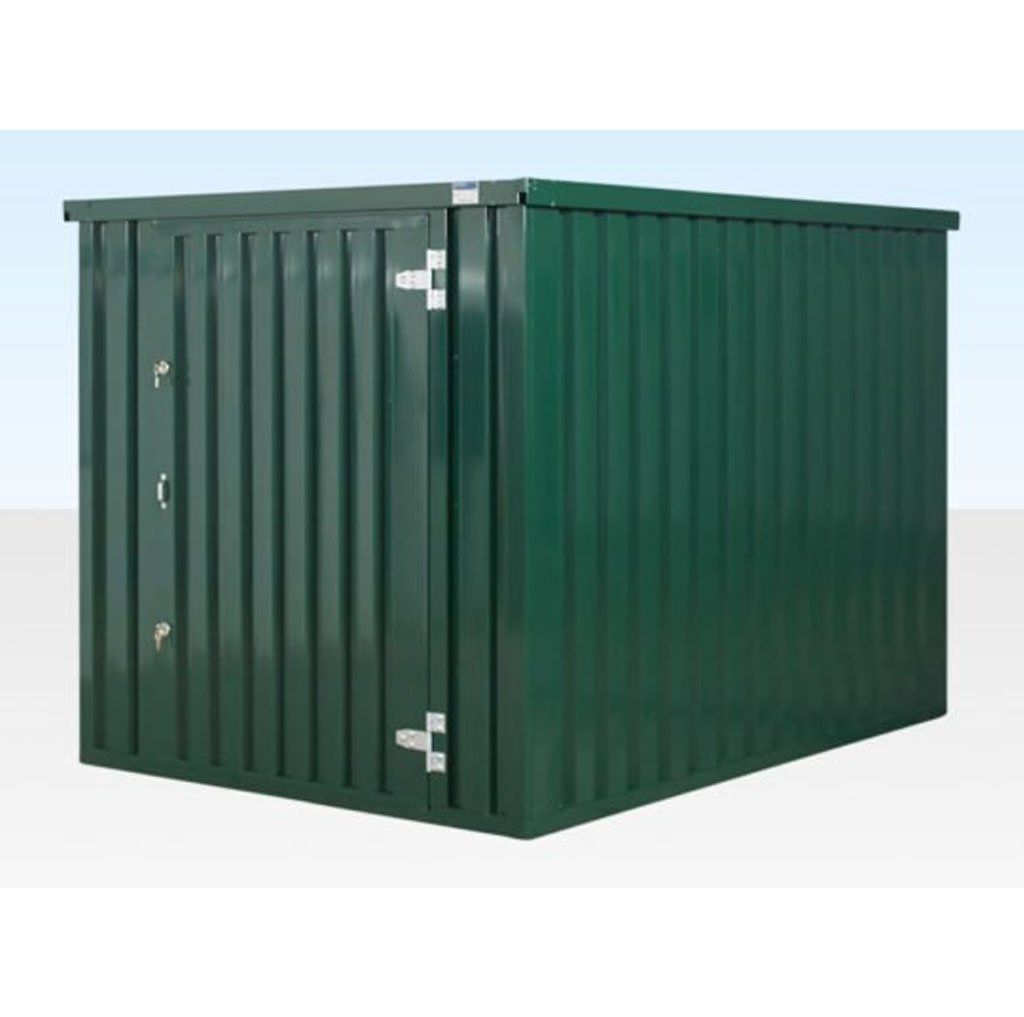
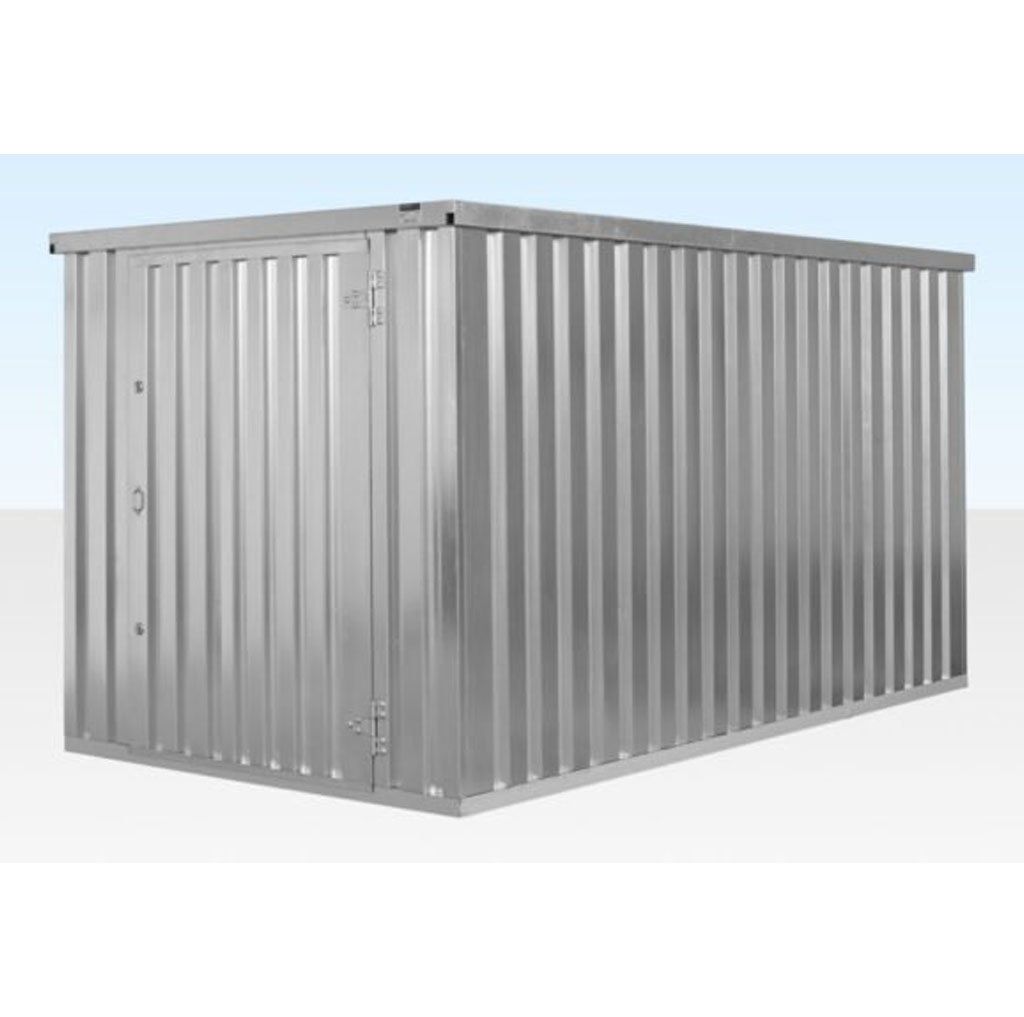
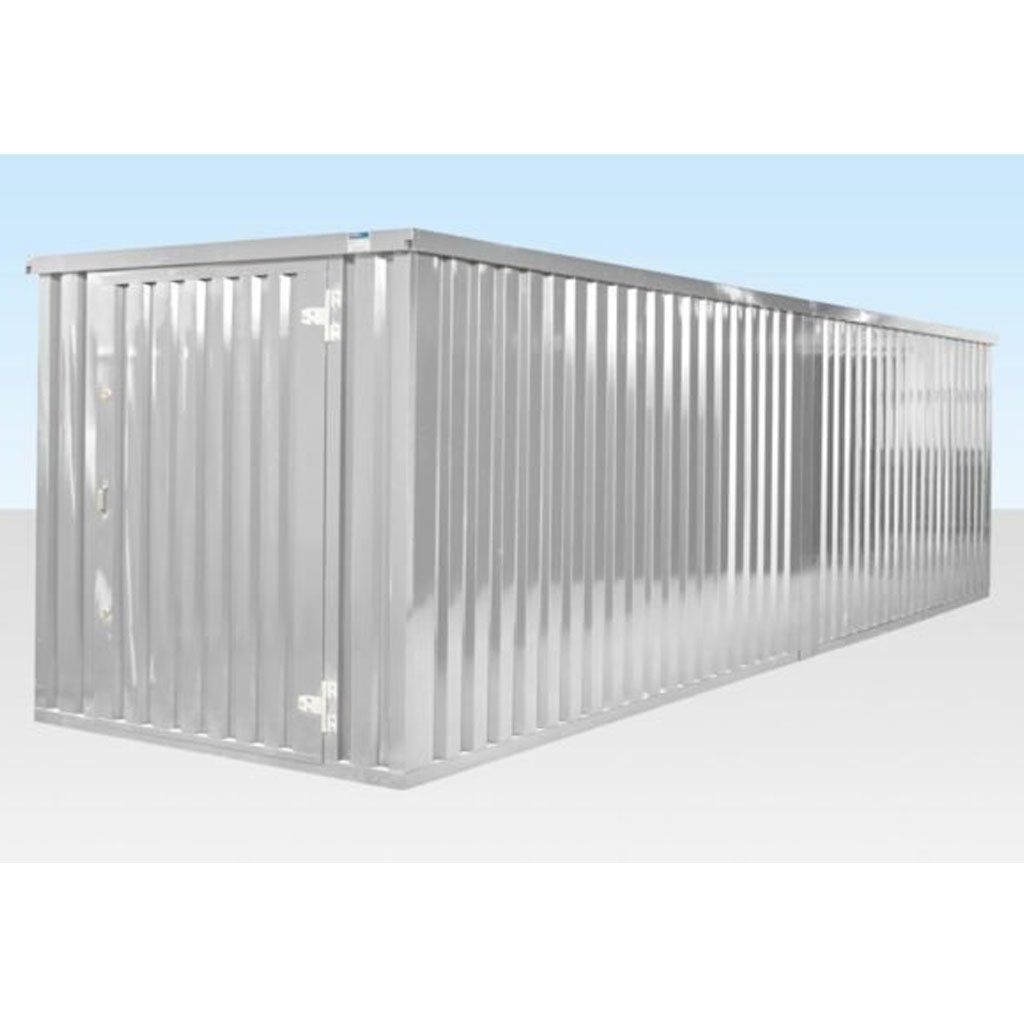
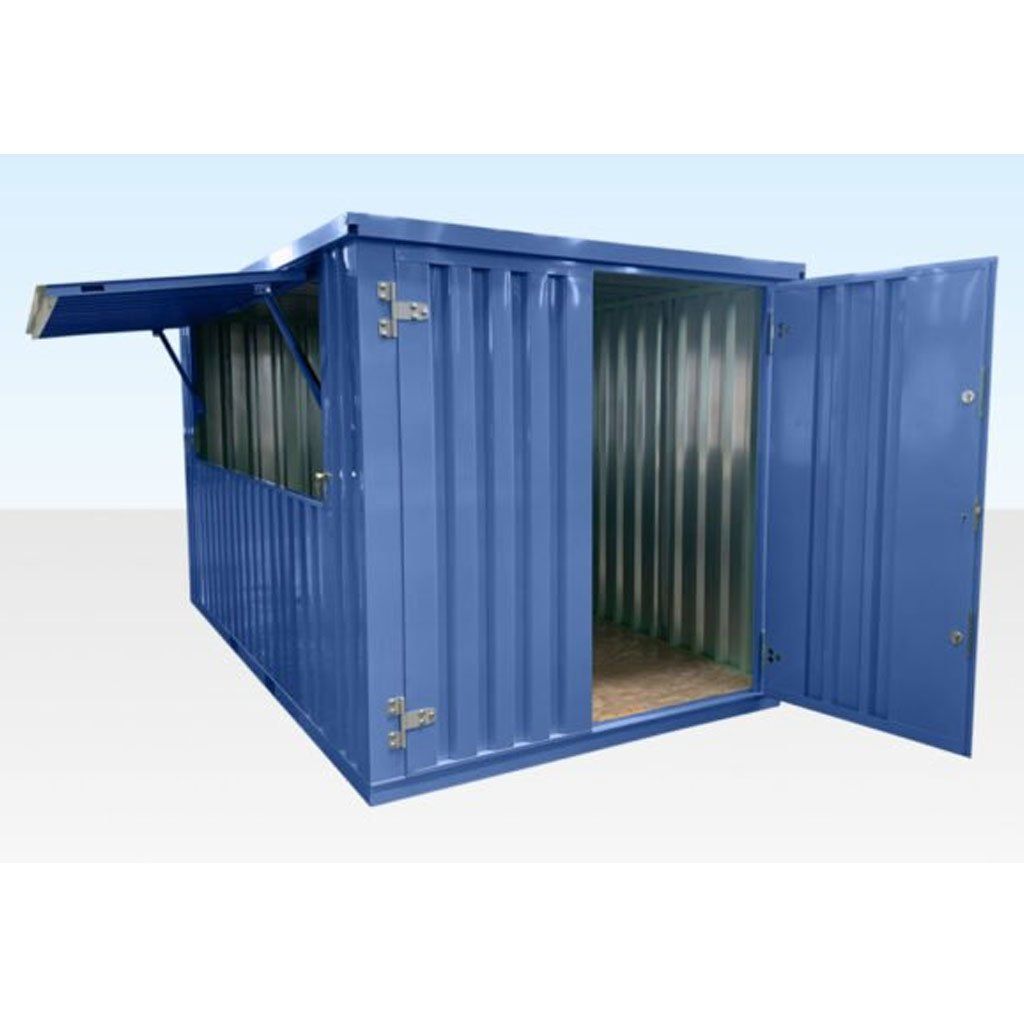
Go compact with a single bay, and the galvanised 3m flat-pack store tucks into a yard corner. Next to it, the powder-coated 3m flat-pack store gives up some corrosion resistance in exchange for a cleaner look where customers see it. Bigger footprint needed? The galvanised 4m flat-pack store covers it. Choosing between the two finishes comes down to exposure: a zinc coating that keeps protecting the steel even through scratches and cut edges makes galvanised the pick for exposed or coastal ground, while a baked-on colored finish makes powder-coated the one for front-of-building spots, where looks outweigh maximum durability.
When bays link together
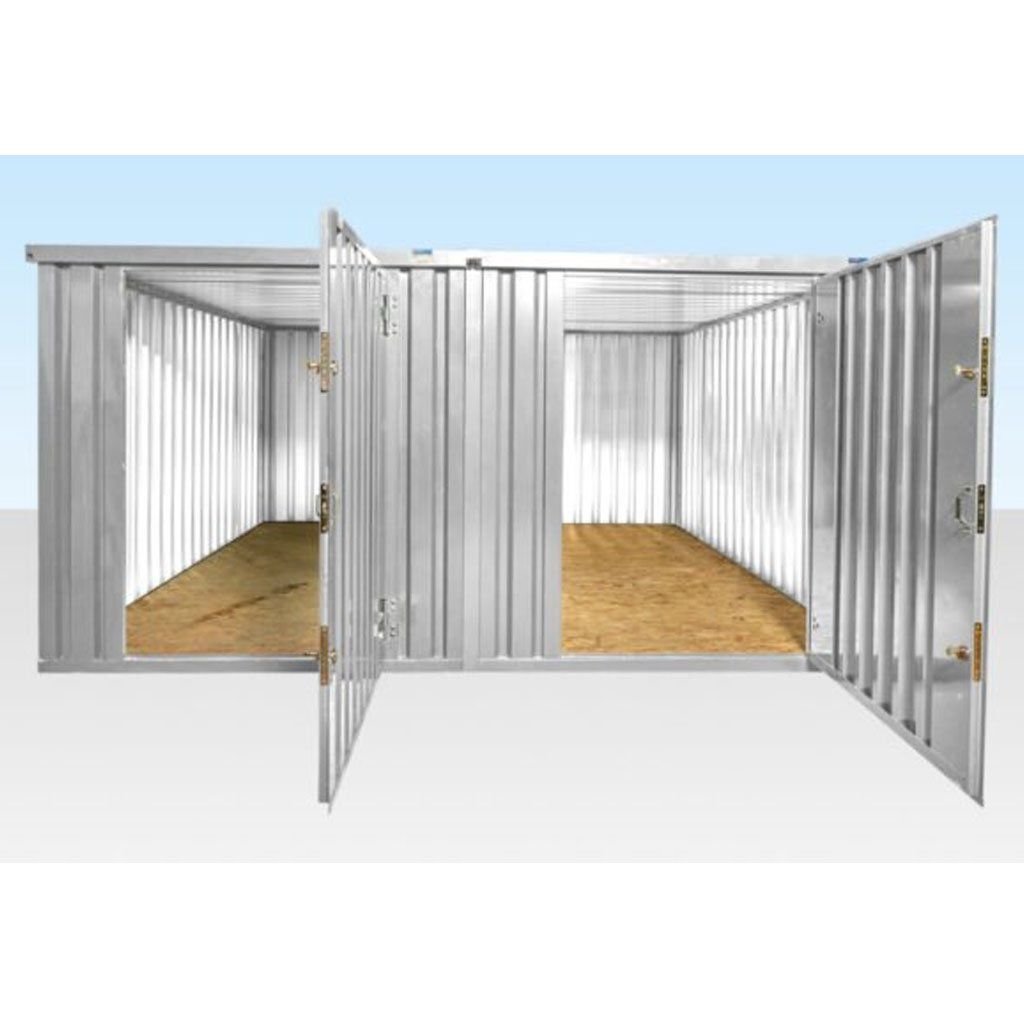
Rather than moving up to a container, link bays when a single one runs short. The side-linked bundle puts two stores shoulder to shoulder to form one wider room, while the end-linked bundle lines them up end to end for a longer, narrower footprint instead. Serviced or customer-facing points use the same idea in the flat-pack service kiosk, built with the same bolt-together method. Any linked bundle needs its larger base laid out and levelled before the panels show up, since the full run has to sit square.
Common questions
What does flat-pack assembly involve?
Two people with basic hand tools bolt a single-bay store together, with no crane and no welding involved. Panels fix to a base frame, the roof drops on, and a lockable door hangs at one end. Linked bundles take more time to build and more hands on the job.
Does it match a welded container for security?
No. Lighter-gauge steel goes into a bolted panel store, making it less secure and less weathertight than a one-piece welded box. It locks up fine and keeps dry goods safe on a fenced or supervised site, but high-value stock left in an exposed yard calls for the stronger choice: a welded steel container.
What kind of base does it need?
Concrete, paving, or compacted hardstanding: a flat, firm, level base is what it needs. Since the bolted frame relies on sitting square, soft or uneven ground keeps the doors from closing cleanly. A linked bundle needs that level area extended across the full footprint before delivery arrives.
Get a free quote
Every unit ships inspected and graded, priced in a single quote covering the kit plus delivery with no hidden fees, and expect our reply inside 1 business day. To start, describe the site, the footprint you're after, and any access limits. Sizing the right store and planning the base is what our storage-solutions consulting does, while container delivery handles the drop. Still deciding between a kit and a steel box? Read flat-pack versus steel storage containers first, then send your details our way for a free, itemized quote.
Containers suited for storage and facilities

Related services
- Storage Solutions ConsultingAdvice on sizing your on-site storage
- Container DeliveryDoor-to-door delivery on a tilt-bed truck
Frequently asked questions
Can I rent a container instead of buying one?
We sell containers rather than renting them short-term. Describe your project and we'll point you to the purchase option that fits the job and your budget.
What modifications can you make to a container?
Yes. We install personnel doors, windows, insulation, wiring, HVAC, shelving, and roll-up fronts, turning containers into offices, workshops, retail units, and cold-storage conversions.
What's the process for buying a shipping container?
Request a free quote online or call us. We confirm the unit's availability, its price, and delivery to your site, then take care of the paperwork and logistics.
Related guides
Put containers to work in storage and facilities
Tell us about your project and we will send a free, no-obligation quote.