How Long Shipping Containers Last: Lifespan, Rust, and Upkeep
A realistic look at shipping container lifespan, what drives rust and corrosion, and the maintenance routine that adds years of service.
 EditorsEditors8 min read
On this page
Think about what a shipping container is built to survive: years at sea, stacked nine containers high, doused in salt water the entire voyage. That punishment-grade engineering explains why one sitting in your yard will typically outlast a timber shed or a prefab outbuilding. The real question isn't whether it lasts — it's how long, under which conditions, and what upkeep gets you there.
Three variables set the answer: the condition grade you start from, the climate the unit sits in, and whether the steel gets touched up before rust digs in. Left alone in a dry climate, a new unit ages nothing like a 12-year-old box sitting on bare, wet ground. Below: realistic lifespan ranges, the mechanics behind corrosion, and a short maintenance routine that covers most of the work.
Short version
Expect 15 to 30 years from a shipping container used for storage on land, often longer if you keep up basic maintenance. That clock starts fresh on a new (one-trip) container (one that made a single loaded run from the overseas factory before being sold), and such units commonly stay sound past the 25-year mark. A used cargo-worthy unit carries road and sea years already, putting it toward the lower-to-middle part of that range. What actually limits the lifespan is rust, and airflow, drainage, and the occasional coat of touch-up paint prevent nearly all of it.
New versus used: how long each one lasts
Your baseline comes from the starting grade, because corrosion adds up: every year already spent in salt air is a year you inherit along with the container.
One-trip (new) containers
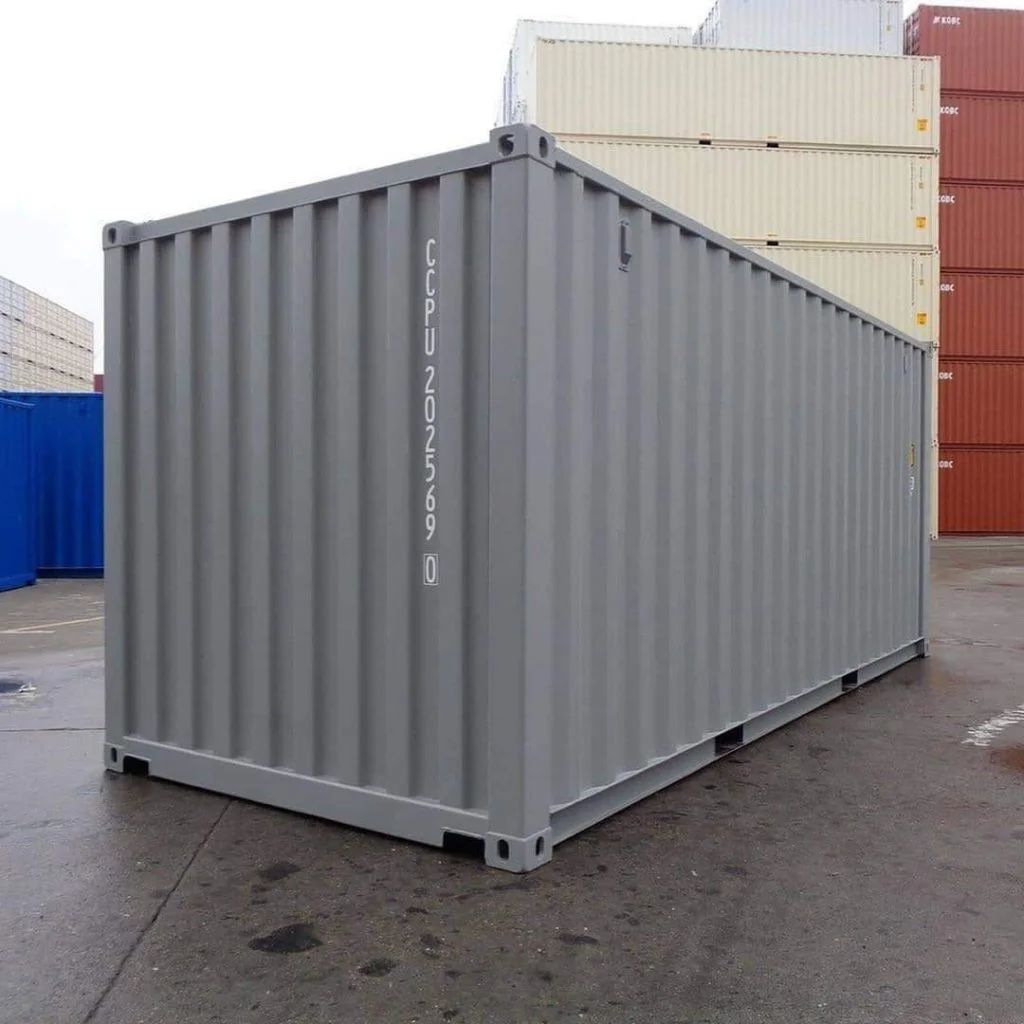
Having made a single loaded voyage from the factory before resale, a one-trip container arrives with steel, paint, and seals close to factory condition. Away from constant ocean salt, on land these units commonly serve 25 years or more before structural steel work becomes necessary. They carry the thickest remaining paint and the least existing corrosion, making a one-trip unit the longest-lived option for anyone planning to keep a container for decades. Our 20ft one-trip standard dry container serves as the general-purpose steel box for dry cargo and storage, offered at that near-new condition.
Used stock: cargo-worthy and WWT grades
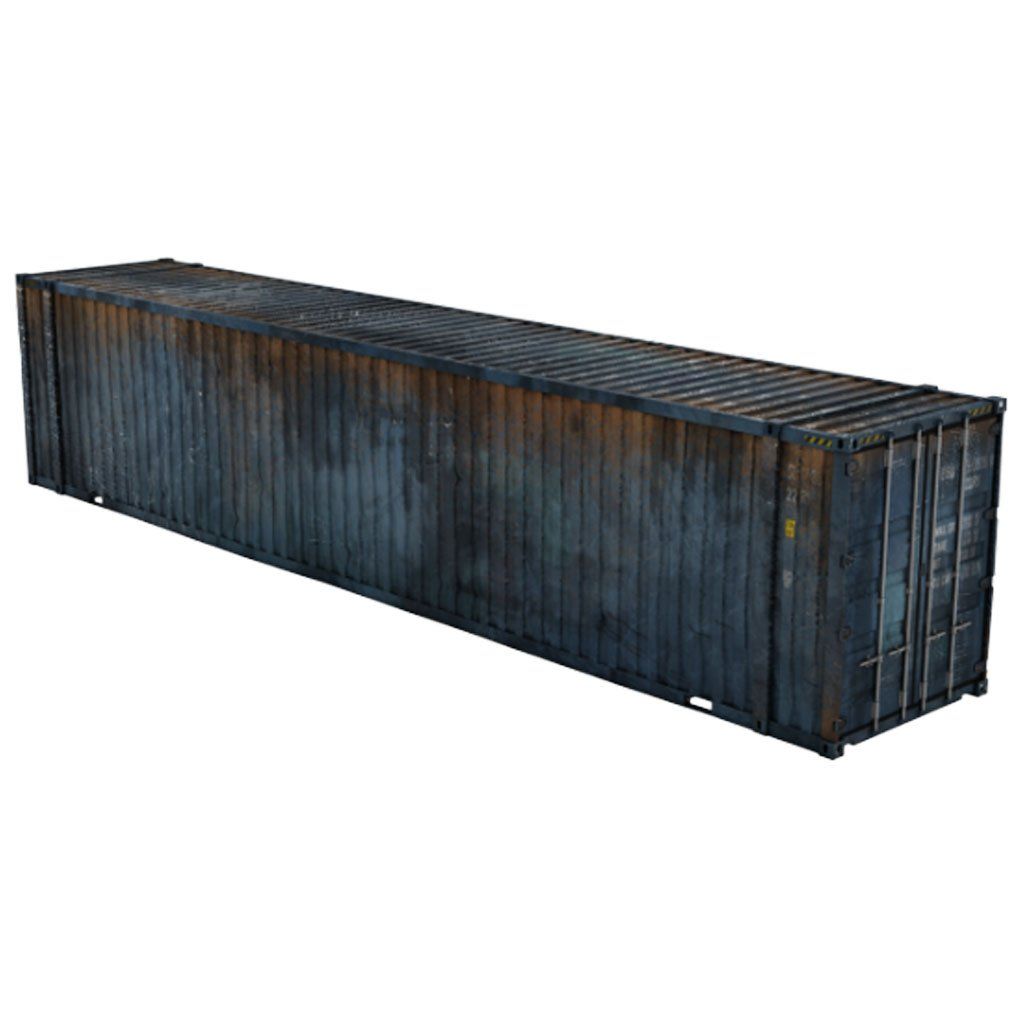
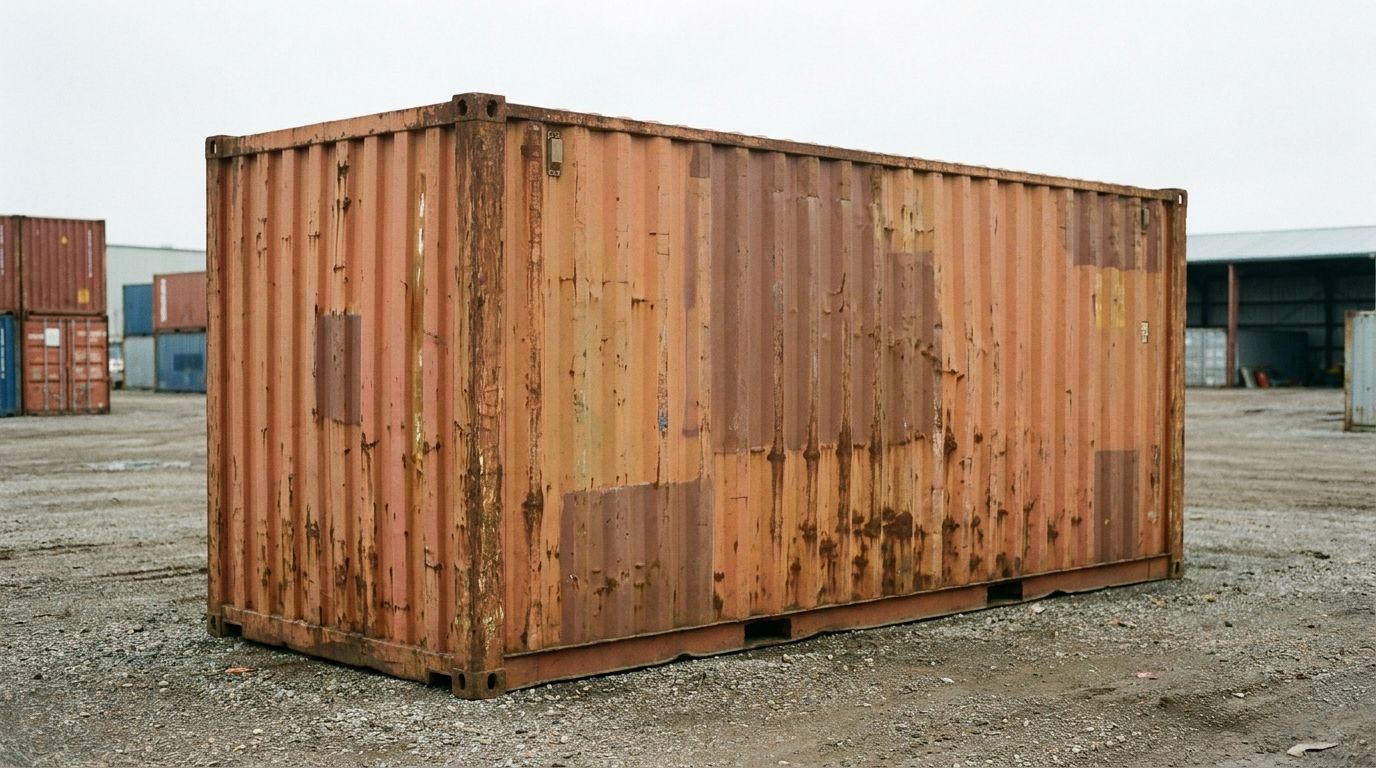
Used stock breaks down by grade. A cargo-worthy (CW) unit, inspected fit to carry cargo with structurally sound doors, floor, and seals, is the standard grade for good used stock and still carries plenty of service years for storage. A wind and watertight (WWT) unit keeps out rain and weather and works fine for storage, though it isn't certified for ocean transport. Expect cosmetic wear and some surface rust on either grade — that's normal, not structural failure. A used high cube (one foot taller than a standard container at 9ft 6in, adding usable vertical space), like a 40ft used high cube container adds interior volume at a used-grade price point, with the tradeoff that the steel already carries years of prior service.
To weigh the tradeoff between starting grades in more depth, see our guide to choosing new versus used shipping containers, which breaks down the cost and condition math step by step.
Where does rust and corrosion come from?
Corten, or weathering steel, is what containers are built from, and it develops a stable surface patina that slows corrosion on its own. Real as that protection is, it has limits — wherever water sits and air can't dry the steel, rust picks up speed.
Roughly in order of how much damage they cause, the usual culprits:
- Poor drainage and standing water. Set directly on wet, uneven ground, a container traps moisture against its underside, and the floor cross-members corrode from below, out of sight until the damage is advanced.
- Interior humidity trapped inside ("container rain"). Warm, humid air meets the cold steel ceiling overnight and condenses, dripping down onto whatever's stored and collecting in the corners. Left without airflow, the inside corrodes quicker than the exterior ever does.
- Salt air near the coast. Salt draws and holds moisture against the steel, which speeds up the reaction — units close to the ocean need checking more often than ones set inland.
- Chips and scratches that break through the paint. Wherever a gouge or a drilled hole exposes bare steel, rust starts first, and modification cut edges are a frequent starting point too.
- Contact between dissimilar metals. Where steel touches aluminum or copper fittings without isolation, galvanic corrosion sets up at the joint.
None of this is unusual or alarming — these are simply the spots to check first, since catching corrosion while it's still surface rust is routine, while catching it as a hole in the floor means a repair.
A basic maintenance routine for containers
A short, repeatable routine wins most of a container's lifespan, not any major project. The goal is keeping water moving away from the steel and renewing the paint before bare metal shows.
Give it drainage and airflow from the start
Site the unit level on a base that can bear the load (railroad ties, concrete piers, or a gravel pad all work) so air moves underneath and water runs off rather than pooling under the floor. Tilt the roof slightly and rain sheds on its own. Getting a site ready for delivery is covered step by step in our guide to getting your property ready for container delivery walks through the ground prep and access requirements in full.
Give the interior airflow
Placed near the top and bottom of opposite walls, passive vents or louvers let humid air escape and cut interior condensation. Desiccant helps with sensitive contents, but airflow does more for protecting the steel.
Keep to an inspection and touch-up schedule
Make it a habit to walk the unit twice yearly, plus after any serious storm. Look for ponding on the roof, check the floor cross-members from below, examine the door gaskets (the rubber seals keeping it watertight), and scan for scratches or open seams. The moment paint chips or surface rust appears, wire-brush that spot down to sound metal, prime it, then finish with a steel-rated topcoat. Renew the paint before rust gets a foothold, and that single habit is the difference between a box that lasts 15 years and one that lasts 30.
Maintain the doors and seals
Keep the door hinges and locking bars lubricated so the door keeps sealing tight. Once a door stops closing square, water and weather work their way in along the gasket — a common source of slow leaks.
A special case: reefer maintenance
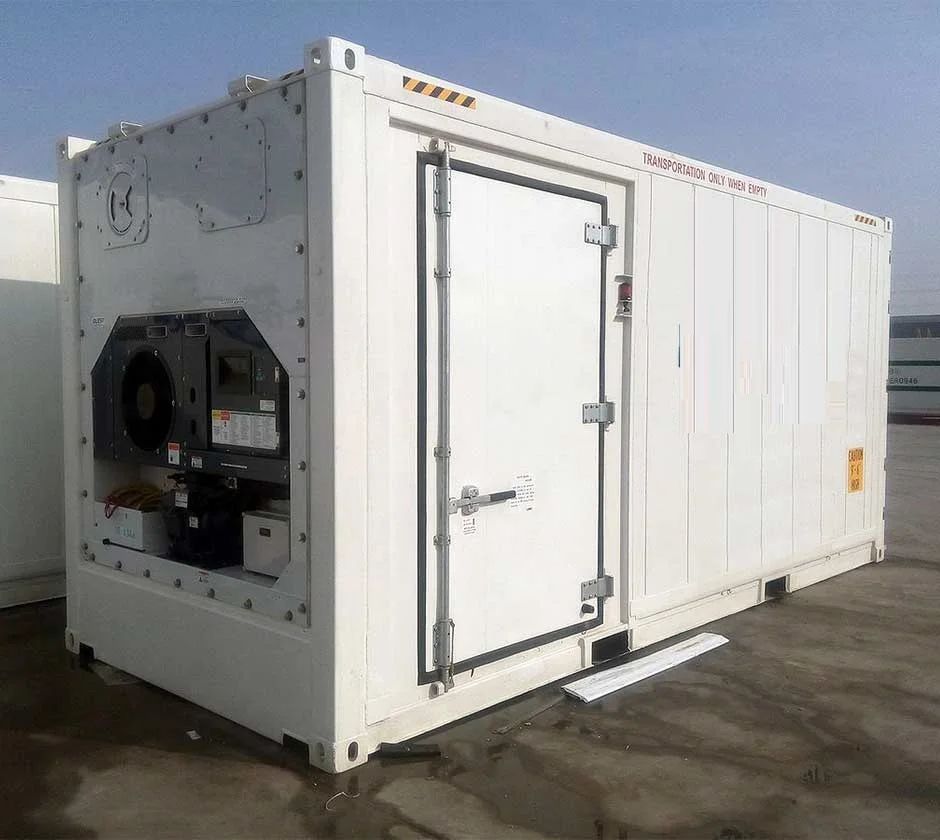
A refrigerated container (reefer) builds an insulated box and a powered cooling unit on top of the steel shell, which means a second system needs upkeep. Insulation and the interior lining hold off interior condensation, but the cooling unit still needs what any compressor-driven machine needs: clean coils, checked refrigerant and seals, and regular run-time under load to keep it exercised. Our 20ft refrigerated unit ships refurbished: professionally repaired, repainted, serviced to working condition, and fitted with a cooling unit that's been serviced, tested, and confirmed working. What determines how long a reefer lasts is that cooling unit — the steel shell around it corrodes by the same rules as any other container.
Deciding between one-trip and cargo-worthy
Which starting grade fits comes down to how long you intend to keep the unit and how much cosmetic wear you're willing to accept.
- Pick one-trip (new) if the container is destined to be a long-term fixture: an office conversion, a build you'll paint and finish, or a unit you plan to keep for 20-plus years. Paying more up front buys the most remaining service life and the cleanest starting steel.
- Pick cargo-worthy (used) when sound, watertight storage at a lower price matters more than existing cosmetic wear. For many yard-storage and jobsite uses, a CW unit is the value pick and still outlasts most needs by a wide margin.
Whichever grade you choose, buy against the grade, not the photo. Every unit we sell gets inspected and graded before delivery, so what you're quoted is what shows up.
Signs your container is nearing the end
Failure in a container is rarely sudden. These are the signals to watch for, roughly ordered from cosmetic to serious:
- Rust flaking across wide areas that comes back quickly after touch-up, meaning the patina is no longer protecting the steel.
- Floor sections that feel soft or springy, or spots where daylight shows through the floor or a seam, a sign the cross-members beneath have corroded all the way through.
- Holes from rust ("perforations") in the walls or roof that let in water and light.
- Doors that won't seal square anymore, where the gaskets have gone hard, torn open, or pulled away from the frame.
- Walls that are bowed or buckled, corner castings twisted (the reinforced fittings used for lifting and stacking), a sign the frame has been overloaded or has corroded badly.
A handful of perforations can usually be patched, buying more years of non-critical storage. Once floor rot and structural failure set in, though, a unit has reached the end of its useful life, and retiring it beats trying to repair it.
Questions people ask
Does rust eat through a shipping container fast?
No, it doesn't. The steel forms a protective patina, and what you'll usually see is normal, slow-developing surface rust. Structural rust only sets in once water is trapped against the steel for extended periods with no drainage or touch-up.
Does storage duty extend a container's life versus shipping?
In general, yes. On land, clear of constant ocean salt and the wear of stacking and handling, a container ages more slowly than it does while in active marine service.
How often does a container need repainting?
No set schedule applies. Twice-yearly inspections let you touch up chips or surface rust as they appear, and how often a full repaint is needed comes down to your climate and how exposed the unit sits.
For buyers going used who want to judge condition before committing, our guide to what to check when buying a used container runs through the inspection points and the questions worth asking.
Want a unit on your site that holds up for the long haul? Send us a free quote request and we'll match the grade to your timeline, or browse the catalog to compare sizes and conditions yourself. What we quote is what you pay, with no hidden fees, and you'll hear back from us within 1 business day.