Shipping Containers in Hurricanes and High Wind
Can a shipping container withstand a hurricane? There is no real wind rating for a box on the ground. Here is what keeps one put, and what does not.
 Editorial TeamEditorial Team6 min read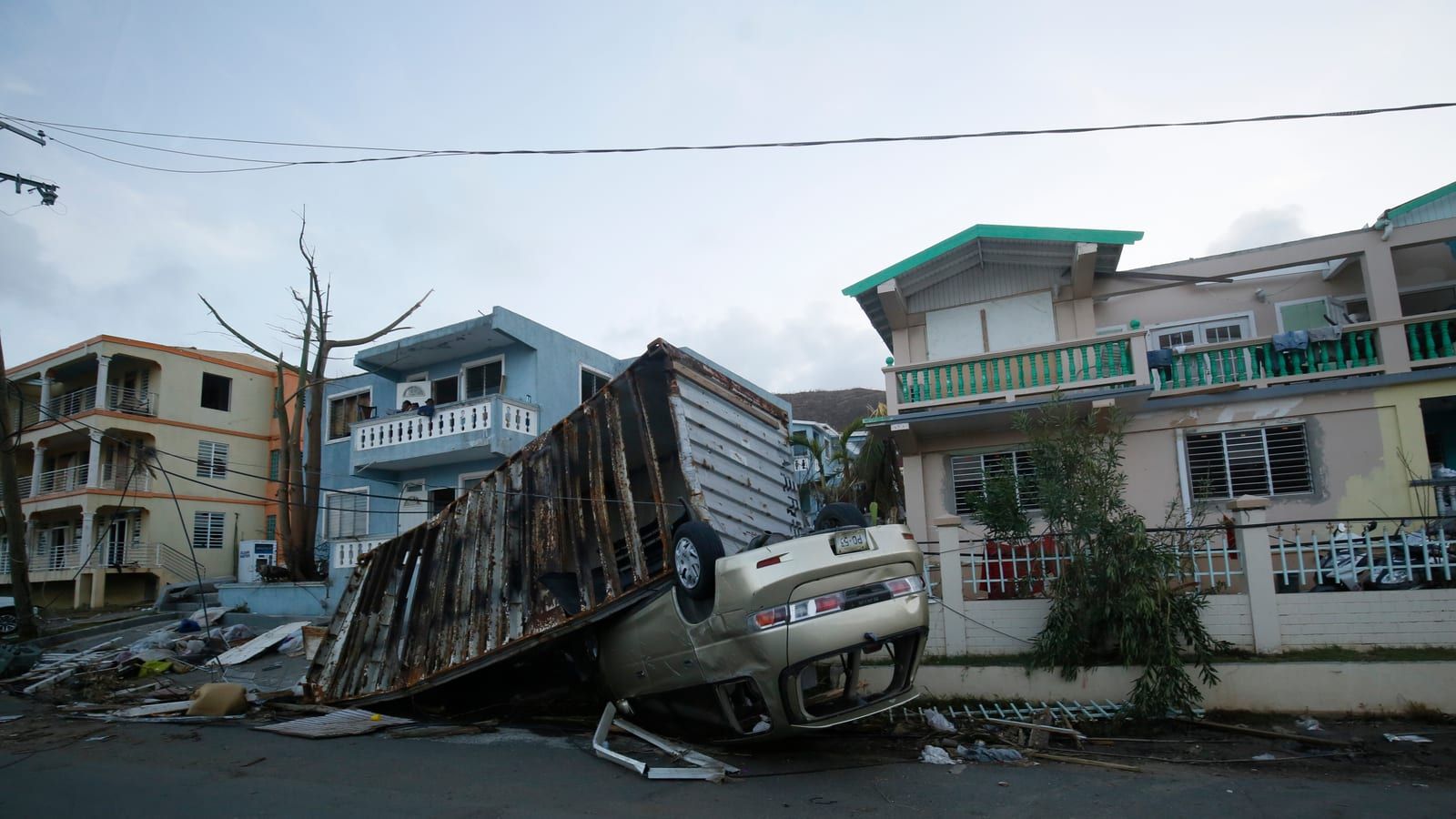
On this page
- 01The short answer, and the wind rating myth
- 023 ways wind moves a container
- 03Weight, sail area, and orientation
- 04Anchoring that reaches the corner castings
- 05Water is the other half of the problem
- 06Flooding and surge: a sealed box floats
- 07A container is not a storm shelter
- 08Your pre-storm checklist
- 09After the storm: what to inspect
- 10Insurance, permits, and when to bring in an engineer
The short answer, and the wind rating myth
Can a shipping container withstand a hurricane? A loaded container anchored to a sound base is one of the more storm-resistant things on a property. An empty, unanchored one is a large steel sail. Weight, anchoring, and siting decide which you have.
You will see a shipping container wind rating quoted as a hard number, 1 figure unsecured and a higher one anchored. Treat any mph figure quoted for a container as marketing, not engineering. There is no ISO wind-speed rating for a box on the ground: the ISO standards test stacking, racking, lifting, and weathertightness in transit.
In the United States the governing figures are the ASCE 7 design wind speeds your local code adopts, which vary by location, exposure, and structure type. A real answer is site specific and comes from an engineer.
3 ways wind moves a container
Wind acts in 3 ways, each with its own fix:
- Sliding. The box translates across its pad. Wind only has to beat the friction underneath, which drops as the ground turns to mud.
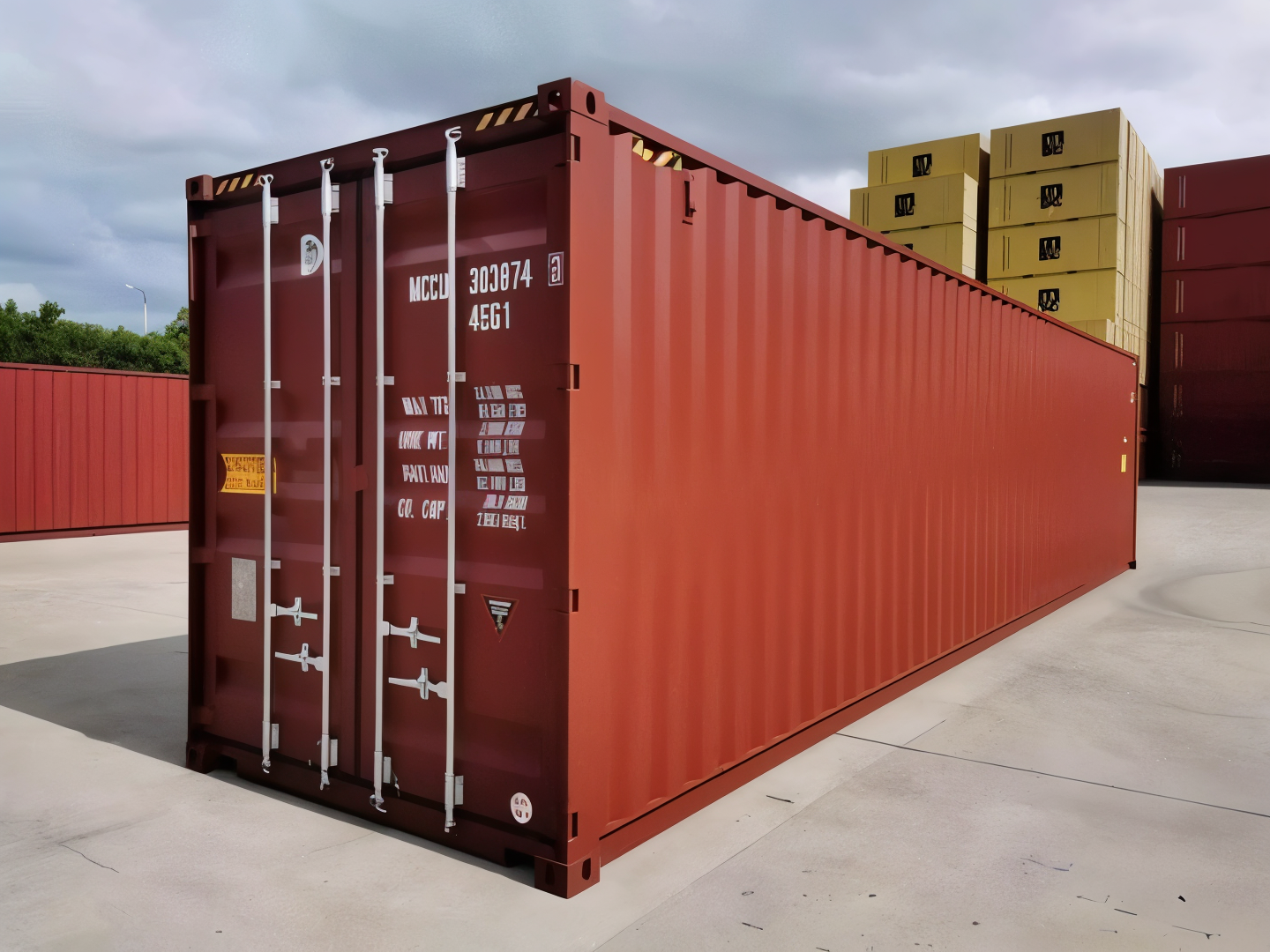
- Overturning or rolling. Pressure on the long broadside levers the box about its downwind bottom rail, and a 40ft shows about twice the side area of a 20ft. Hold-downs at all 4 corners resist it.
- Uplift. Airflow creates negative pressure on the roof and leeward wall, lifting a light unit off its base. It acts on the biggest surface the box has.
2 more modes cause much of the loss without the box moving: wind-driven water through worn gaskets and vents, and flying debris.
Weight, sail area, and orientation
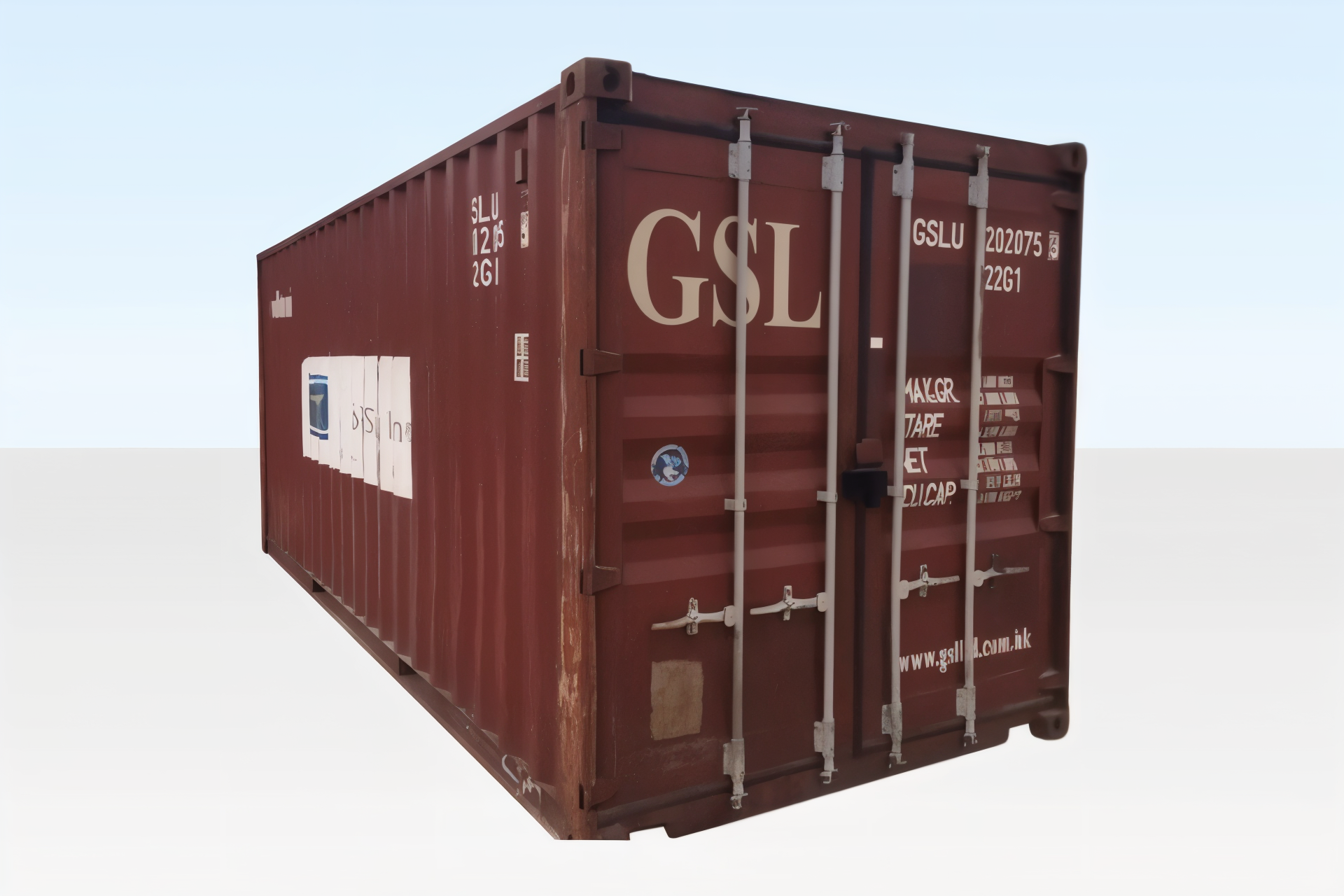
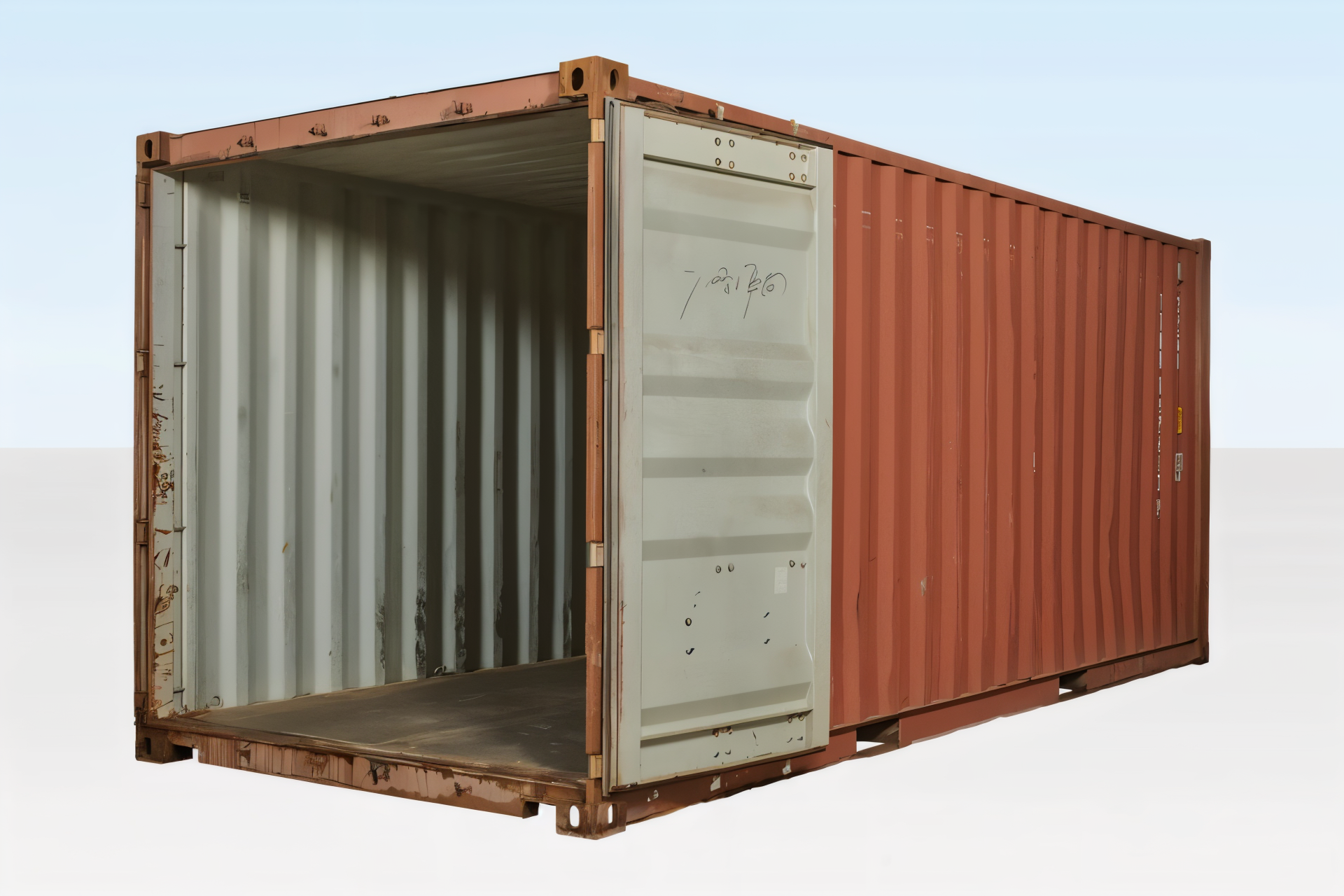
Weight against sail area is the whole story. A 40ft box shows a very large broadside while an empty one is light for its size, so the empty one is riskiest. A 20ft used cargo-worthy container, CW meaning certified fit for ocean transport, is easier to keep loaded and anchored than a 40ft cargo-worthy box.
- Keep it loaded, low. Dense contents stacked low raise resisting weight and drop the center of gravity. Check the floor and payload limits first.
- Point the long axis into the storm wind. That presents the narrow end and cuts pressure area and lever arm together.
- Put the doors downwind. Doors on the windward face can be caught, levered, and peeled open.
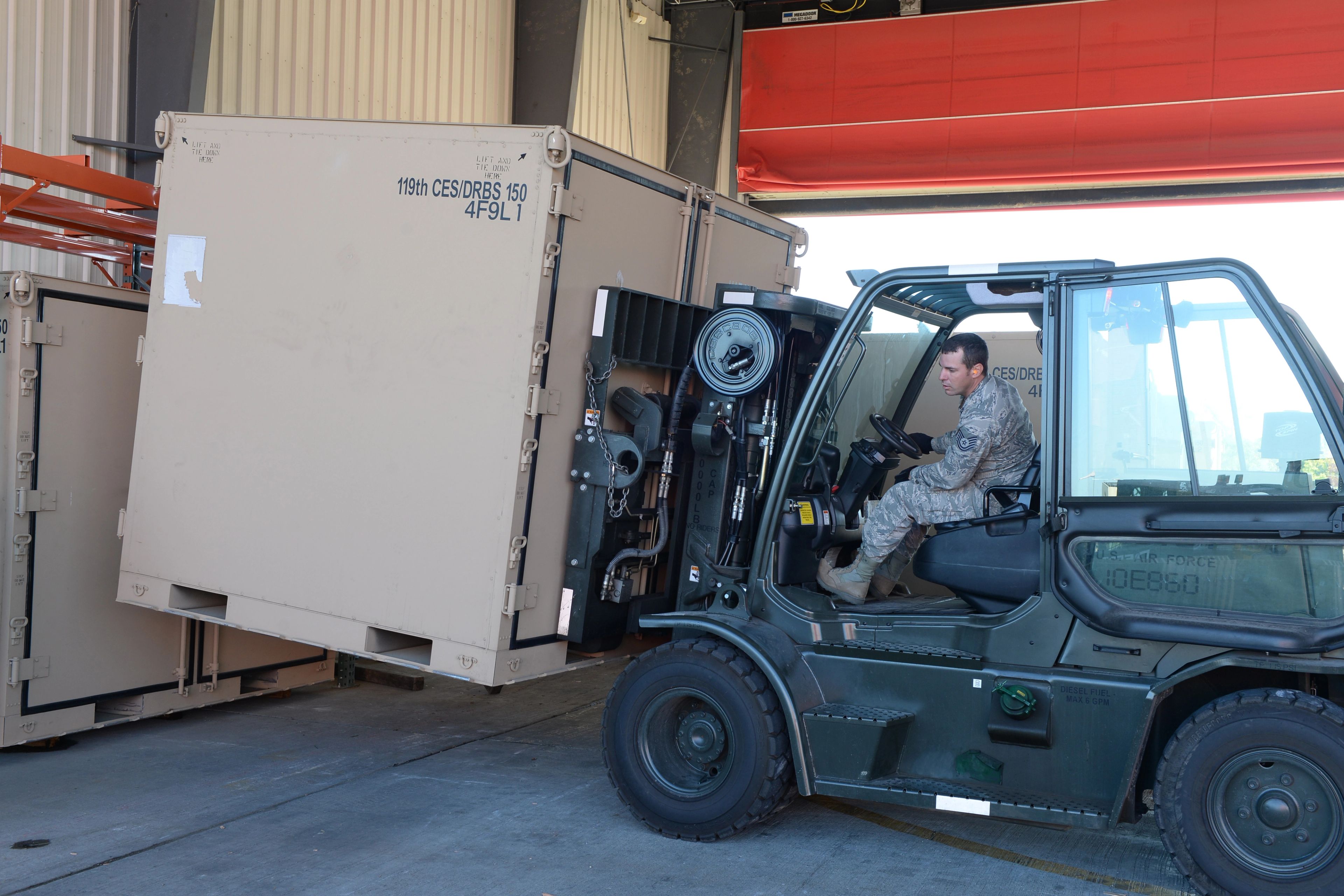
The cost is mobility: a loaded box is harder to reposition and needs a base that will not settle. Read how a container gets moved first.
Anchoring that reaches the corner castings
A container carries load through its 8 corner castings (the cast steel blocks at each corner that cranes grab) and the corner posts between. Anything you attach must reach that steel.
- Helical or screw ground anchors beside each corner, tied to the casting.
- Concrete deadmen at the corners, or a slab with cast-in anchor plates under the castings.
- Brackets or plates bolted or welded to the castings, then fixed to the anchor below.
- Straps over the box to ground anchors both sides, tensioned so it is clamped, not tethered.
- Twistlocks or bridge fittings between stacked or adjacent units, so 2 boxes resist as one.
The limits matter more than the list. Never strap over the roof panel, which is thin sheet, not a structural member, and never fix to the side corrugation, which is skin. Anchor size, spacing, and depth depend on soil, exposure, and code, so no numbers appear here: a local engineer sizes them for your site. No anchoring makes a container hurricane proof; it lowers the risk of sliding, rolling, and uplift, it does not remove it.
Water is the other half of the problem
A box that never moves can still lose everything inside. In sustained wind, rain travels sideways and finds the door gaskets, the vents, and any cut opening. A used unit graded WWT (wind and watertight: no daylight, doors that seal) is checked for this, but gaskets age.
Before the season, shut the doors on a strip of paper at several points and see how easily it pulls out. A flattened gasket is cheap to fix now and expensive later. Our guide to ventilation and condensation covers the airflow side.
Flooding and surge: a sealed box floats
A sealed steel box full of air is buoyant. In surge or deep flooding an empty container can float, and a floating container is a battering ram. Even one too heavy to float can be shoved off its pad.
- In a surge or flood zone, do not store what you cannot lose.
- Keep contents on pallets; standing water inside is common even when the box stays put.
- Drainage and elevation do more than steel thickness.
- After a flood, check the floor: thick plywood wicks water at cut edges and fastener holes.
Base construction is its own subject, covered in our guides to shipping container foundations and building a gravel pad that lasts.
A container is not a storm shelter
Do not shelter in a shipping container during a hurricane or a tornado, and do not let anyone else. Rated shelters and safe rooms are defined by FEMA and ICC criteria: engineered, tested against debris impact, anchored to a foundation built for the load. A container is none of that. Its 1 set of doors can be blocked by debris or jammed by a racked frame, and it can be moved with people inside. Follow evacuation orders.
Containers earn their place after the storm: staging supplies, secure equipment storage, and site offices, the pattern behind containers for emergency and disaster response. Occupied builds are a separate, engineered and permitted case.
Your pre-storm checklist
Work this roughly 48 hours out, while there is time.
- Move it if that is still practical: least exposed spot, long side sheltered, doors downwind. Inside 24 hours, skip this.
- Load it or ballast it low: weight low is the cheapest resistance you can add.
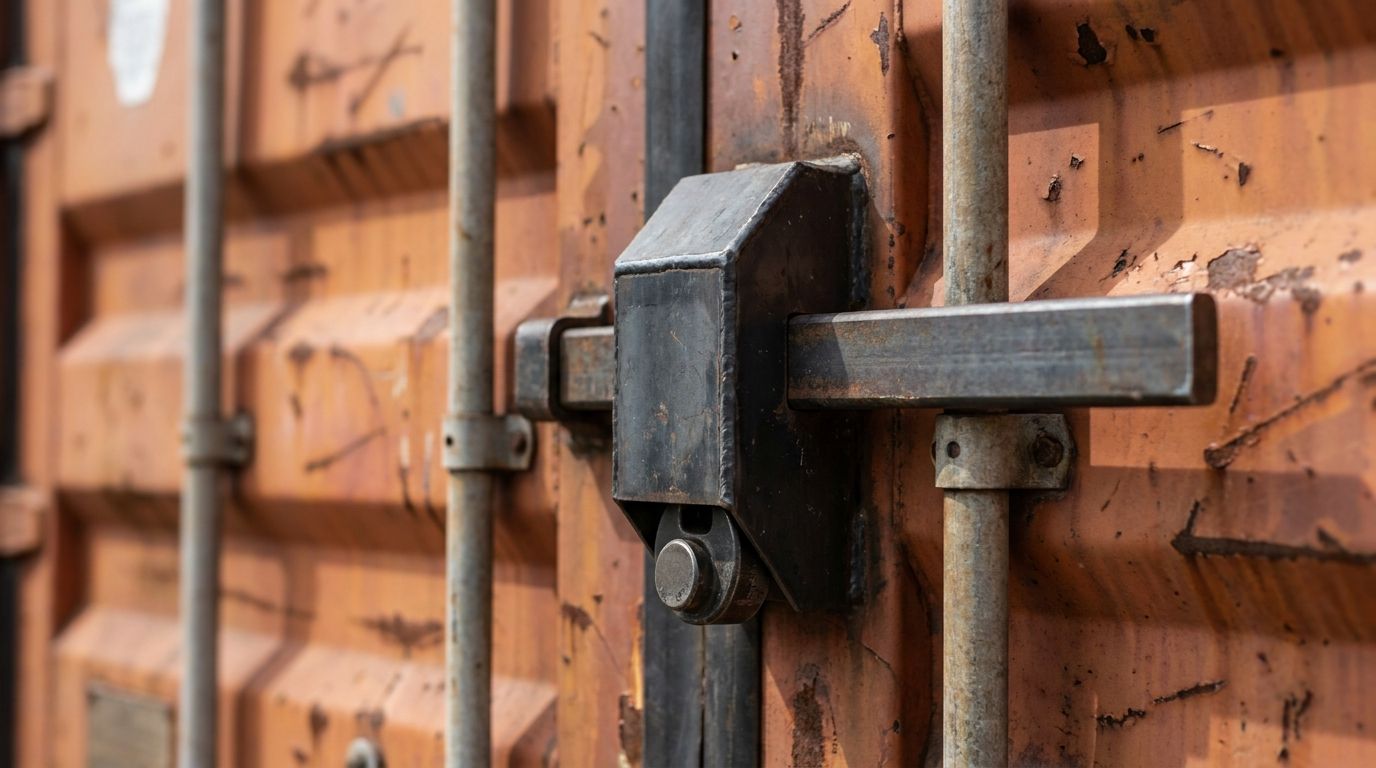
- Close and lock both doors and check the gaskets and cam seals; our guide to locking a container down covers theft.
- Remove or stow anything bolted on that catches wind: awnings, canopies, ramps, shelving, signage.
- Clear loose objects nearby; your own yard is the likeliest debris source.
- Photograph the unit, the anchors, and the contents; claims turn on evidence.
- Stop work near it and keep people clear.
The honest limit: an empty, unanchored box on soft ground the day before landfall has no quick fix. Move the contents somewhere safer.
After the storm: what to inspect
Photograph everything before you move or open anything.
- Did it shift? Check the anchors and your marks. The fastest level test is the doors: if they no longer swing and latch as they did, the frame is racked or the base settled. Relevel it before reloading.
- Roof. Ponding (standing water sitting in a dish) and impact dents.
- Gaskets and floor. Water inside, damp or swollen plywood, staining at the edges.
- Fresh scrapes. Debris strips paint and bare steel rusts, so touch it up.
Insurance, permits, and when to bring in an engineer
A container on your property may or may not be covered by a homeowners policy; coverage often turns on whether the carrier treats it as a structure, as personal property, or excludes it. Ask before the season. Permanent anchoring can also trigger a permit, because bolting a unit to a foundation can reclassify it as a structure. Our guide to container permits and zoning covers it. This is general guidance, not legal, tax, or insurance advice, and rules vary by city, county, and HOA.
Bring in a licensed local engineer for a coastal or high-wind site, an occupied or serviced unit, a stacked pair, or a jurisdiction that wants a wind-load calculation. For a backyard storage unit inland, weight low, orientation, a sound pad, and hold-downs at the castings are the right effort.
Tell us where the container will sit, how exposed it is, and what it will hold, and we will match the unit on size, condition grade, and weathertightness. Every unit is inspected and graded before delivery, and we check site access first. A tilt-bed (roll-off) truck slides it off at ground level with no crane or forklift, provided the site has the straight, obstacle-free run the truck needs to position and unload; heavy placements may need one. Send your site details for a free, itemized quote with no hidden fees, and we reply within 1 business day.