How to Move a Shipping Container: Methods, Costs, and Planning
To move a shipping container, empty it first, then match the method to the distance: tilt-bed trucks for local moves, flatbed and crane for longer hauls.
 Editorial TeamEditorial Team6 min read
Updated August 7, 2026
On this page
- 01How to move a shipping container
- 02Empty the container first
- 03Tilt-bed trucks: the default for local moves
- 04Flatbed plus crane or forklift for longer hauls
- 05Moving it a few feet on site
- 06Plan the route and both sites
- 07Check the container's condition before booking
- 08When selling and replacing beats hauling
- 09Frequently asked questions
- 10Get a free quote
How to move a shipping container
Moving a shipping container is a different job from getting one delivered. The box is already on your ground, possibly full, possibly settled in place for years. The method comes down to distance, weight, and access: a few feet on site is a rollers-and-patience job, across town is a tilt-bed truck, and across state lines is the moment to ask whether the box should make the trip at all.
The short version: empty the container, check its condition, then match the method to the distance. A tilt-bed (roll-off) truck, one with a bed that tips so the box slides on and off at ground level, handles most local moves. Longer hauls mean a flatbed with a crane or forklift at each end.
Empty the container first
An empty 20ft container weighs about 5,000 pounds and a 40ft about 8,500; loaded, either can weigh several times that, and nearly every moving method and quote assumes the lower number. Rollers dig in under a packed box, forklifts run out of rating, and a quote priced empty gets re-priced when the driver finds a full one. Emptying costs time and sometimes temporary storage, but it makes every other step cheaper and safer.
Tilt-bed trucks: the default for local moves
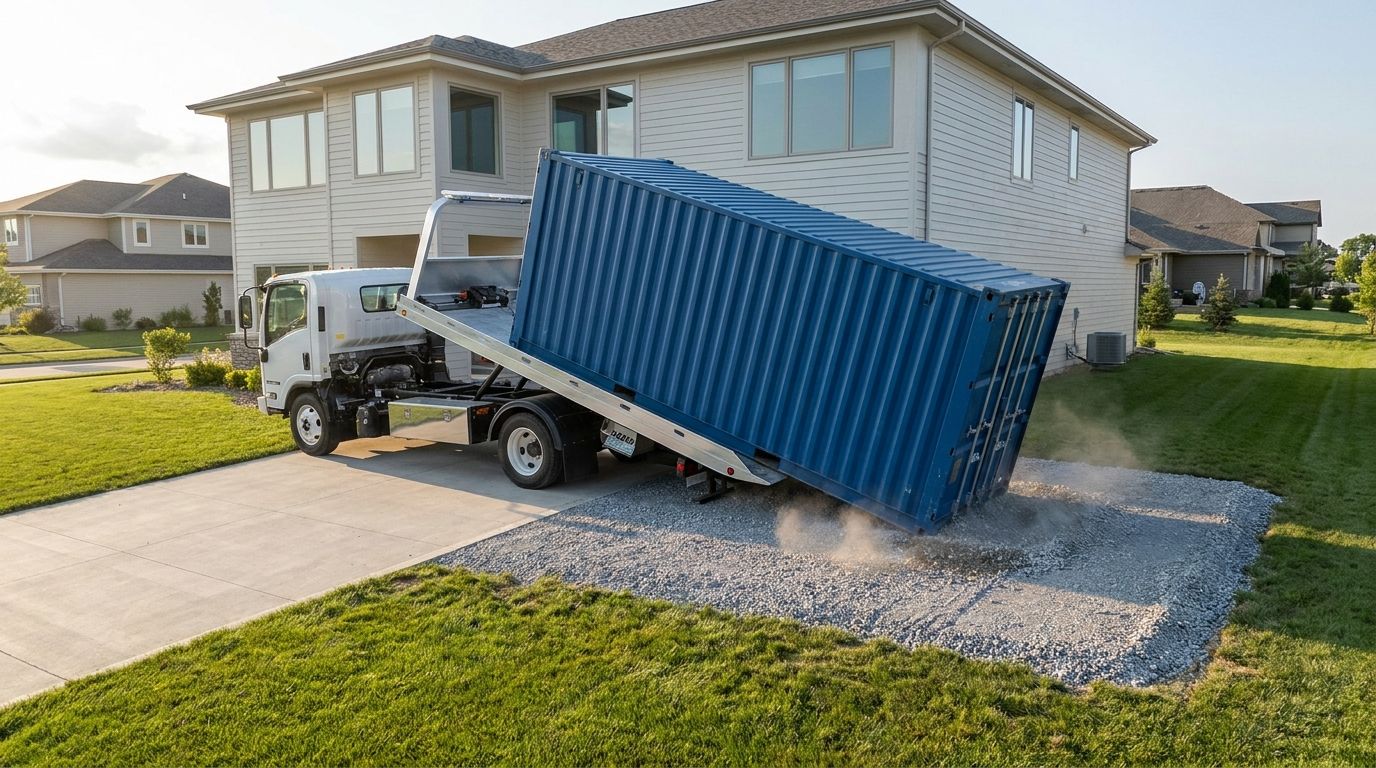
For a move across town, a tilt-bed truck is usually the whole answer: the bed tips, the container is winched up onto it at your site, and it slides back off at ground level at the destination, no crane or forklift at either end. The same equipment handles most container deliveries, including ours. The limits are reach and room: the truck needs a straight, obstacle-free run to line up with the container's ends, firm ground, and space for the truck plus the box's length; soft or sloped ground can stop the job before it starts.
Flatbed plus crane or forklift for longer hauls
As the distance grows, flatbed trucks take over, and a flatbed cannot load or unload itself, so you need a crane or a suitable forklift at both ends. Cranes lift from the corner castings, the reinforced steel blocks at each corner of the frame; the tradeoff is that crane time is billed by the hour, often with a minimum, which makes it a major cost driver on a long move. Forklifts need long, heavy-duty tines and a machine rated well above the container's weight.
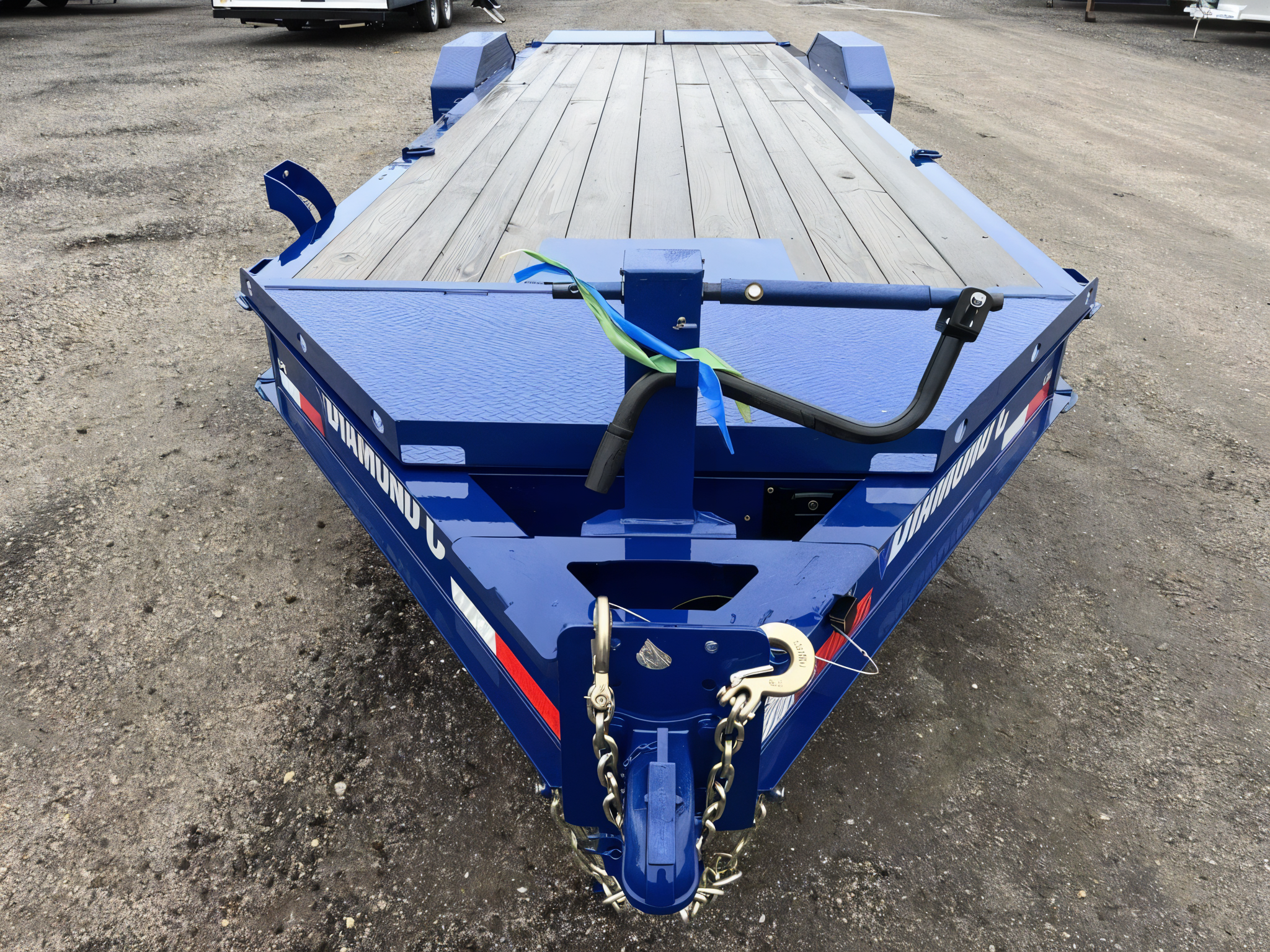
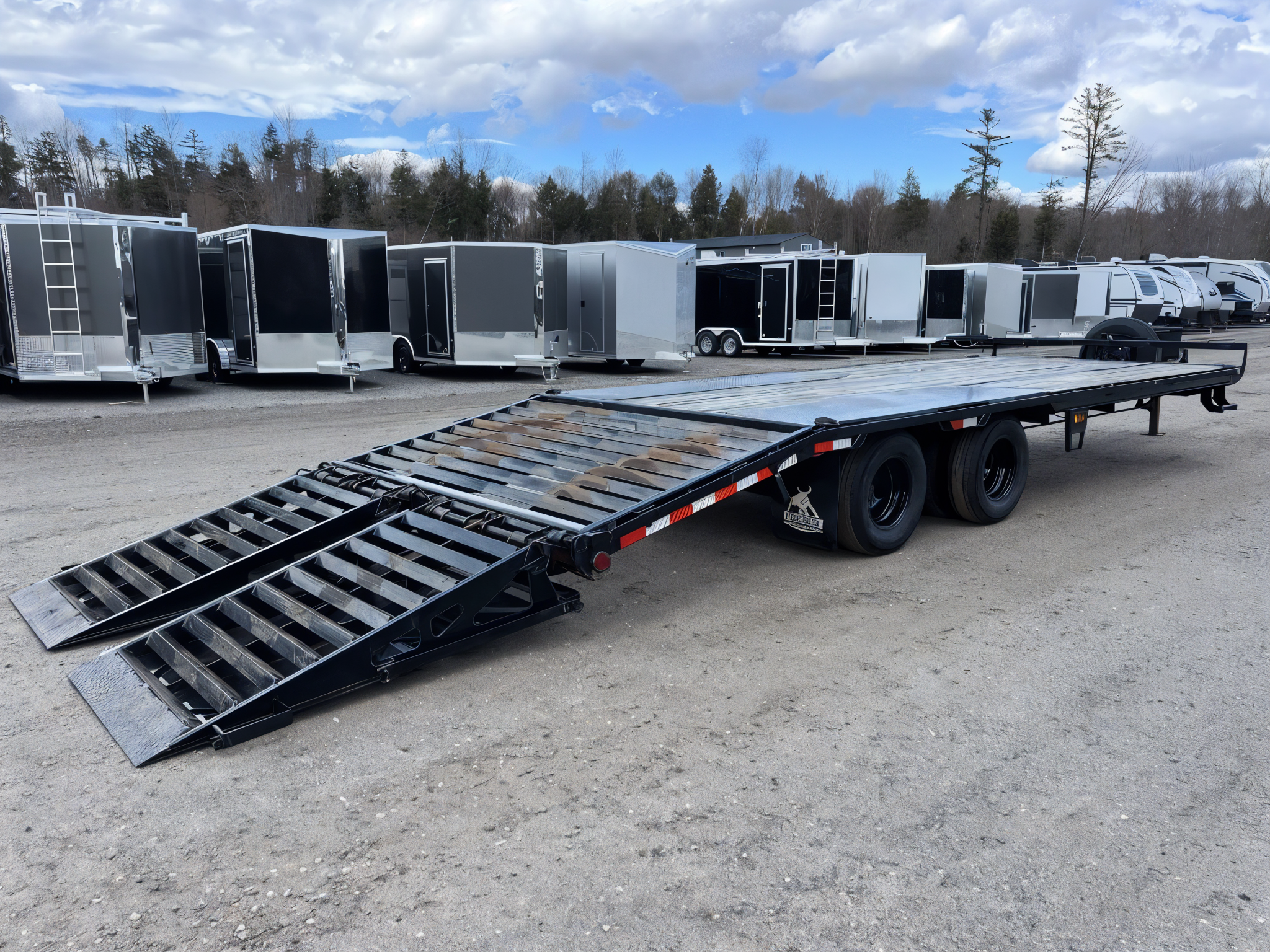
If you already run heavy equipment and a rated tow vehicle, an equipment trailer can move an empty 20ft box legally and cheaply. A low-profile 24ft equipment trailer keeps the deck low for loading, and a deckover equipment hauler carries the container's full 8ft width without overhang. You still need machinery to set the box on the trailer, chains through the corner castings, and a combined weight inside the truck's and trailer's ratings, so this is a route for operators who haul equipment routinely.
Moving it a few feet on site
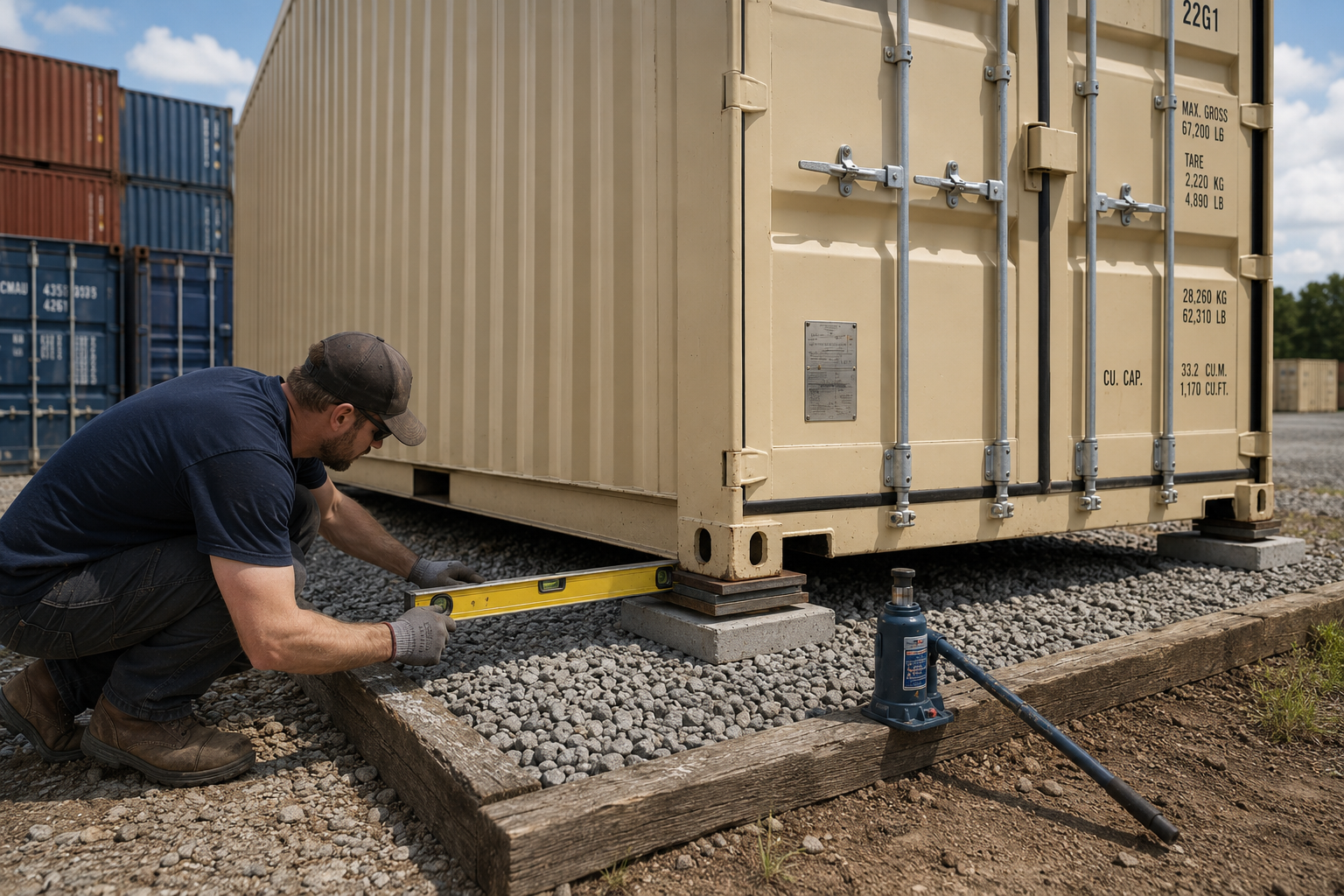
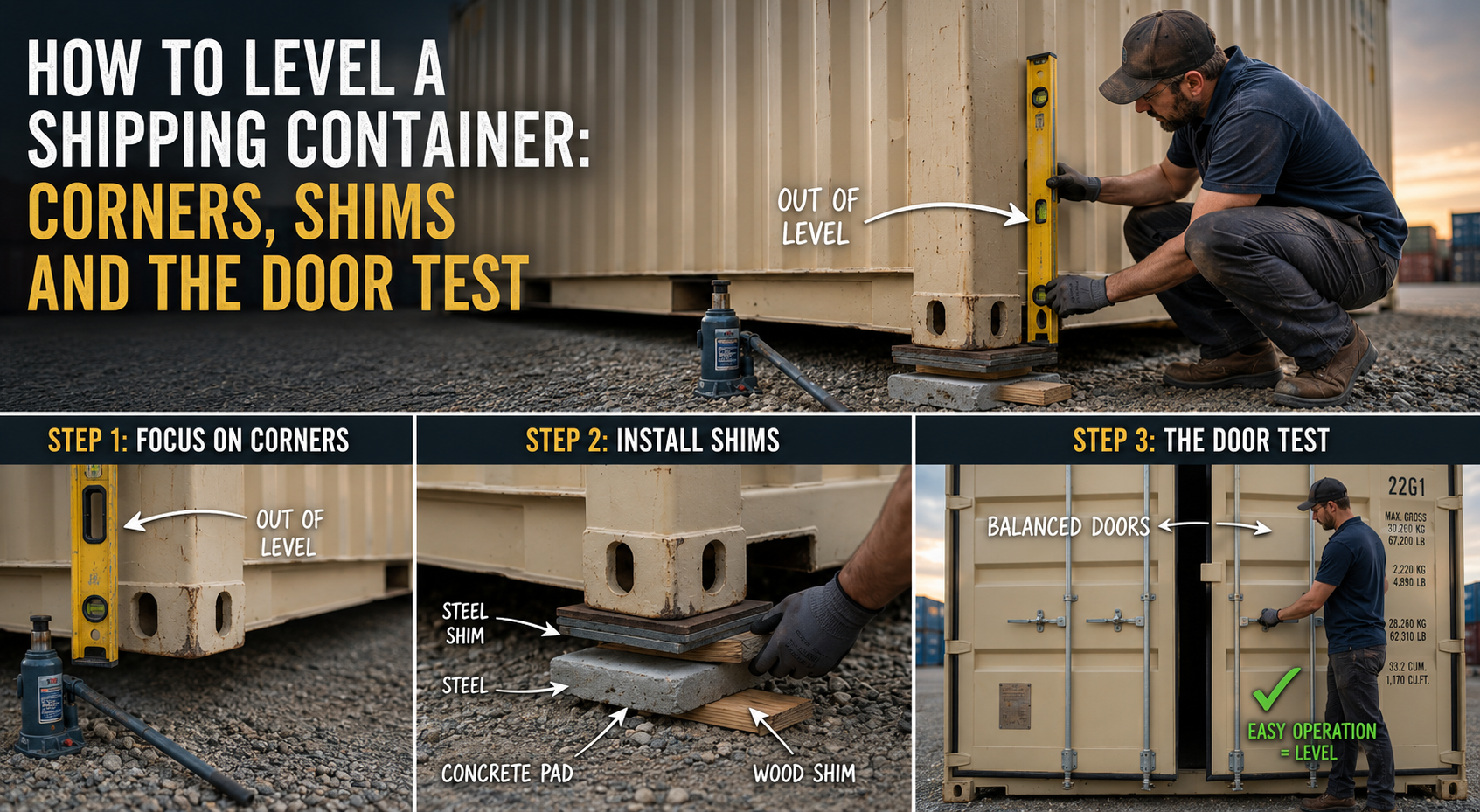
Sometimes the box only needs to move a few feet onto new blocking. Empty, on firm and level ground, that can be done without a truck: steel pipes or heavy rollers under the rails, container skates (low rolling dollies under the corners), or a jack lifting one end at a time. Two cautions matter more than any technique: never put any part of your body under a container that is not supported on cribbing rated to hold it, and never drag a box by one corner with a skid steer or tractor, because dragging twists the frame and racks the doors. If the ground is soft or sloped, a local tilt-bed operator can reposition it in minutes.
Plan the route and both sites
A move contains two deliveries: the pickup, which is a delivery in reverse, and the drop. Walk both sites the way a driver would: gates, low branches, and overhead lines all matter, and ground that was firm when the box arrived may be soft now. At the destination, have the spot prepared and level before the truck arrives; our guide to preparing your property for a container delivery applies to both ends of a move. A standard container on a proper truck is a normal legal load, but escorted oversize routes for modified units and city or HOA rules at the new site can add paperwork, and our post on shipping container permits covers what to check. This is general guidance, not legal advice.
Check the container's condition before booking
A box that has sat for years needs a once-over before anyone lifts it. Check the corner castings for rust-through, since every crane connection loads those 8 points. Sight down the side rails for sag or twist, check the floor and cross members for rot, and swing both doors; doors that bind often mean the frame has settled out of square. A tired container can take more damage from the lift than from the years of sitting, and a driver can refuse a unit that looks unsafe to load. If the box is borderline, that changes the math in the next section.
When selling and replacing beats hauling
Transport pricing scales with distance, crane time at both ends, escorts for oversized or modified loads, and how hard each site is to work. On a long interstate move, those costs stack up against the value of the box, and for an older unit they can approach what it is worth. The cleaner play is often to sell locally, where the buyer handles a short move, and buy a replacement near the destination with delivery included. A 20ft one-trip container (one-trip meaning it crossed the ocean once with a single cargo load, so it is close to new) will arrive in better shape than an old box after a long haul. The tradeoff: you give up a unit you know, and modifications do not transfer.
Frequently asked questions
Can I move a shipping container with a pickup truck and trailer?
Only if the box is empty, the truck and trailer are rated for the combined weight, and you have machinery to load it; a trailer cannot pick the container up. An empty 20ft is manageable with the right equipment, but a 40ft is a job for a professional hauler.
How do I move a shipping container a short distance without a crane?
On firm, level ground, an empty container can be shifted with pipe rollers, container skates, or a jack lifting one end at a time. Keep the moves short and slow, never get under the box, and if the ground is soft or sloped, hire a tilt-bed truck instead.
Do I need a permit to move a shipping container?
A standard container on a proper truck is a normal legal load, and the hauler handles the transport paperwork. Permits usually come up at the destination, where cities and HOAs may regulate container placement. Rules vary widely, so check locally; this is general guidance, not legal advice.
Get a free quote
If the math says replace rather than haul, tell us the size and condition you need and where it is going. We deliver to your site on a tilt-bed truck that sets the container down at ground level, no crane or forklift needed, and we check site access and clearance before delivery. Every unit is inspected and graded before delivery, the quote is free and itemized with no hidden fees, so what we quote is what you pay, and we reply within 1 business day.