How Much Weight Can a Shipping Container Hold?
How much weight can a shipping container hold? Both 20ft and 40ft boxes share a 67,200 lb max gross rating, so payload comes down to tare, floors, and roads.
 Editorial TeamEditorial Team6 min read
On this page
- 01How much weight can a shipping container hold
- 02Quick answer
- 03Max gross, tare, and payload
- 04Why a 40ft holds no more weight than a 20ft
- 05Floor loads and point loads
- 06Stacking strength is in the corner posts
- 07Road limits: a loaded box usually cannot travel
- 08What a loaded box does to the ground
- 09When a flat rack or open top is the right unit
- 10Frequently asked questions
- 11Get a free quote
How much weight can a shipping container hold
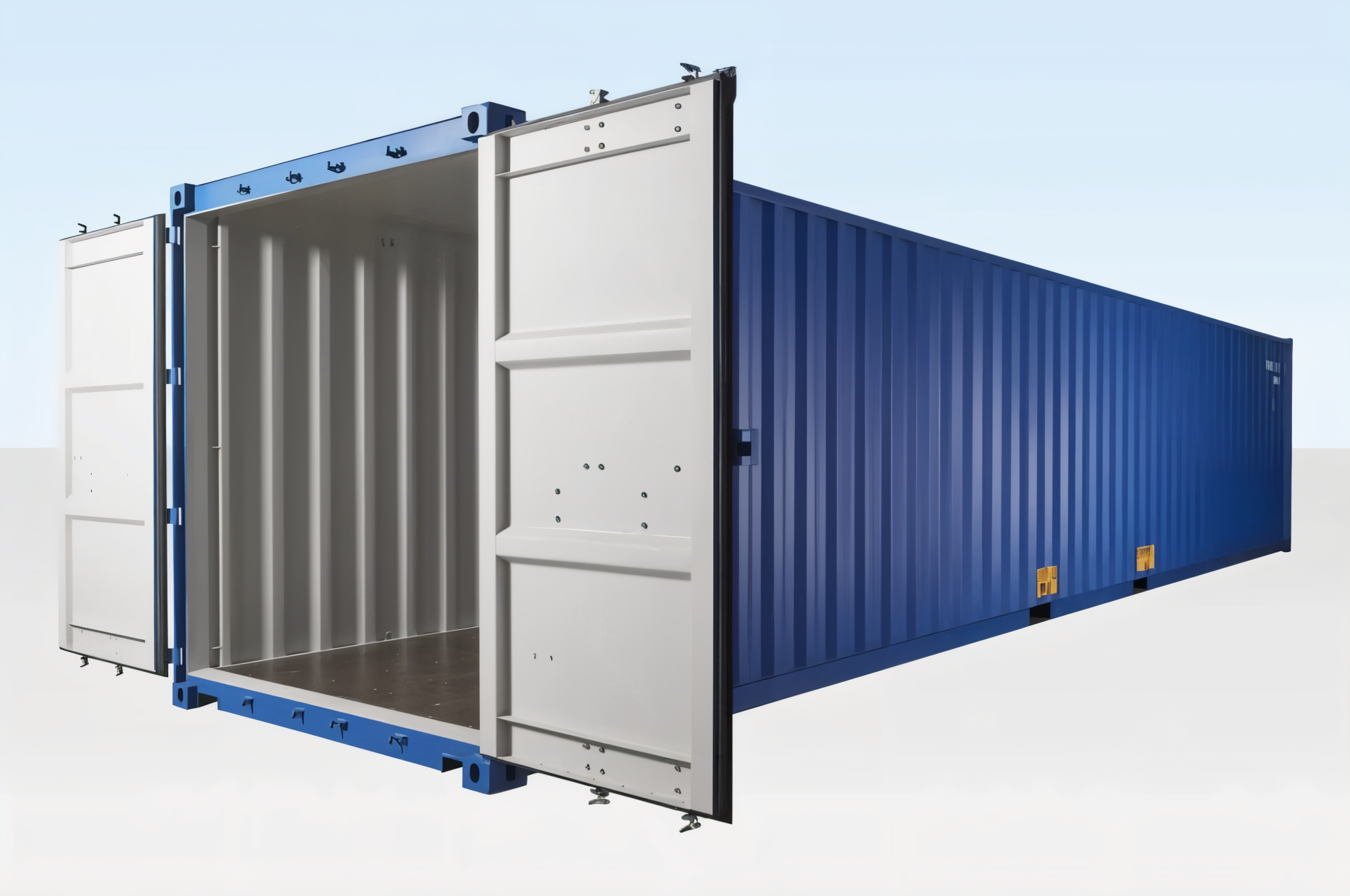
Every ISO shipping container has a metal data plate on its left door, the CSC plate (short for Container Safety Convention), and the answer to this question is stamped on it. Modern 20ft and 40ft boxes are rated for a maximum gross weight of 30,480 kg, about 67,200 lb, far more than most buyers will ever load, and far more than the road or your ground will usually allow.
That gap between the plate rating and the practical limit is what this guide covers: the 3 numbers that define container weight, why a 40ft holds no more than a 20ft, what the floor can take, and what happens when a loaded box has to travel or simply sit on soil.
Quick answer
A standard 20ft or 40ft ISO container is rated for a maximum gross weight of 30,480 kg (67,200 lb), the box plus everything inside it. Subtract the empty weight and a 20ft carries roughly 62,100 lb of cargo, while a 40ft carries roughly 58,900 lb. In practice, floor point loads, ground bearing, and the 80,000 lb US highway limit cap you well below those figures. The CSC plate on the door is the authority for your specific unit.
Max gross, tare, and payload
Three ratings define what a container holds, and mixing them up is the most common heavy-cargo mistake.
- Max gross is the total permitted weight of the loaded box, steel plus cargo. The modern ISO rating for both 20ft and 40ft units is 30,480 kg (67,200 lb).
- Tare is the empty weight: about 5,070 lb for a 20ft standard and about 8,270 lb for a 40ft, which carries roughly twice the steel.
- Payload is what remains for cargo, max gross minus tare: roughly 62,100 lb for a 20ft and 58,900 lb for a 40ft.
These are ISO ratings, not a promise about your unit. Many older 20ft boxes were plated at 24,000 kg (52,910 lb) gross, so read the CSC plate before you plan a heavy load.
Why a 40ft holds no more weight than a 20ft
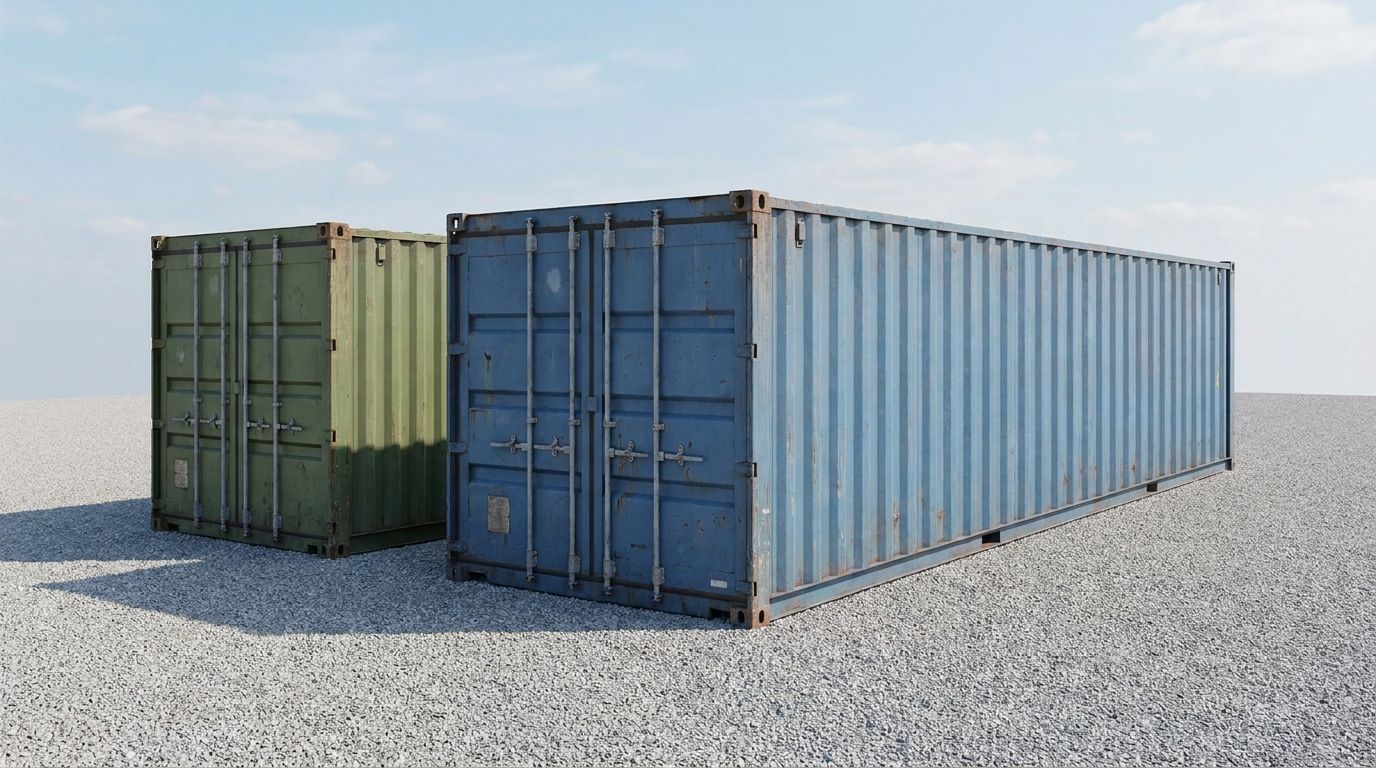
A 40ft should logically carry twice what a 20ft does, but it does not. Both share the same 30,480 kg gross cap, and because the 40ft weighs about 3,000 lb more empty, its payload is actually slightly lower. The longer box buys volume (about twice the cubic capacity), not weight capacity, which is why dense cargo such as metal, liquids, and tile ships in 20ft units.
Height works the same way. A 40ft one-trip high cube container stands 9ft 6in, a foot taller than standard (one-trip means the unit made a single cargo voyage from the factory). The extra foot adds volume, not a higher rating. If weight is your constraint, a bigger box does not fix it.
Floor loads and point loads
The payload rating assumes cargo spread along the floor, which is marine plywood over steel crossmembers. Concentrated weight on a small footprint is where floors actually fail. The ISO floor test assumes a forklift axle load of about 12,000 lb (5,460 kg), so a pallet jack or compact forklift is fine on a sound floor, but a heavier machine can break through while the box is nowhere near its payload. Machinery feet, jack stands, and coils concentrate weight the same way.
The fix is dunnage, meaning lumber or steel plate laid under the load to spread it. Run timbers across the container's width so each one bridges several crossmembers, keep the heaviest points over the steel rather than mid-panel, and balance weight between the two ends for the day the box is lifted or trucked.
Stacking strength is in the corner posts
Loaded containers stack many units high at sea, but that strength lives entirely in the 4 corner posts and the castings on them. The roof sheet is thin steel with no load rating. If you stack containers on site, align the castings exactly; a box resting even slightly on another's roof panel is bearing on the one surface not built for weight.
Road limits: a loaded box usually cannot travel
The max gross rating is structural, not legal. On US interstates the federal cap on a truck's total weight is 80,000 lb, covering tractor, chassis, container, and cargo together. A tractor and chassis typically weigh in the low-to-mid 30,000s of pounds, so a 5,070 lb 20ft box leaves roughly 40,000 to 44,000 lb for cargo before overweight permits come into play, well under the 62,100 lb plate figure. State and axle rules vary, so confirm with your hauler; this is general guidance, not legal advice.
The practical pattern follows from the math: containers travel empty or light and get loaded in place. A box you fill with dense material is a box that stays put, ships partial, or moves under permit.
What a loaded box does to the ground
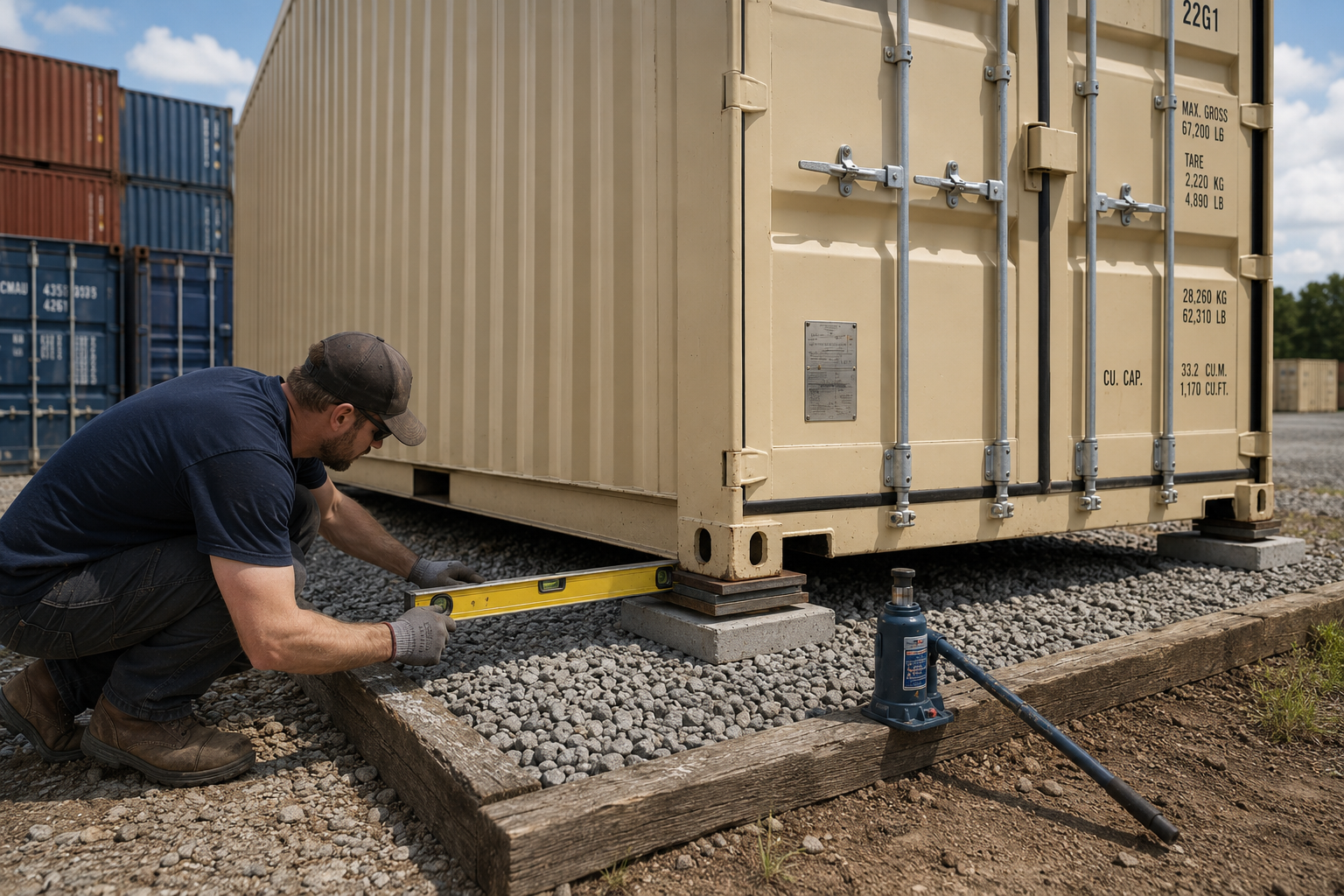
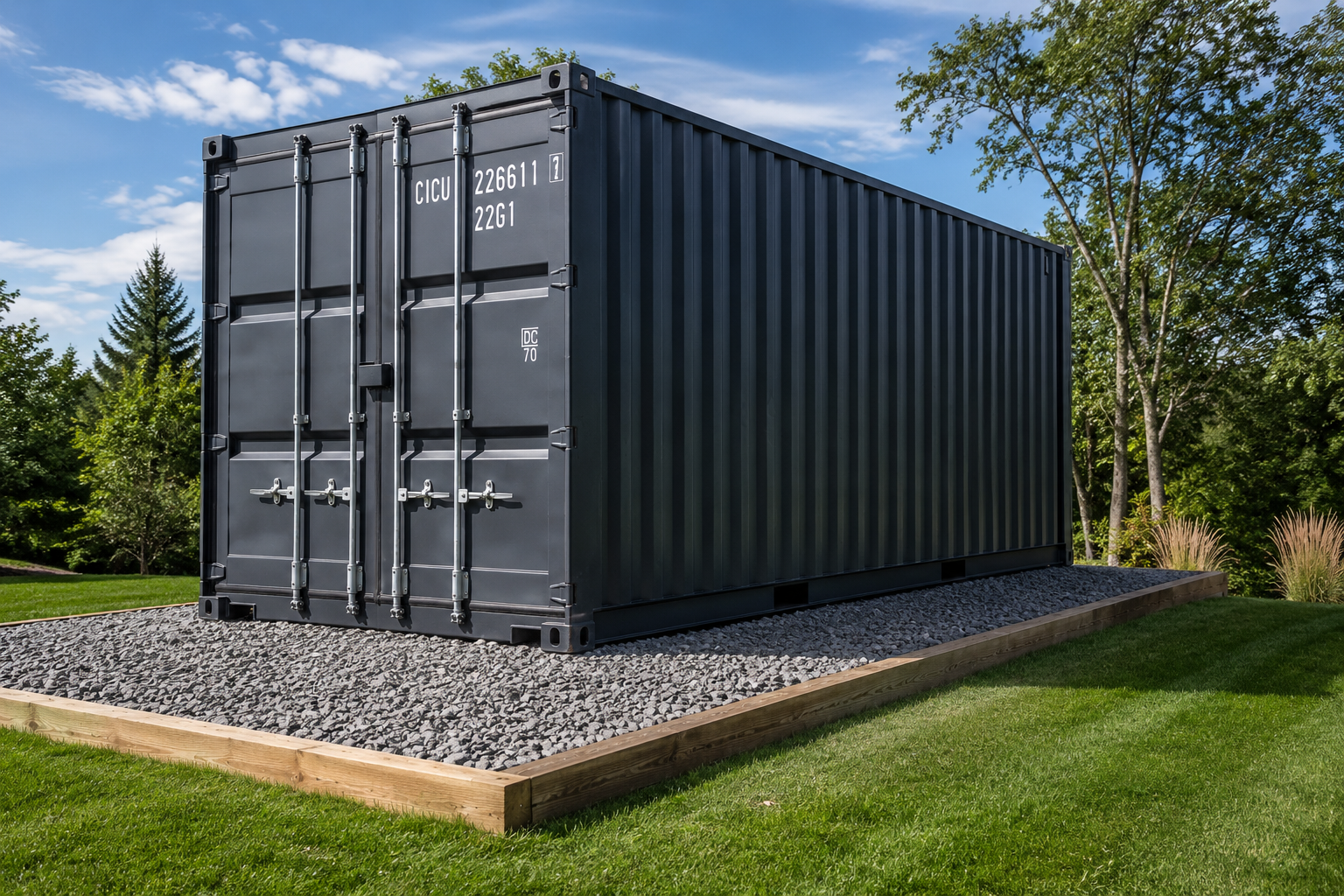
Once the container sits loaded on your land, the problem moves to the soil. The full weight rests on 4 corner castings, each only about 7 in square, and soft or wet ground lets a corner sink. The failure is quiet: the frame racks (twists out of square) and the doors stop closing. Prepare the base before you load heavily; our guides to shipping container foundations and building a gravel pad cover the options and how to size them for heavy use.
When a flat rack or open top is the right unit
Some cargo is too heavy, wide, or tall for a standard box no matter what the plate allows, and 2 specialty units exist for exactly that.
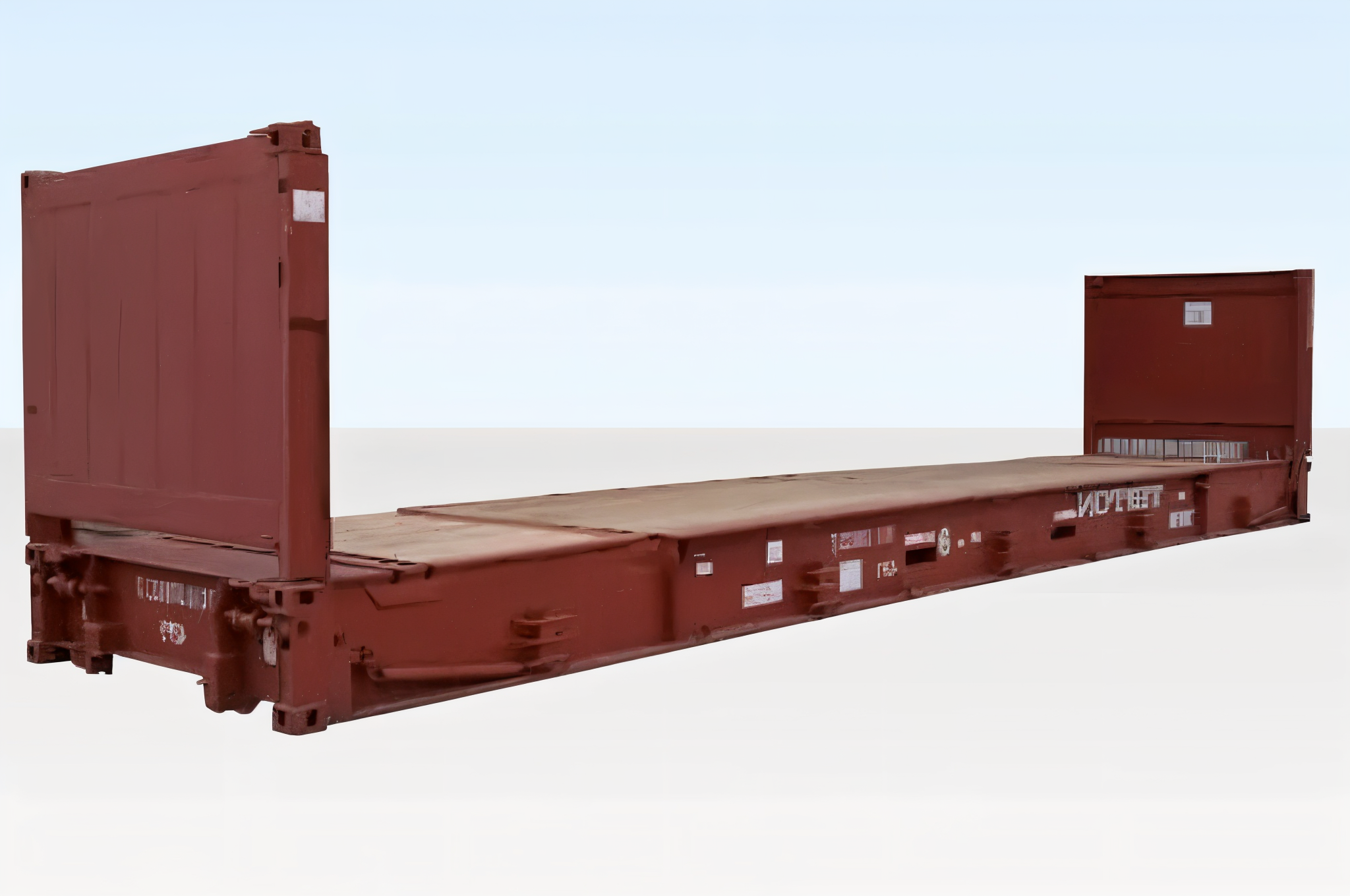
A flat rack is a reinforced deck with end walls and no roof or sides, made for machinery, vehicles, and steel. You load it from the side by forklift or from above by crane, and lash the cargo to tie-down points instead of relying on walls; the deck is built for point loads a standard floor cannot take. A 40ft flat rack container suits long machinery and vehicles, while a 20ft used flat rack container handles short, dense pieces. The tradeoff is exposure: cargo needs tarping or has to tolerate weather.
An open top keeps 4 walls and the cargo doors but swaps the steel roof for a removable tarp over bows, so tall or awkward pieces crane in from above and still ride enclosed. A 40ft open top shipping container gives more protection than a flat rack and more loading access than a standard box, though a tarp is never as watertight as welded steel.
Frequently asked questions
How much weight can a 20ft shipping container hold?
A modern 20ft standard unit is rated at 30,480 kg (67,200 lb) max gross, which leaves roughly 62,100 lb of payload after its 5,070 lb tare. Older units are often plated at 24,000 kg (52,910 lb), so check the CSC plate on the door.
Can a forklift drive inside a shipping container?
A compact one, yes. Container floors are tested to a forklift axle load of about 12,000 lb, so pallet jacks and small forklifts are fine on a sound floor. Keep heavier machines out, or lay steel plate to spread the wheel loads.
Can a fully loaded container be trucked on US highways?
Rarely at its full rating. The 80,000 lb federal truck limit, minus the tractor, chassis, and container, leaves roughly 40,000 to 44,000 lb for cargo without permits. Dense loads ship partial, move under overweight permits, or get loaded after the container is delivered.
Get a free quote
If your cargo is heavy, tell us what it weighs and how you plan to load it, and we will match the unit to the job: a standard box, a flat rack, or an open top. Every unit is inspected and graded before delivery, the quote is free and itemized with no hidden fees, and we reply within 1 business day. Standard boxes come off a tilt-bed (roll-off) truck at ground level with no crane needed, while heavy specialty units may need a crane; either way, we check site access and clearance before delivery.