Customized Containers for Sale: What Sets the Price Range
Customized containers for sale span a wide price range. Here is what actually moves the number — base box, scope, systems, finish, and delivery.
 Editorial TeamEditorial Team10 min read
On this page
- 01Quick answer
- 02What you are actually paying for
- 03The price ladder: what each rung actually buys
- 04Why two sellers quote the same 20ft office so differently
- 05What a custom quote should itemize
- 06Buy prefab, or commission a build?
- 07Lead time is a cost, not a scheduling note
- 08Frequently asked questions
- 09Get a free quote
Search for customized containers for sale and you get two kinds of result: galleries of finished builds with no price attached at all, and price tables built around a spec that is not yours. Neither one helps you budget.
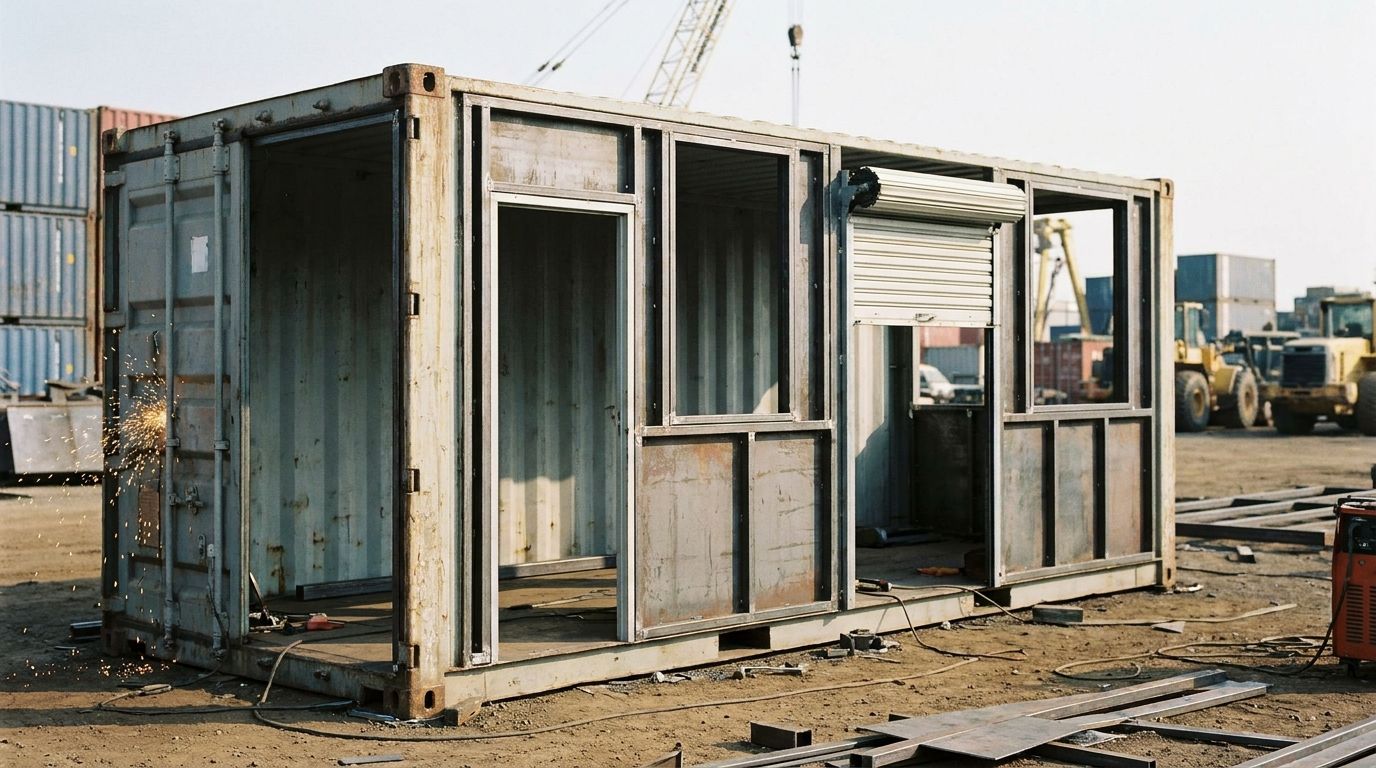
A customized container is not a single product with a single number. It is a base box with work done to it, and the work is where the money goes. Two units photographed side by side, both captioned 20ft office, can sit at opposite ends of the range because one is a painted shell with a door cut into it and the other is insulated, wired, climate-controlled, and furnished.
This guide breaks the price into the five things that actually move it, then shows you a real ladder: live product cards at each rung, so you can see the spread for yourself instead of trusting a chart that went stale the month it was published.
Quick answer
A customized container is priced as a stack, not as an item. Start with the base box (size, condition grade, and standard height or high cube), add the scope of the conversion (every opening cut, plus insulation, electrical, plumbing, and HVAC), add any systems such as solar or climate control, then add the finish level, which runs from bare shell to turnkey. Delivery and site access set the final landed cost. The product cards further down show current pricing for real units at each rung of that ladder, which is a more honest answer to the range question than any table we could type here.
What you are actually paying for
The base box
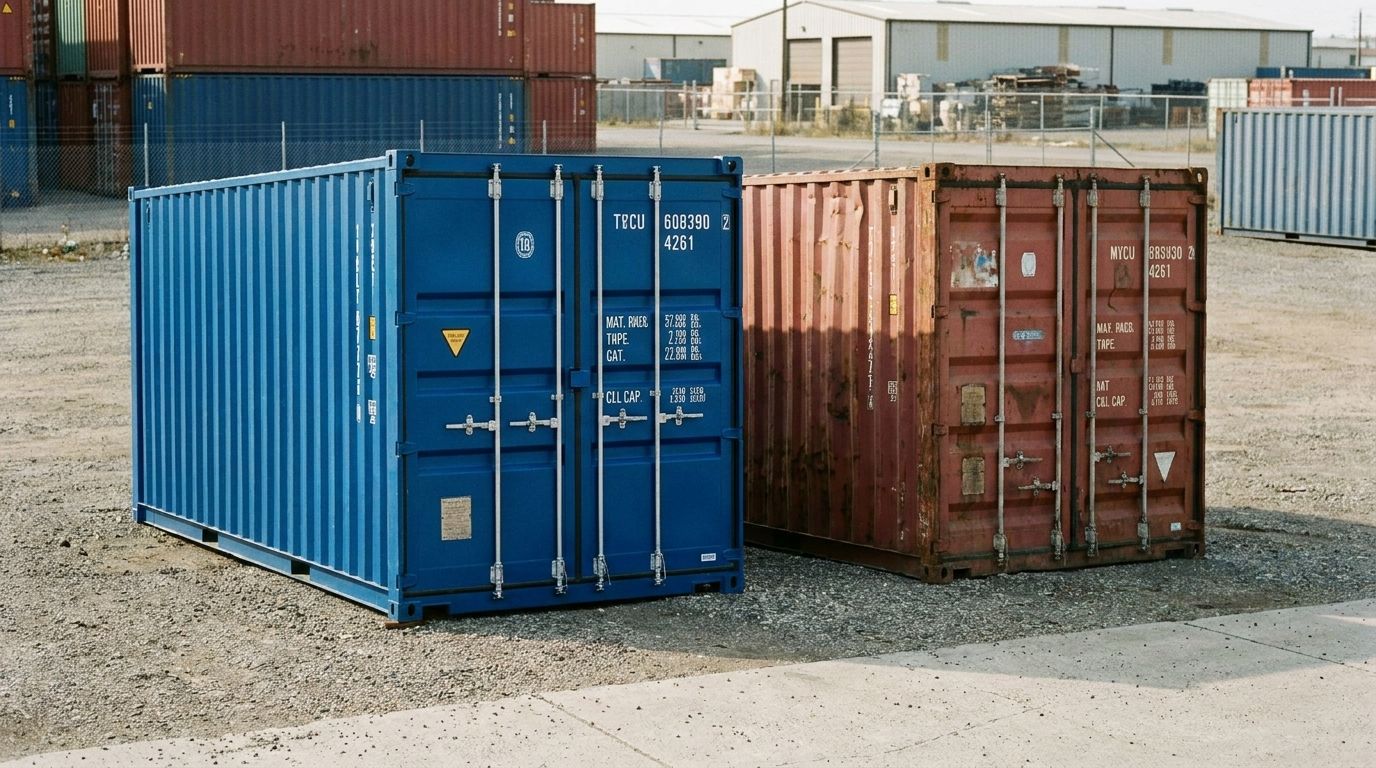
Every custom unit starts as a container that someone already paid for, and its condition grade carries straight into your price. A one-trip unit, meaning it made a single cargo run from the factory before sale, costs more than a cargo-worthy (CW) box inspected fit to carry freight, which in turn costs more than a wind and watertight (WWT) unit that keeps weather out but shows its age.
For a shell that will be lined, painted, and never inspected from the outside, a lower grade can be the smarter buy. For anything with windows and a customer walking through the door, the grade you start from is the finish you end with, because dents and patch welds telegraph through paint.
Height is the other base decision. A high cube stands about 1ft taller than a standard container, and once you subtract a floor build-up and a ceiling for insulation and wiring, that foot is the difference between standing up comfortably and stooping. It adds little at purchase and cannot be added later, so if the unit will ever be occupied, price the high cube first.
If you are still weighing grades, our guide to new versus used shipping containers covers that tradeoff in detail, and how much a shipping container costs owns the pricing question for plain, unmodified boxes. This post picks up where the modifications start.
The scope of the conversion
Modification work is quoted to scope because it is labor before it is parts. Cutting an opening in a container wall is structural: the corrugated panel is doing a job, so the opening has to be framed and reinforced, and that framing is billed whether the hole ends up holding a window, a personnel door, or a roll-up front. Double the number of openings and you roughly double that line.
Insulation, lining, electrical, plumbing, and HVAC stack on top in roughly that order of cost, with plumbing usually the steepest single jump because it brings supply, drainage, and a fixture list along with it. What is technically possible is a separate question, and our post on shipping container modifications covers the full catalogue of options. For pricing, the useful mental model is simpler: count the openings, count the systems, and ask whether the unit has to be occupied by people or only by inventory. Occupied units cost more, because they carry comfort, code, and finish requirements that a store room never does.
Systems and finish level
Solar, battery storage, and climate control are the clearest step up on any quote, because they are equipment carrying their own cost rather than labor on steel. An off-grid package has to be sized to what you actually plan to run, so a quote that lists a solar option without naming the load it supports is not a quote you can compare against anything.
Finish level is the variable buyers underestimate. The same shell can be handed over bare, primed for a contractor to finish, or delivered furnished and ready to occupy, and each stage adds both material and hours. A bare shell is cheaper to buy and slower to actually use; a turnkey build costs more and starts working the day it lands. Neither is wrong, but you should know which one you are pricing.
Delivery and site access
Delivery is part of the landed cost, not a footnote to it. A tilt-bed (roll-off) truck slides the container off at ground level with no crane or forklift, which is the standard method and the cheapest one. Heavier fitted cabins, and units that have to be set onto a foundation or lifted over an obstacle, may need a crane instead, and that is a separate line on the quote. We check site access and clearance before delivery, since the truck needs a straight, obstacle-free run to position the unit and unload it.
Ask for delivery to be quoted in the same document as the unit. A conversion quote that stops at the yard gate is not comparable to one that ends at your site.
The price ladder: what each rung actually buys
Rather than type a range that ages badly, here is the ladder itself. Each card below is a real unit in our catalogue and shows its current price, so the spread you are looking at is live rather than remembered. Read them as rungs rather than recommendations — the right rung is the one that matches what your unit has to do.
Rung 1: a refurbished shell
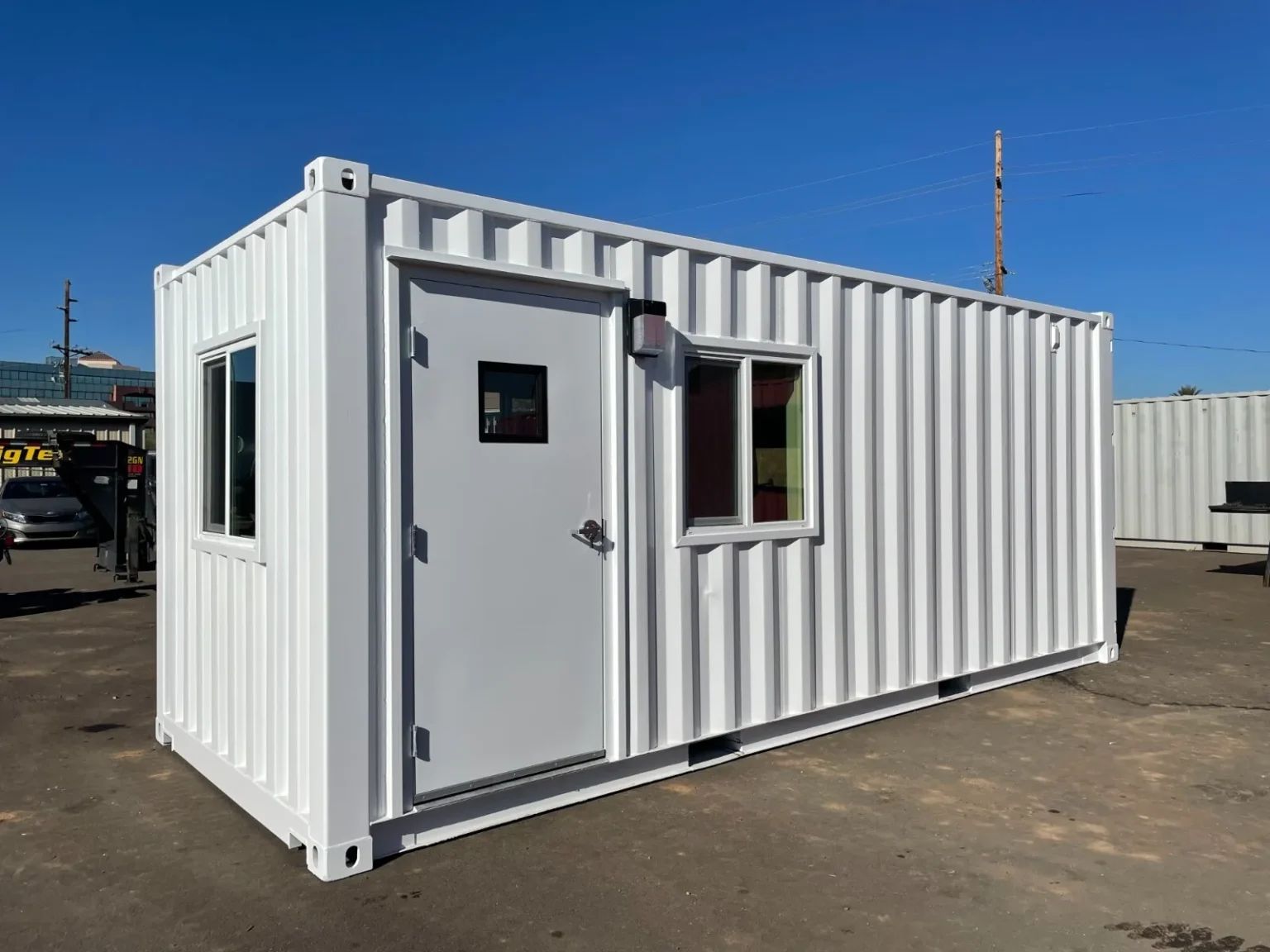
The entry point for a customized unit is a container that has already been repaired, repainted, and lightly fitted out. A 20ft refurbished office container sits here. The conversion work is done and the finish is basic, so you are mostly paying for a box that is clean, dry, and usable as a site room on day one.
Rung 2: a custom conversion base
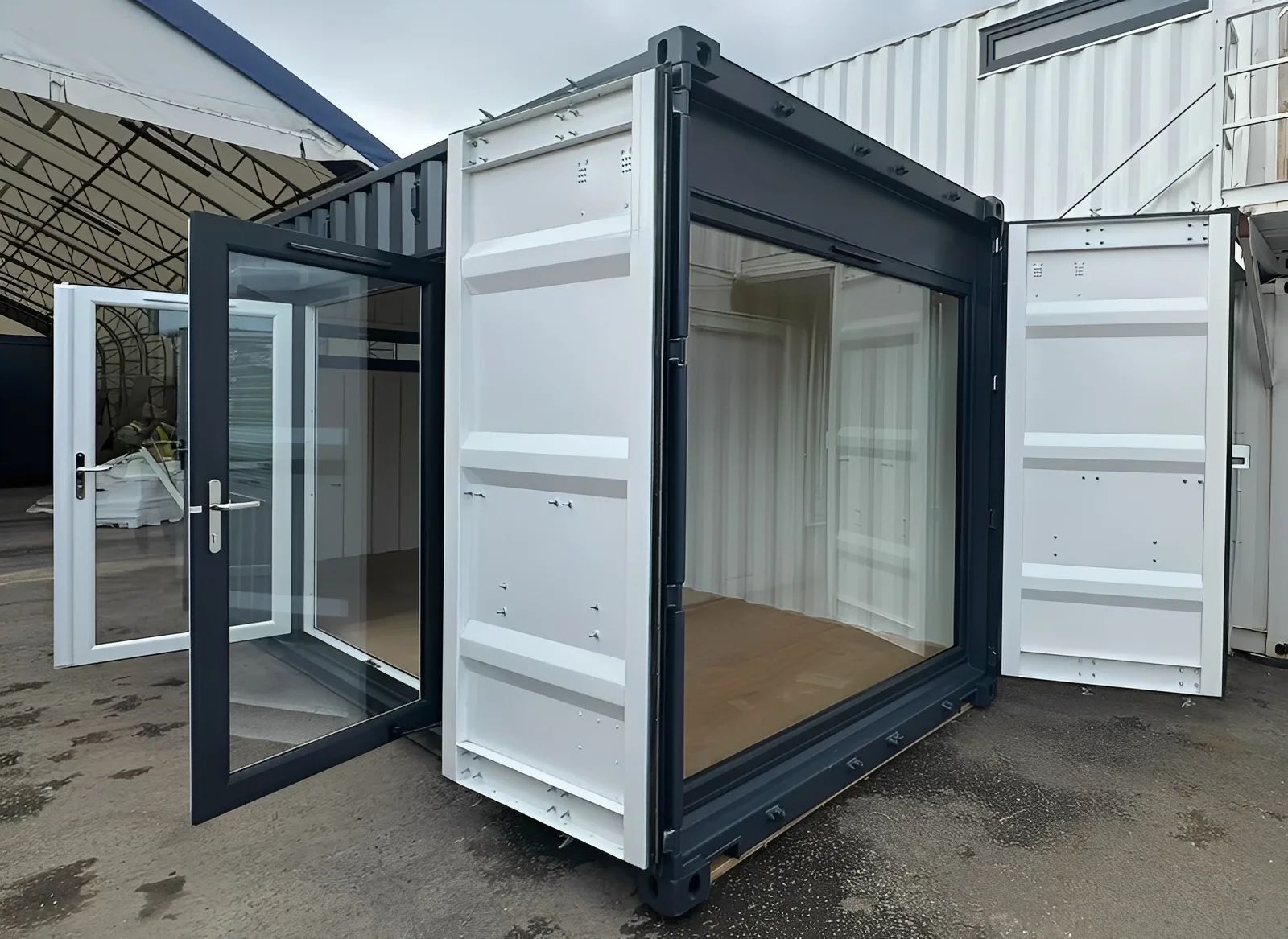
One step up is a unit converted for a purpose rather than merely refurbished, such as a 20ft x 8ft custom container conversion built as a portable building. The premium over rung 1 buys conversion scope: openings, framing, and a deliberate interior layout instead of a repaint.
Rung 3: a fitted office with climate control
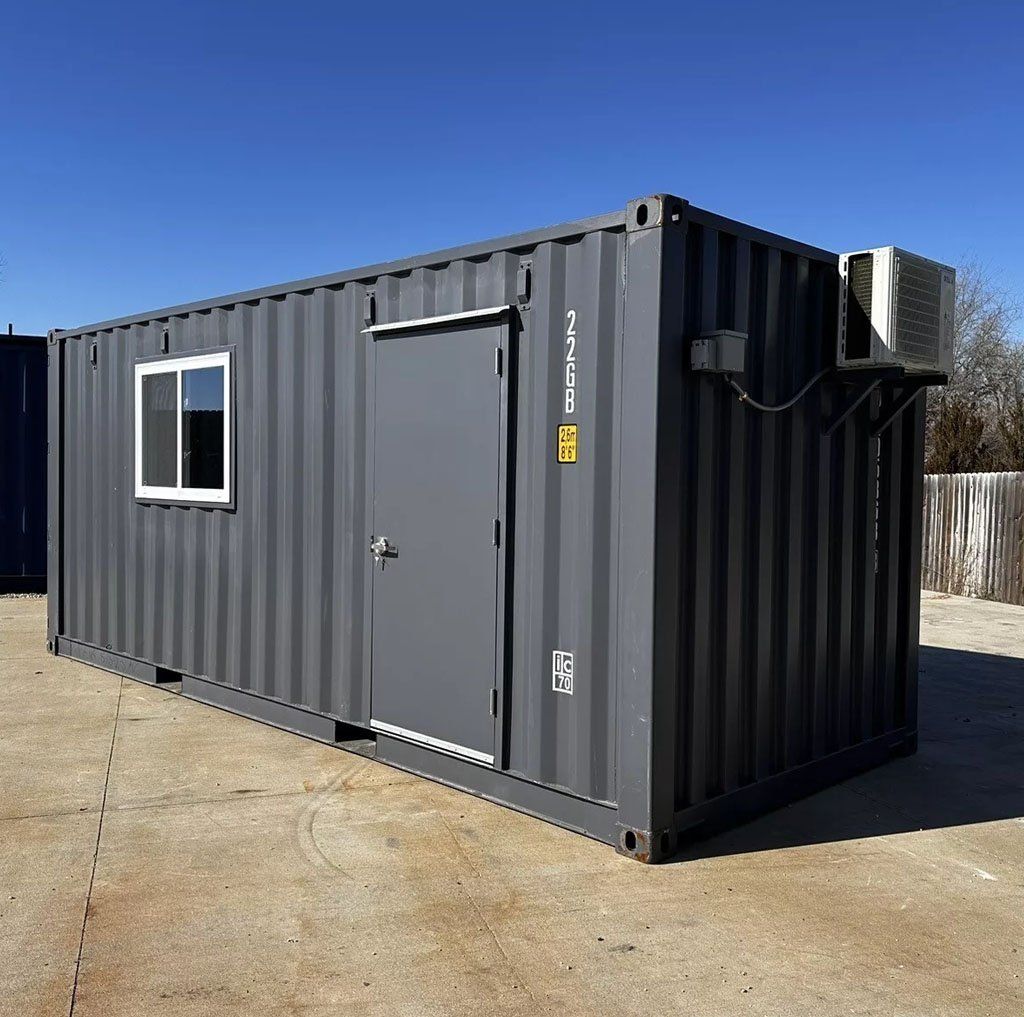
Add insulation, interior lining, wiring, and a mini-split and you have a finished workspace. A 20ft slate gray shiplap container office with 120V power sits at this rung. The step up from rung 2 is where most of the systems cost lives, because heating and cooling drags insulation, an electrical load, and a properly sealed envelope in behind it.
Rung 4: systems and off-grid capability
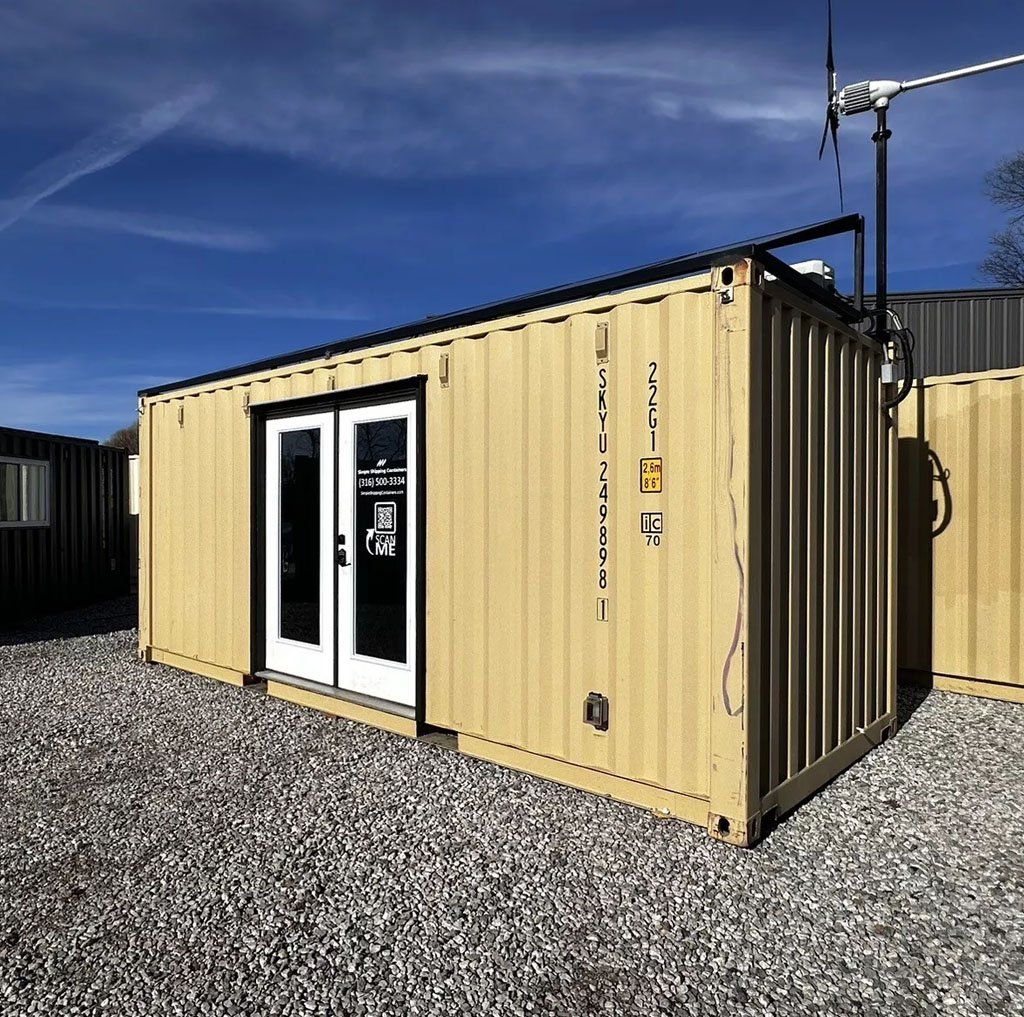
When the site has no power, the unit has to bring its own. A 20ft solar container office can run off-grid or tie into grid power. The premium over a grid-only office is the generation and storage equipment, and it only earns that premium back if trenching power out to the site would cost you more than the package does.
Rung 5: a turnkey living build
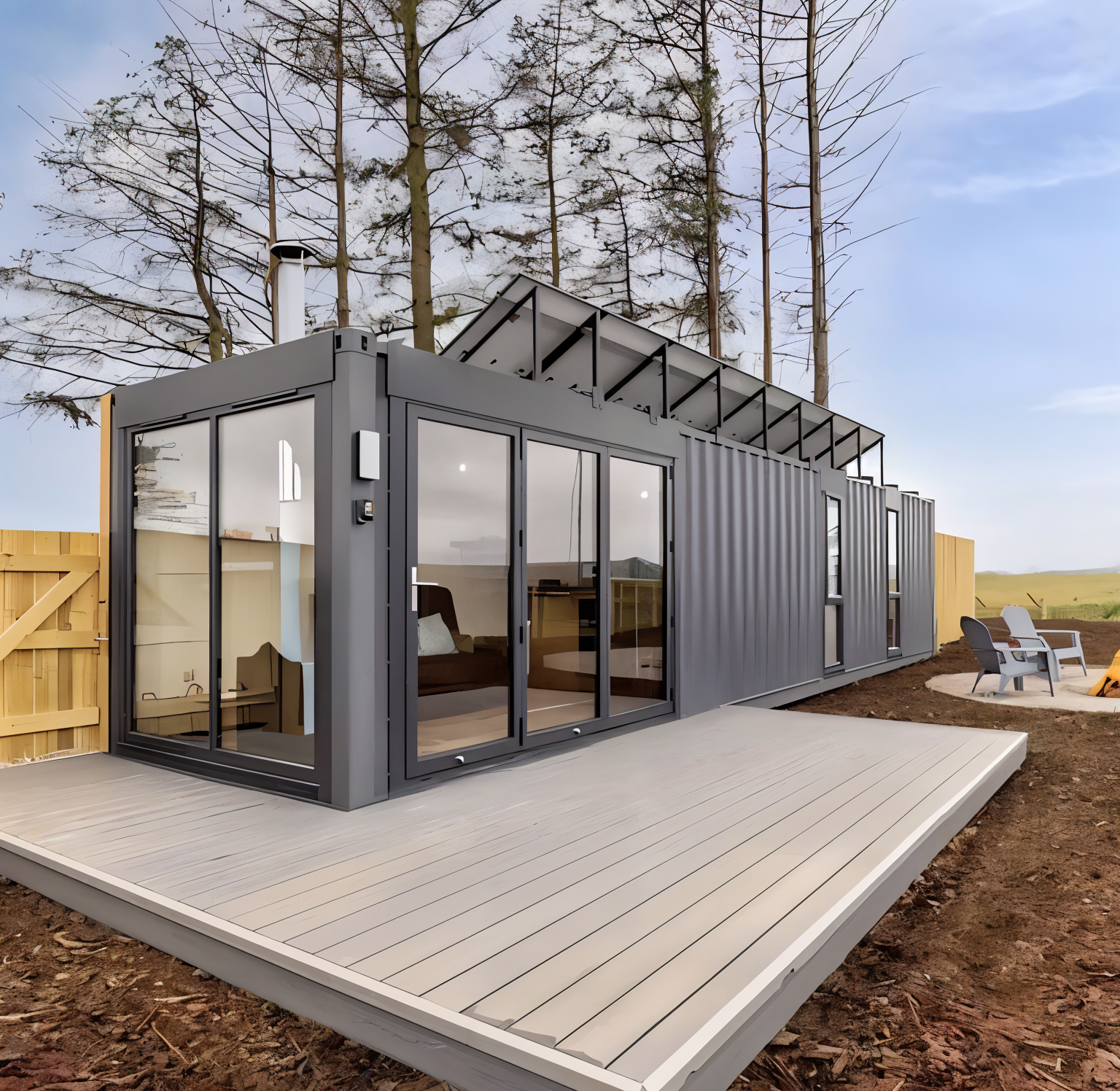
At the top sits a fully furnished build such as a 1BHK container house with a deck. This is a finished dwelling: plumbing, kitchen, bathroom, furniture, and exterior structure. The distance between this rung and the first one is the honest answer to how wide the range really runs.
Why two sellers quote the same 20ft office so differently
Put two quotes side by side and the gap almost always sits in one of two places.
The first is the base box. One seller starts from a one-trip unit and the other from a WWT box, and fresh paint hides the difference until the first winter. Ask which grade the conversion started from, and get the answer in writing.
The second is what the number actually includes. Is the mini-split inside the price or a line you add later? Is the electrical a rough-in or a finished, tested install? Is delivery inside the total? Does the price quietly assume you have a level pad waiting? A cheaper quote is very often a smaller quote, and the difference resurfaces as change orders once the build is underway.
What a custom quote should itemize
A quote you can compare like-for-like breaks the build into lines instead of handing you one number. Ask for these:
- The base unit. Size, condition grade, and standard height or high cube, all named explicitly.
- Each opening. Windows, personnel doors, roll-up doors, and vents, counted and priced, since this is the line that moves most when the spec changes.
- Insulation. The type, and where it stops. Walls only, or walls, roof, and floor.
- Electrical. The panel, the circuit count, outlets, and lighting, and whether the install is finished and tested or left as a rough-in.
- Climate control. The unit itself, its capacity, and the installation.
- Plumbing. Supply, drainage, and fixtures, if the build has any at all.
- Finish. Flooring, wall lining, paint, and any furniture included.
- Delivery. To your site, with the method named, plus what happens if the site is not ready when the truck arrives.
- Lead time. A build window in writing, not a verbal estimate.
Our quotes are free and itemized, and there are no hidden fees: what we quote is what you pay. The itemization is the point as much as the total is, because a single lump sum cannot be compared against anything.
Buy prefab, or commission a build?
Two routes lead to a customized container, and they trade the same three things against each other: price certainty, lead time, and how closely the unit matches your spec.
Buying a prefabricated modified unit means the work is already done. You can see the price before you commit, the specification is fixed and inspectable, and the unit ships when you order rather than when a build slot opens up. The limit is equally plain: you are choosing from what exists. If your door has to sit on the long wall because of how the site is laid out, an off-the-shelf unit will not move it for you.
Commissioning a custom build gets you the exact layout, but the price comes from a scope you have to write, and the timeline depends on the shop's queue. That is the right route when the unit has to fit a fixed footprint, match a brand, or carry equipment with real requirements.
There is a practical middle path: start from a prefab unit close to your spec and modify from there. Our page on container offices and on-site workspaces covers what a working office unit needs, and custom work is routed through our modifications service. Tell us what the unit has to do and we will scope it.
Lead time is a cost, not a scheduling note
Lead time belongs on the price side of the ledger. A unit that lands a season late can cost you a rented alternative, an idle crew, or a trading season, and none of that ever appears on the quote you compared. Ask for the build window before you compare prices, and ask what that window depends on.
The tradeoff runs the other way too. A firm date narrows your options and a flexible one widens them, so tell the seller which of the two you have when you request the quote.
Frequently asked questions
What is the price range for customized containers for sale?
It runs from a lightly refurbished shell up to a fully furnished dwelling, which is far too wide a spread to be useful as a single figure. The cards above show current pricing for real units at 5 points along that range, from an entry-level office to a turnkey house. For your own number, the base box grade, the opening count, and the systems list will decide almost all of it.
Is it cheaper to buy a modified container or to modify one yourself?
Buying a unit that is already converted is usually the lower total cost for a standard build, because the shop is repeating work it has done many times before. Modifying your own box makes sense when the spec is unusual, when you already own a suitable container, or when you are supplying your own labor. Factor in the second delivery either way: a box that travels to a fabricator and then on to your site is transported twice.
How long does a custom container build take?
It depends on the scope and on the shop's queue, so ask for the build window in writing as part of the quote rather than accepting a verbal range. A prefabricated unit that is already built ships sooner than one built to order, which is the main reason buyers working to a fixed date choose from existing stock.
Do customized containers need a permit?
Often yes, particularly for anything occupied, plumbed, or set on a foundation. Rules vary by city, county, and HOA, and a storage box is usually treated very differently from an office or a dwelling. Check locally before you order, and note that this is general guidance, not legal advice.
Get a free quote
Tell us what the unit has to do, where it is going, and whether you are working to a fixed date. We will match it to something in stock or scope the conversion around it, and every unit is inspected and graded before delivery. The quote is free and itemized, with no hidden fees: what we quote is what you pay. We check site access and clearance before the truck rolls, and we reply within 1 business day.